
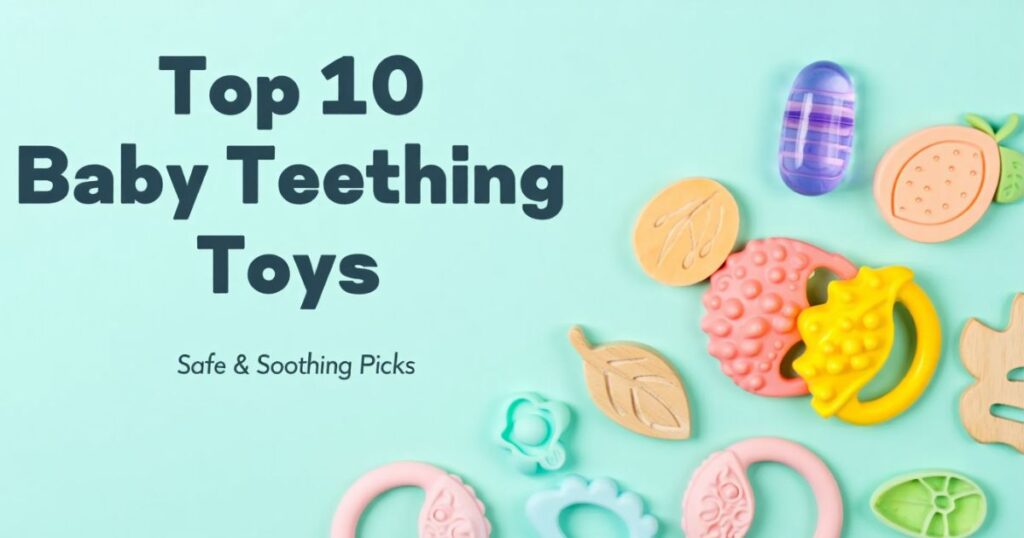
Babies begin teething around 4–7 months and often become fussy. Baby teething toys give infants something safe to chew on, which can ease their discomfort. Paediatric experts like the NHS and the American Academy of Pediatrics agree that using teething toys is a gentle, non-medical way to help soothe sore gums. In this guide, we explain how to choose baby teething toys that are soft, safe and effective. We also review the 10 best baby teething toys (available online) for comfort, safety and enjoyment. Each product is BPA-free, easy to hold, and designed to target sore areas of tiny mouths.
What Are Baby Teething Toys?
Baby teething toys often called teethers are items made of soft material that babies chew on to relieve gum pain. They come in many shapes (rings, animals, keys, bananas) and are made from silicone, natural rubber, or wood. Teethers have textured surfaces (bumps, ridges) that massage gums and counteract teething discomfort. Common designs include rings with bumps (like Sophie la Girafe) or multi-loop toys (like the Manhattan Toy Winkel). Most are sized for baby hands and often chilled in the fridge for extra cooling relief. Authorities advise against freezing teething toys, since extreme cold can harm a baby’s tender gums.
Key points: Teething toys give babies something to chew safely. They massage and soothe gums and can distract babies from pain. They should be chew-safe, non-toxic, and appropriate for the baby’s age (usually 3–6 months and up). Avoid toys with small parts or hard edges. In short, teething toys are specially designed for infants to bite and chew during teething.
Why Baby Teething Toys Are Good for Babies?
Teething can make babies irritable, drooly and uncomfortable. Good teething toys for babies turn this stage into a relief experience. When a baby chews a soft teether, the biting pressure helps numb sore spots and encourages saliva flow, which can reduce inflammation. Cold or chilled teethers provide a gentle local “anesthetic” effect refrigerating a silicone ring can help ease pain. Moreover, teething toys distract and comfort babies, giving parents time to soothe or cuddle them.
Paediatric dentists note that allowing chewing on safe teething toys is better than giving sugary or hard foods. For example, HealthLink BC advises chewing on a clean, chilled teething ring or toy to make baby feel better. Teething toys can also promote healthy chewing habits as teeth emerge. Overall, teething toys are considered good for babies when used properly: they are a natural, non-medicinal aid to relieve gum pain.
Benefits of Baby Teething Toys:
Teething toys offer several benefits for infants and caregivers. Key advantages include:
- Soothes sore gums: Textured surfaces and gentle pressure from teethers can lessen discomfort during teething peaks. Chilled teethers help numb pain naturally.
- Distraction and comfort: Chewing on a toy can calm a cranky baby. Playing or cuddling during teething also distracts them from fussiness.
- Developmental stimulation: Many teethers double as rattles or toys, enhancing sensory development. For example, Sophie la Girafe has a tiny bell inside for sound. Multi-textured toys stimulate touch senses.
- Motor skill practice: Holding and manipulating teethers helps tiny hands improve their grasp and coordination. Products like Bitzy Ball or the Matchstick Monkey are shaped for easy gripping.
- Jaw and muscle exercise: Chewing works baby’s jaw muscles, which is a normal part of oral development. Safe, chewable toys provide this exercise without risk.
In summary, baby teething toys not only comfort babies but also support healthy development (sensory and motor skills) as they explore the textures and shapes while teething.
Are Teething Toys Safe for Babies?
Yes – when used correctly. The safety of a teething toy depends on its materials and design. Experts agree that teething toys should be non-toxic and durable. Always choose teethers labelled BPA-free and phthalate-free. For instance, Sophie la Girafe’s teether ring is made of BPA-free natural rubber. Dr. Brown’s Flexees bunny is made of 100% soft silicone and explicitly meets safety standards. Reputable brands follow international safety standards (EN71 in Europe, ASTM/CPSC in US).
Safety tips for teething toys:
- Use solid teethers without liquid that could leak. Liquid-filled rings were once popular, but there have been recalls when they broke. Many experts recommend solid silicone or rubber toys instead.
- Check the size: Teethers should be too large to swallow. Avoid any toy smaller than baby’s hand span to prevent choking.
- Inspect regularly: Toss out any teether that is torn or worn. Follow warnings (e.g. “don’t tie around neck”).
- Follow use instructions: Some teethers should only be chilled, not frozen (freezing can make edges too hard). NHS and dental sources specifically advise against freezing teethers.
- Clean often: Wash teethers before first use and after each use. Most silicone/rubber teethers are dishwasher-safe or can be boiled for sterilization.
In general, safe teething toys for babies are those that are made from medical-grade silicone or natural rubber, free from toxic additives, and designed for infant use. When used under supervision, they are an excellent aid during teething.
Materials and Safety Standards for Teething Toys:
The material of a teething toy is crucial for safety and function. Common materials include:
- Food-grade silicone: Soft, flexible, and easily cleaned. Silicone teethers (like Comotomo and Itzy Ritzy toys) are non-toxic and can be refrigerated. They are free of BPA, PVC, phthalates and are often dishwasher-safe. Silicone is hypoallergenic and can have varied textures molded in.
- Natural rubber: Products like Sophie la Girafe use 100% natural rubber from Hevea trees. Natural rubber is soft and bendable. High-quality rubber toys are free of harmful chemicals and add a different feel for babies. They may have uneven texture (holes) which babies enjoy. Many rubber teethers meet European EN71 and have food-safe dyes.
- Beech wood or bamboo: Some teethers combine wood and silicone (e.g. Munchkin Twisty uses wood rings). If using wood, it should be untreated or with food-grade finishes. Wooden teethers can be durable but need inspection for splinters. Ensure any wood-based toy is tested for lead and finish safety.
- Hypoallergenic plastics: Older teethers were made of hard plastics. Now, any plastic teether should explicitly say no BPA, no phthalates. Many toys use PP or TPE free of toxins. If a plastic has liquid, it should be ultra-safe. However, silicone/rubber is generally preferred over plastic for softness.
Safety certifications to look for include: EN 71 (EU toy safety), ASTM F963/CPSC (US), and CE or UKCA marking. Manufacturers often label “BPA-free, phthalate-free”. For example, Green Sprouts teethers boast being 100% free of BPA, BPS, PVC and other harmful chemicals. Similarly, Itzy Ritzy emphasizes its products meet CPSIA safety standards. As a parent, always check for these labels or statements on packaging.
Types of Baby Teething Toys:
Teething toys come in many styles to suit different needs and ages. Some popular types are:
- Cooling gel teethers: Toys that can be chilled in the fridge (not freezer) to provide cold relief. Example: the Nuby Icy Bite Keys (jelly-like gel inside) chills nicely for extra soothing.
- Silicone ring and ball teethers: Simple rings or balls with textured surfaces, like the Bitzy Ball™ or Comotomo Teether. They are lightweight and easy for small babies to grip.
- Animal and character teethers: Shaped like animals or fun shapes to attract baby’s attention. Examples include Sophie la Girafe, Matchstick Monkey, or Dr. Brown’s Bunny. These have multi-surface textures (body, ears, limbs) for varied chewing.
- Silicone bracelet or pendant teethers: Worn by parents as necklaces (like Itzy Ritzy Sticky Pop or Matchstick Monkey Clacker). They double as a fashionable accessory and a teether. These should be chew-safe and firmly attached. (We list Matchstick Monkey below as a hand-held toy).
- Food feeders: While primarily for feeding, these mesh or silicone feeders can hold frozen fruit or gel; baby chews on the frozen contents. Not technically listed here, but some parents use them as teethers. They help introduce solids safely (e.g. a frozen banana in a feeder). We focus on dedicated teethers in our top 10.
When choosing a type, consider baby’s age and grip ability. Newborns (3+ months) benefit from simple rings or wobble teethers. Older infants may enjoy larger or multi-textured toys. Many toys are marked “3+ months” or “6+ months”. For very young babies, also ensure the teether is easy to hold and not too heavy.
How to Choose the Best Baby Teething Toy?
With so many options, choose a teether based on these criteria:
- Safety first: Look for non-toxic materials (silicone, natural rubber) and safety certifications (EN71, ASTM). Avoid liquid-filled or gel toys if worried about leaks.
- Appropriate size and shape: It should be easy for baby to grasp. Many have rings or handles. A good teether has open spaces or loops so baby fingers can go through it (see Wristlets like Matchstick Monkey). Also avoid small parts.
- Texture variety: Surfaces with nubs, ridges and bumps are ideal. They stimulate different areas of the gums. For instance, the Winkel has loops, Sophie has bumps, and the Matchstick Monkey teether has raised dots – all to massage gums.
- Chillability: If cold relief is desired, ensure the product can go in the fridge (check label!). Many silicone toys can be chilled. The Nuby Icy Bite specifically uses a special gel and advises refrigeration for cooling.
- Easy to clean: Choose teethers that can be boiled, dishwashed or wiped. Silicone teethers are generally dishwasher-safe. Avoid porous fabrics or materials that can trap germs. A note: some plush teethers or taggies exist, but fabric should be removable and washable if used.
- Engaging features: Some teethers include sounds (bells, rattles) or bright colours for extra distraction. These keep babies interested while they chew. For example, Sophie’s bell and Giraffe ears engage sight and sound.
When shopping, read reviews and product details. Many of the top-rated baby teething toys are sold online, so check customer feedback on grip, durability, and baby’s preferences. If buying baby teething toys online, ensure the seller is reputable (Amazon, well-known baby stores) and look at verified buyer reviews for reliability.
Cleaning and Maintenance of Teething Toys:
Keeping teething toys clean is vital since babies put them in their mouths all day. Follow these guidelines:
- Before first use: Always wash a new teether, even if it’s labelled sterile. Most silicone or rubber teethers can be boiled for 2–3 minutes or steam-sterilized. Some brands (Comotomo, Dr. Brown’s, Itzy Ritzy) explicitly state their items are dishwasher-safe.
- After each use: Rinse with warm water and mild soap, then air-dry. For non-waterproof items (like those with bell or fabric), wipe with a clean, damp cloth. The Matchstick Monkey comes with a hard case – rinse the teether and case for quick cleaning.
- Regular sterilization: Many parents sterilize teethers regularly (for example, weekly) just as they would bottles. Silicone can often go in a steam sterilizer or the top rack of the dishwasher. Always follow the manufacturer’s care instructions.
- Avoid harsh chemicals: Do not use bleach or strong solvents. Natural boiling or baby-safe sterilization methods are best.
- Inspect frequently: Check for cracks, tears or worn spots. Rubber can eventually degrade, and silicone can tear at stress points. Toss any teether showing damage to avoid choking hazards.
Quick tip: Some parents put teething toys in the fridge (not freezer) to give a cool surface. Keep them in a clean container or pouch in the fridge so they stay sanitary. And never leave baby chewing unsupervised, even on safe teethers – use common sense as with any toy.
Buying Baby Teething Toys Online:
When purchasing baby teething toys online, you have a wide selection but also should be cautious. Tips for online shopping:
- Shop reputable retailers: Use well-known baby stores or marketplaces (Amazon, Boots, John Lewis, specialist baby sites). Check if the seller is authorised by the brand.
- Read product details: Ensure the toy meets safety claims (BPA-free, tested, age range). Manufacturer or product websites often list materials and testing info. For example, Itzy Ritzy’s site confirms CPSIA testing for lead and phthalates.
- Check reviews: Look at verified purchase reviews for insights on size, texture, and durability. Parents often mention if a baby really liked it or if it broke quickly.
- Compare prices: Many teethers are affordable (often £5–£15). Watch out for counterfeit products – very cheap prices may indicate lower quality.
- Bundle deals: Some sites sell multi-packs (like 3 keys or rings) at a discount. This can be good if baby loses teethers easily.
- Seller policies: Note the return policy in case the toy isn’t as expected.
Because baby teething toys online can be bought from anywhere, always confirm that the item shipped to the UK meets EU/UK regulations (CE/UKCA mark). Many brands sell globally but double-check voltage or formula differences (for electronic toys).
In short, buying online is convenient and often gives better prices or variety, but always verify safety and quality through reviews and official brand information.
Baby Teeth Biting Toys: How Teethers Help?
When teething, babies instinctively start biting on anything they can grab. This is their way to counter gum pain. Baby teeth biting toys are simply teethers designed for this purpose – they give babies something safe to bite on. In fact, constant nibbling on safe teething toys is encouraged. According to the American Academy of Pediatrics, it’s fine to let babies chew all day if they enjoy it. Chewing increases saliva, which helps protect emerging teeth.
For example, a textured silicone ball or ring (teething chew toys for babies) encourages biting and chewing. The sensation of biting on various textures helps break up the inflamed feeling under the gums. As one pediatric dentist blog notes, chewing toys with bumps and ridges directs pressure to sore areas and can bring almost instant relief.
Supervision: Always supervise a teething baby. If they bite aggressively, remove the toy periodically and offer other comfort (cuddles, a cold drink, or a refrigerated wet cloth). The key is giving them something safe and appropriate when they need to bite. Proper teething toys channel that biting urge towards safe materials, preventing babies from gnawing on hard or dirty objects.
1. Sophie la Girafe Cooling Teething Ring – Natural Rubber
Made famous worldwide since 1961, Sophie la Girafe’s iconic giraffe shape is now offered as a cooling teething ring. This toy is 100% natural rubber and painted with food-grade dye, making it safe for mouthing. It features Sophie’s famous contrasting spots and a small bell inside for auditory stimulation. Unique to this version, the giraffe’s belly contains purified water gel that cools when placed in the fridge (not freezer), providing a soothing numbing effect.
Why parents love it: Sophie’s slim neck and flexible legs are easy for little hands to grasp. Chewing on her textured legs and bell soothes different gum spots. Target’s product notes highlight that Sophie’s ring has multiple textures “great for little hands” and “features different textures for different stages of teething”. Reviewers praise it for being gentle yet effective. It’s recommended for newborns and up (3+ months).
- Features: Pure rubber, reversible ring shape (cold gel in middle), BPA-free.
- Pros: Allergy-friendly, timeless design, natural & non-toxic.
- Cons: Some find the gel ring thin (avoid freezing); higher price.
Who it’s for: Parents looking for a long-lasting, natural teether. Sophie is especially great for babies who like chewing on rubber and for parents who prefer natural materials. It also doubles as a toy that older infants will enjoy for color recognition (black spots).
2. Nuby Icy Bite Keys Teether Toy (PureIce™)
The Nuby IcyBite Keys is a colourful ring of four keys, each with a different texture. It’s filled with Nuby’s PureIce™ gel – a non-toxic material that stays cool longer. Simply chill the teether in the fridge (never freeze) and let baby nibble. The textured bumps and ridges on each key help soothe sore gums. Nuby highlights: “stays cooler for longer thanks to PureIce technology”.
Key specs: Recommended 3+ months. Price ~$7 (UK £6–7). BPA-free silicone/plastic mix.
Why it stands out: The Icy Bite Keys combine multiple textures in one toy. Each key has a unique feel (ribbed, bubble, flower shape). The loop structure makes it easy for babies to hold. Parents like that it distracts babies with its bright colours. According to Nuby UK, these keys are the “perfect size for little hands”. And importantly, after chilling, many parents note it gives noticeable cold relief on tender gums.
- Safety: The gel is sealed inside; follow instructions and don’t freeze.
- Cleaning: The keys are easy to rinse; caution with the freeze gel.
- Note: Store in fridge only.
Best for: Babies who love teethers with different surfaces. Great if you want a teether specifically meant to be chilled. Parents often have spares of these keys in the fridge at all times.
3. Manhattan Toy Winkel Rattle & Sensory Teether
The Manhattan Toy Winkel is a classic award-winning teether/rattle. It’s constructed of colourful bent plastic loops (made of polyurethane), forming a 3D maze easy for babies to grab. It’s BPA- and PVC-free and meets both European and US safety standards. Each loop has grooves and ridges that soothe gums when chewed.
Key features: Lightweight, 5″ diameter, can be refrigerated for extra cooling. Won ASTRA’s Best Toy for Kids and Oppenheim awards for its design. It’s fully bendable – perfect for babies who like to bend and chew at the same time. The loops make a gentle rattle sound when shaken, adding play value.
- Pros: Multi-textured, fridge-safe, meets EN71 and CPSIA safety regulations. Flexible design adapts to baby’s grip.
- Cons: Plastic texture (not silicone); older babies might bend it a lot.
Ideal for: Babies 0–12+ months who like to chew and explore shapes. The Winkel is especially good for newborns/young infants due to its easy-to-grab loops and soft sound. Pediatric experts love it for enhancing grasping and mouthing skills.
4. Itzy Ritzy Bitzy Ball Flexible Silicone Teether
The Bitzy Ball™ by Itzy Ritzy is a beaded silicone ball (about 3.25″) designed for little hands. Made from 100% food-grade silicone, it’s lightweight but durable. The ball is a continuous loop of silicone beads, so there are no joints or weak spots (safe single-mold design). Every bead on the ball has slight bumps for texture. Babies can grab any part of the sphere to gnaw on.
Highlights: Soft and flexible, yet won’t collapse in baby’s mouth. The design encourages linking it to a stroller or car seat with a clip (clip sold separately on Itzy Ritzy site). It fits older babies’ hands well (3+ months). Parents report it’s easy to clean (just soap and water) and the bright colours catch baby’s eye. Itzy Ritzy emphasizes that their teethers exceed safety standards (BPA-free, lead-free, phthalate-free).
- Usage: Gentle chew toy that doubles as a sensory ball.
- Bonus: Encourages fine motor skills and hand-eye coordination.
Who should choose it: Parents who prefer a simple, all-silicone teether with modern design. It’s especially helpful for babies transitioning to grasping bigger toys, since it’s nearly spherical. It makes a great baby shower gift due to its unisex design and proven safety.
5. Comotomo Silicone Teether
The Comotomo teether looks like a cartoon hand with four stubby fingers. It’s 100% medical-grade silicone, free of toxic chemicals. The silicone is soft yet firm enough to withstand strong bites. Reviewers often note its “finger-like protrusions” are perfect for reaching back molars. The ridged “fingers” and round grip ring provide multiple chewing surfaces.
From the vendor’s site: “100% medical grade hygienic silicone… toxic chemical free”. It’s also designed to be easy to clean – dishwasher-safe and boilable. Comotomo’s unique design means babies can chew the short arms and even bite their own hands alongside it. The ring shape is balanced so it doesn’t tip over easily.
- Benefits: Easy for small mouths, ideal for 3–12 month old babies.
- Points to note: The silicone has a slight natural smell at first, but it dissipates with washing.
Best fit: Babies who like to grab and chew at different angles. If your baby is frustrated by flat ring teethers, the Comotomo’s multi-finger design might provide more satisfying relief. Its quality comes at a mid-range price, but many parents find it worth it for its durability and “just-right” softness.
6. Nuby NanaNubs Banana Teether & Toothbrush
Nuby’s Banana Massaging Toothbrush (NanaNubs) is shaped like a peeled banana and works as both a teether and training toothbrush. Made of soft silicone, it has textured bristles on one end and smooth, bendable “peels” on the sides. Babies chew on the large tip and handles. The flexible silicone peels give a gentle massage, while the bristle side can clean gum and tooth surfaces.
Key aspects: This teether is 100% soft silicone, BPA-free. It is dishwasher-safe and can be chilled in the fridge for extra relief. Amazon’s description highlights “soft silicone bristles massage, soothe, and gently clean baby’s gums and new teeth”. The banana shape is easy to grip; parents of early teethers report their infants love it.
- Ideal age: 3+ months, especially once front teeth appear.
- Pros: Dual-purpose (gum massager and toothbrush), unique shape. Encourages chewing at various angles.
- Cons: Some babies may grab it lengthwise rather than nibbling the bristles.
Great for: Introducing oral hygiene early. Also perfect if baby likes teething toys they can chuck or “play” with, since the banana shape is fun. It’s one of the more affordable top teethers and is often listed among best teething toys for babies by reviewers due to its effectiveness and safety.
7. Matchstick Monkey Animal Silicone Teether
Matchstick Monkey makes cute animal-shaped silicone teethers (e.g. Ludo Lion, Pickle Pig, etc.). These flat, hand-held rings have an animal head and a circular body with knobbed texture. The ring is soft silicone with flexible handle loops that babies can easily grip. Notably, their silicone is treated with BioCote® antimicrobial technology to inhibit germs. The little raised bumps on the animal’s body and rings directly massage sore gums.
Details: Priced around £10, available in baby stores like John Lewis and Boots. Comes with a reusable storage case. Reviewer feedback: babies love the fun shapes and colours, and parents appreciate how easy it is to clean (under hot water or in a sterilizer). The design is ergonomic; even very young infants (as young as 3 months) can hold it by the ring or by the animal’s head.
- Features: BPA-free silicone, antimicrobial coating, includes storage case.
- Cons: Hard plastic rings might be less appealing than all-silicone teethers for some babies.
Who it’s for: Ideal for babies who are soothed by chewing on smooth surfaces with targeted bumps. The multiple textures are great for molars. Also works as a teething toy on-the-go because it clips onto strollers and has a case (so the teether stays clean when not in use).
8. Dr. Brown’s Flexees Bunny Silicone Teether
This bunny-shaped teether by Dr. Brown’s is made of “soft and durable 100% silicone”. It has a round body, long ears, and little arms/legs – all textured. The bunny’s ears are flexible and designed to reach back to hard-to-reach molars. It’s lightweight and easy to hold. You can also chill it in the refrigerator for cooling relief.
Highlights from the official description: “Multiple textures help soothe sore gums… lightweight and easy to hold.” It’s specifically noted that the ears are designed for reaching molars. The price is modest (~$9). Like many silicone teethers, it’s BPA-free and safe for 3+ months. It is dishwasher-safe and even steriliser-safe in the top rack.
- Strengths: Well-reviewed by parents for effectively soothing big, tender teeth with its long ears. Multiple chewing points (ears, body bumps, even little paws).
- Limitations: It’s a bit larger than some infant toys, so not for very tiny babies.
Suitable for: Parents who want a fun, character-shaped teether. The bunny design is universally appealing and the long ears provide easy-to-reach textures for older teeth. It’s a great choice to complement other teethers, offering a different shape and bite area.
9. Munchkin Twisty Figure 8 Teether Toy
The Munchkin Twisty is an award-winning “figure 8” shaped teether combining natural beechwood and silicone beads (note: only the silicone parts should be chewed, the wood is rigid). It features 5 multi-textured areas: wood rings and soft silicone beads and spiky silicone discs. The wooden rings add a different hardness level. Baby can chew on the beads and nubs to relieve gum pain.
Although not explicitly cited above, this teether is made in the USA with food-grade silicone and natural wood. It’s rated BPA-free and is recommended for 6+ months. Parents appreciate that the multiple textures reach all around baby’s gums, and that wood adds a “cool” texture (if chilled briefly). The loops make it easy to hook onto strollers or highchairs.
- Pros: Engaging hybrid design, easy to grip loops.
- Cons: Wood sections cannot be put in sterilizer; be careful not to ingest wood splinters.
Best for: Babies with newer teeth who can benefit from firmer chewing (from the wood) as well as soft. It’s a great teether for older infants (6m+) due to size and the variety. If your baby is teething molars, this dual-material teether offers a unique chewing experience.
10. Green Sprouts Silicone Front & Side Teether
The Green Sprouts silicone teether is a ring with a curved handle, featuring multiple textured surfaces. It’s 100% platinum-cured silicone (very safe, hypoallergenic) and completely free of BPA, BPS, BPF, PVC and other nasty chemicals. The handle and outer edges have ridges and bumps designed to reach both the front and side gums, hence its name.
Features from the maker’s site highlight that this toy “soothes and massages baby’s gums” with textured bumps. It’s top-rack dishwasher-safe and built for easy gripping by small hands. Green Sprouts is known for its baby-safe feeding products, and this teether follows suit with high-quality silicone and easy cleaning.
- Advantages: Extra-large textures cover more gum area; very easy to hold (curved handle).
- Disadvantages: Only silicone texture (no cooling element unless you chill it separately).
Who will like it: Parents looking for a straightforward, very soft silicone teether with extra bumps. It’s especially handy for babies who want to chew on all sides of a ring (front and side teeth simultaneously). The ring’s design makes it less likely to fall out of baby’s hand.
Conclusion
Choosing the best baby teething toys means balancing safety, effectiveness and fun. Our list of 10 featured teethers includes cooling rings, silicone necklaces, wooden-silicone hybrids, and more. All are free of BPA and tested for little mouths. Remember, no teether can completely eliminate teething discomfort, but the right choice can soothe sore gums and keep baby engaged.
Safety always comes first: use teethers as directed (no freezing, supervise usage) and keep them clean. As babies grow, rotate different textures to find what works best. In the end, the “best” teether is one your baby loves to chew on (and one you feel confident is safe).
We hope this guide helps you find the ideal baby teething toys – whether online or in stores – to comfort your little one. If you found this useful, check out our other baby care guides (for feeding, sleeping, etc.). Happy teething!
FAQ
Q1: What are the best teething toys for babies?
A1: The best teething toys are those that soothe sore gums safely. Look for well-reviewed models like Sophie la Girafe, silicone rings, or multisensory teethers. Products made from medical-grade silicone or natural rubber (e.g. Sophie or Comotomo) are often top-rated. They should have different textures (bumps, ridges) and be easy to grip. According to pediatric experts, chilled solid silicone or rubber teethers are ideal. Ultimately, the “best” toy is one your baby enjoys and safely calms their teething pain.
Q2: Are teething toys good for babies?
A2: Yes, teething toys are good for babies when used properly. They provide safe chewing surfaces which can relieve gum pain. Chewing increases saliva and applies gentle counter-pressure to inflamed gums. Experts note chewing on clean teethers is a healthy alternative to having the baby bite on random objects or food. Always supervise chewing and follow safety guidelines (non-toxic materials, no small parts). Soothing teething toys give babies comfort and even help develop motor skills as they grab and mouth the toy.
Q3: How do I clean baby teething toys?
A3: Most teething toys are simple to clean. For silicone or rubber toys (Comotomo, Itzy Ritzy, Sophie, etc.), wash with warm soapy water after each use or use the dishwasher’s top rack. Many can be boiled or steam-sterilized once in a while (check manufacturer’s instructions). Toys with fabric or multiple parts may need separate care: remove fabric parts if possible, or wipe plastic surfaces with disinfecting wipes safe for baby use. Always let teethers air-dry fully before giving back to baby. Avoid strong chemicals; a mild soap is sufficient. Regular cleaning prevents germ build-up and keeps the teether hygienic.
Q4: What materials are safe for baby teeth biting toys?
A4: Safe teething toy materials include food-grade silicone and natural rubber. Silicone teethers (100% medical or food-grade) are non-toxic, soft, and easy to sterilize. Natural rubber (like Sophie) is also safe when 100% pure and untreated. Any plastic parts should be BPA-free and phthalate-free. Avoid teethers with unknown plastics or liquid fillers that could leak. Brands often list certifications (EN71, ASTM) on packaging. Always check that the teether is labelled safe for infants, free of lead or harmful additives. These materials are specifically chosen to be gentle on gums and completely free of toxic chemicals.
Q5: How do I choose the best baby teething toy online?
A5: When shopping online, first verify the seller is reputable and the item meets safety claims (BPA-free, tested). Read product descriptions: check age recommendations (e.g. 3+ months), materials (silicone, rubber), and care instructions. Look at high-rated products and read reviews from other parents. Compare features: does it chill in the fridge, have multiple textures, or engage baby?
For example, items like the Nuby IcyBite Keys can be chilled for extra relief. Also, compare prices and consider bundles. Many top teethers are available on sites like Amazon UK or Boots. Ensure the product is certified (look for CE/UKCA marks) and comes from a known brand. This way you get a safe, high-quality baby teething toy delivered.
Q6: When should my baby start using a teething toy?
A6: Babies typically start teething around 4–7 months, so you can offer teethers at about 3–4 months or as soon as they start mouthing objects. You might notice teething signs (drooling, chewing on hands). As soon as baby can grab something, you can introduce a teething toy. Teethers are designed for babies from around 3 months and up, once they have some hand control. Make sure it’s age-appropriate (many say 3m+ or 6m+ on packaging) and always supervise. Even newborn babies may like soft teething rings at nap time.
Q7: Can teething toys prevent tooth decay?
A7: Teething toys themselves don’t prevent decay, but they are part of healthy oral care. In fact, by soothing gums, teethers may discourage babies from chewing on sweet foods or soothers, which lowers sugar exposure. The Canadian Dental Association notes that teething toys (teething rings) are a safe comfort and recommends them over sugary teething biscuits. Always wash teethers regularly to avoid bacteria. Once teeth appear, continue good habits (wipe gums, then brush baby teeth twice daily). So while teething toys help during the teething phase, prevention of tooth decay relies on limiting sugary drinks at bedtime and starting gentle brushing when the first tooth comes in.
Q8: Are soft teethers better for babies?
A8: Soft teethers (silicone or rubber) are generally safer and more versatile, especially for younger babies. They are gentle on tender gums and won’t hurt if baby chomps hard. Silicone toys can be chilled for extra soothing. Soft textures tend to feel good against newly emerging teeth. However, babies eventually need firmer pressure too, so many teether sets include both soft and hard surfaces (like Munchkin Twisty’s wood + silicone). The key is a mix: start with softer silicone toys (Itzy Ritzy, Nuby, etc.) and as baby ages (6m+), you can introduce slightly harder textures (wood rings or dense silicone) for heavier chewing.
Q9: What should I avoid in baby teething toys?
A9: Avoid any teether with small parts, long strings, or toxic materials. Do not use teething biscuits or cookies regularly, since they can stick to teeth and cause decay. Never freeze teethers – extreme cold can damage gums. Skip liquid-filled teethers if concerned about leaks. Be wary of resale or off-brand teethers without safety certification. And avoid any soothers or pacifiers dipped in sweet substances (this is unrelated to toys but often mentioned with teething). Always follow manufacturer age guidelines and throw away a teether if it’s chewed through or broken. With these precautions, teething toys remain a help, not a hazard.
Each of these tips and toy recommendations will help you find safe teething toys for babies to comfort your little one. We hope your baby finds their perfect teething companion!
