
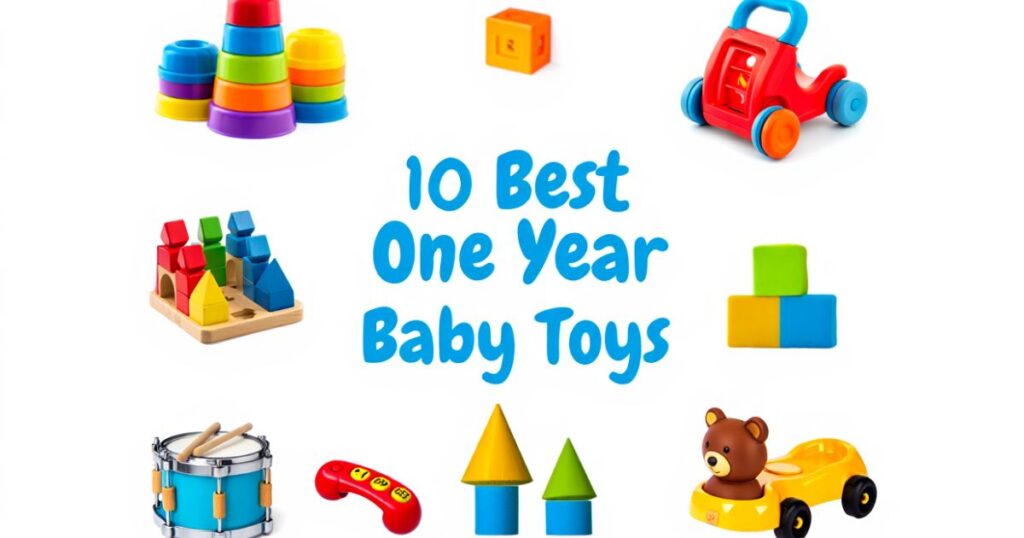
Discover the top one year baby toys that combine safety, education, and fun. At around 12 months old, babies become highly curious—moving more steadily, stacking objects, and testing cause-and-effect. Experts note that children at the one-year mark are intrigued by bright colors, sounds, and textures. This makes one year old baby toys particularly valuable for learning. In fact, developmental specialists advise choosing toys that match a child’s stage and emerging abilities. We’ve selected 10 award-winning and bestselling toys that spark exploration, build skills, and withstand rough play. Each pick supports fine motor, language, or sensory growth, ensuring it’s a one year baby toy that’s both fun and age-appropriate.
Top 10 One Year Baby Toys (Recommended Picks)
- Ms. Rachel First Words Talking Flash Cards – An interactive electronic reader with 100+ word cards. Babies press the bright button to hear simple words pronounced aloud. This engages audio, visual, and tactile senses simultaneously, helping little ones practice new vocabulary. Parents praise it for encouraging early speech and memory via repetition.
- Honeysticks Non-Toxic Finger Paints – A set of six vibrant, water-based paints in honeybee-shaped pots. The creamy paints are safe and easy to clean, letting toddlers explore colors and textures. Designed for minimal mess, these paints support creative play while ensuring non-toxic materials (free of BPA and phthalates).
- Jool Baby Dolphin Bath Bubble Maker – A cute wall-mounted dolphin that produces gentle bubbles at bath time. This bath toy has an easy stick-on mount and plays 5 melodies as bubbles flow, delighting one-year-olds with sights, sounds, and bubbles. It turns routine baths into sensory play, reinforcing cause-and-effect (press button = bubbles!) without small parts to swallow.
- Hop In Foam Ball Pit – A soft round ball pit (diameter ~30 inches) that comes with 68 colorful plastic balls. The low foam walls are crush-proof and removable for washing. Crawling or climbing in and out of the pit builds gross motor skills and balance. By repeatedly moving through the balls, toddlers practice coordination and active play in a safe padded area.
- Maxi Castle Wooden Building Blocks – A set of 25 oversized, easy-grip wooden blocks in colorful shapes. These sturdy, nontoxic wax-painted blocks nestle in a canvas carry bag. Babies and toddlers can stack, sort by shape, or knock them down, promoting hand–eye coordination, spatial reasoning, and imagination. According to child development experts, stacking and shape-sorting games teach concepts like balance and cause-and-effect while boosting problem-solving skills.
- Toniebox 2 Audio Player – A screen-free music and story player shaped like a padded box with a friendly face. The Toniebox plays interactive audio when paired with themed “Tonies” figurines. This kid-friendly speaker has volume controls and a gentle light ring for nighttime routines. It helps develop language and listening skills as toddlers hear songs, lullabies, and stories from trusted characters. The Toniebox 2 (around $140) is durable and easy to use for little hands.
- Ms. Rachel Tonie (Audio Story Figurine) – A talking figurine that works with Toniebox. Featuring Ms. Rachel’s voice, it contains 24 songs and stories encouraging kids to sing along and answer prompts. This reinforces vocabulary and listening comprehension. Unlike screens, the Tonie format lets one-year-olds interact with real voices and music, fostering communication skills.
- My First Book: Busy Farm (Interactive Fabric Book) – A soft fabric book filled with pop-up farm scenes, textures, and sounds. Toddlers explore flaps (like a cow’s udder) and squeaky animals, which strengthens sensory processing and hand dexterity. It even includes a small waterproof backpack, encouraging pretend play and storytime together. Bright farm activities invite babies to practice object recognition (animals, shapes) and fine motor skills.
- B. Toys Rainbow Gumballs Counting Machine – A plastic play gumball machine with numbered colored balls. Toddlers can press the coin slot to release a ball, learning numbers 1–10 and colors. The simple push-and-collect action reinforces counting, color ID, and cause-and-effect. As an educational toy, it highlights how pressing a button leads to a reward, cementing basic logic skills in a playful way.
- Melissa & Doug Match & Roll Shape Sorter – A classic wooden shape sorter with a twist. Brightly painted, chunky wooden pieces pass through color-coded holes. Melissa & Doug’s high-quality design means the sorter is built to last and match safe standards. Babies grasp the large knobs and drop shapes in, working on fine motor control and shape recognition. Melissa & Doug is “the gold standard” for durable toddler toys, and this ~$21 sort-and-drop toy is a favorite for introducing early STEM concepts like matching shapes to holes.
Each of these toys was chosen for quality and development benefits. They encourage learning and play through hands-on activity, whether that’s pressing a button to hear a word, stacking blocks, or scooping paint. All are rated for 12+ months and meet safety norms (no small parts for choking). Many are available online at major retailers, ensuring you can easily compare prices and find the perfect one-year birthday gift.
Educational Learning Toys for One-Year Babies
To support early speech, cognition, and problem-solving, look for learning-oriented one year baby toys that blend fun with education. Many recommended toys focus on vocabulary and concept development. For example, interactive talking books like the LeapFrog 100 Words Book teach science, letters, and numbers through buttons and lights. Similarly, electronic flash cards (e.g. Ms. Rachel Talking Flash Cards) use audio reinforcement to help toddlers recognize everyday words. These toys expose little ones to clear pronunciation and repetition, laying a foundation for language skills.
Simple language toys engage multiple senses: audio (spoken words), visuals (pictures on cards), and touch (inserting cards). According to researchers, repeated exposure in such multimodal formats accelerates vocabulary acquisition. Parents and experts note that at 12–18 months, interactive readers that require a child to choose a card or press a button are highly effective for hands-on learning. Beyond words, learning toys can include counting games (like number blocks or gumball machines) and pretend shopping sets (toy cash registers) that introduce basic math and social concepts.
Educational play also includes books and recording toys. Simple board books with photographs and nursery rhymes are ideal for one-year-olds. Playing recordings of songs or lullabies (via a sound module or simple music box) exposes babies to language rhythms. Even very basic art sets (washable crayons and large paper) empower self-expression and cognitive development. Pediatricians and educators often emphasize that young toddlers need open-ended exploration—so while learning toys can introduce ideas, it’s also vital to let children use them freely. Always supervise an active 1-year-old with audio or art toys to ensure both safety and maximum engagement.
Motor Skills and Active Play Toys for 1-Year-Olds
One-year-olds are rapidly building gross motor skills: they may be pulling up to stand, cruising along furniture, and taking first steps. Active play toys help reinforce this growth. Push-and-pull toys, ride-on cars, and walking wagons provide stability and encourage walking practice. For example, a Radio Flyer Busy Buggy ride-on car has 17 interactive knobs and features; toddlers can either push it as a walker or sit and scoot using their feet. This dual function boosts confidence in walking and coordination, while also challenging fine motor skills (turning dials, pressing buttons).
Bouncy and balance toys are also beneficial. Foam-lined ball pits, like the Hop In Ball Pit, encourage crawling, sitting up, and bouncing among soft balls. Even simple large balls (at least 3″ across) are excellent for toddlers to roll and chase without a choking risk. Low slides and soft climbers (like the Little Tikes First Slide) introduce climbing in a safe way, helping toddlers practice stairs and descending in a gentle environment.
Building toys contribute to motor development too. Handling oversized wooden blocks (as in the Maxi Castle set) refines a toddler’s grip and spatial skills. Stacking towers and knocking them down teaches balance and cause-and-effect while working small hand muscles. According to JoyCat, open-ended toys like stacking blocks keep children active and engaged, aligning with their developmental windows.
Outdoor activities matter as well. Large push toys (toy lawnmowers, animal walkers) motivate early steps in the backyard or living room, while simple ride-on wagons with handles (for parent control) provide smoother practice. For instance, the Snoopy’s Wagon (Radio Flyer) has a canopy and guard rail, letting 1-year-olds practice riding safely. Playing outdoors with parent supervision is great – even water play with spray toys or a small splash pad fosters movement. Overall, choose sturdy toys that reward walking attempts and prevent tipping, so your little one can explore movement safely.
Sensory and Creative Toys for One-Year-Olds
Sensory-rich toys engage sight, sound, and touch simultaneously, which is crucial since one-year-olds are rapidly tuning up their sensory processing. Look for items with interesting textures, bright colors, and simple sounds. Honeysticks Finger Paints (the colored honeybee pots) are perfect for little fingers. Their creamy paints have a thick texture that encourages toddlers to dip their fingers and explore color-mixing without making a huge mess. Safe, non-toxic art supplies (washable crayons, finger paints) let babies freely mouth them during sensory exploration.
Tactile toys include soft blocks, crinkly cloth books, and rubbery shapes. For example, the My First Busy Farm Book has fabric pages, flaps, and squeakers. Feeling various materials (plush fabric, vinyl, feathers) builds sensory discrimination. Textured stacking toys or large peg boards are also great: inserting pegs and removing them refines the pincer grasp.
Auditory sensory toys are valuable too: gentle rattles, shakers, or talking toys like the Tiny Love Rockers Accordion help babies recognize different sounds and rhythms. The JoyCat guide suggests using musical instruments, real or toy, because early music play improves language and math readiness. Soft keyboard pianos or maracas encourage cause-and-effect (shake or press = sound) while making playtime fun.
Finally, ensure creative freedom. Open-ended toys like plain blocks or stacking cups let babies experiment; they’re not limited to one function. This aligns with JoyCat’s philosophy that toys should be open-ended and adaptable to a child’s imagination. For instance, foam bath shapes can become rainbows, letters, or stacking toys — offering multiple ways to play. By choosing sensory-friendly, varied materials, you help toddlers explore their world safely and creatively.
Musical and Sound Toys to Aid Development
Music and sound play a big role in toddler development. Around age 1, babies enjoy simple songs and rhythms. Introducing them to musical toys can boost language and coordination. Real or toy instruments (mini maracas, xylophones, drums) invite toddlers to imitate beats and explore noise-making. Studies show that early music exposure improves skills like math and vocabulary. For example, a toy piano or tambourine lets a child experiment with cause-and-effect (press key = sound) while developing fine motor skills.
Modern audiotoys go a step further. Child-friendly speakers or storyboxes (like the Toniebox) combine fun with learning. They play nursery rhymes, stories, or educational songs when kids place a figure or press a button. This constant auditory input can accelerate word recognition and memory. Even simple recorded music CDs or devices with play-along songs keep a one-year-old happily engaged.
Beyond music, sound-based learning toys work well. The Talking Flash Card Reader (Ms. Rachel’s flashcards) uses clear child-directed speech, helping toddlers to learn animal noises, letters, or actions. When kids load a card and press the button, they hear the word read aloud. Repeated exposure reinforces pronunciation, supporting the leap from babbling to real words.
When choosing musical toys, look for ones with volume control and non-jarring sounds. Toddlers have sensitive ears, so ensure any instrument or music player isn’t too loud. Also, prioritize simplicity: toys that encourage participation (sing-along mics, simple melody repeats) are better than overwhelming light/sound machines. With music and gentle sound cues, your one-year-old will happily move, sing, and learn.
Pretend Play and Role-Play Toys for Toddlers
Imitation is a powerful learning tool. Many one-year-olds love to mimic adult activities, so pretend play toys spark creativity and social skills. Safe doll strollers, toy phone sets, or simple kitchen accessories let babies imitate daily routines. For instance, a wooden “coffee set” lets a toddler pretend to pour and stir, a scenario every child enjoys. Melissa & Doug’s “Brew & Serve Coffee Set” even includes an open/close lid and spoon, delighting little pretend baristas as they mimic real-world actions.
Toy vacuums, miniature cleaning sets, and play kitchens are excellent too. They encourage role-play (“pretending to help”) while expanding vocabulary (naming objects like “fridge” or “doll”). Parents note that push toys shaped like household items (vacuum, lawnmower) are hits at this age. When children push a toy vacuum that plays learning songs, they hear new words through play.
Even simple stuffed animals or puppets encourage imagination. Naming a doll or puppet and enacting small dialogues can develop empathy and social awareness. NAEYC specifically recommends puppets and stuffed animals as good toys for older infants. Even without speaking, holding a doll or feeding a stuffed bunny is a form of communication practice.
Remember safety: avoid toy sets with small dish sets (under 3). Look for chunkier pretend food, or simple shapes. And because one-year-olds have limited fine motor precision, choose toys with big, easy handles (oversized toy utensils, large play blocks). With these pretend toys, toddlers not only have fun “helping” but also learn about the world around them.
Outdoor and Ride-On Toys for One-Year-Olds
Fresh air and sunshine complement indoor play. Outdoor-appropriate toys help one-year-olds build strength and confidence in a large space. Classic items include push cars, scooters with low decks, or mini tricycles (some allow feet to touch ground for stability). Products like the Radio Flyer Sit-to-Stand Busy Buggy give toddlers a sturdy push-car that they can also sit on. Rolling around on a push car indoors or on the patio teaches toddlers balance and leg coordination safely.
Slides and climbing sets designed for toddlers are also great. For example, the Little Tikes First Slide provides an age-appropriate first slide at home. Toddlers can climb up and slide down with minimal risk, which builds leg strength and body control. Inflatable or foam play mats and large foam block sets let little climbers safely experiment with bumping and crawling. The Stapelstein Rainbow Balance Board (or other wobbly boards) offers indoor balancing fun that’s low to the ground.
Don’t forget ride-on toys. Wagons and trikes (with adult supervision) let children enjoy movement. A sturdy wagon with straps (like the Snoopy’s Wagon) can be a fun ride for a 1-year-old, promoting gross motor and coordination as they sit and move with a push handle. Large plastic balls for outside kicking also help toddlers practice coordination.
When selecting outdoor toys, ensure they have broad, stable bases. Avoid toys that require advanced balance (e.g. two-wheeled bikes) until after age 2. Durability and weather-resistance matter too—look for plastic or coated metal that won’t rust and padded parts that prevent injury. Playing outdoors with these toys not only encourages exercise but also provides new environments and stimuli for learning.
One Year Baby Toys for Girls
Many toys are great for baby girls and boys alike, but parents often search specifically for “one year baby girl toys”. At this age, girls enjoy similar developmental toys but may also appreciate items traditionally marketed toward them. Sensory and educational toys remain universal: shape sorters, blocks, and interactive books are just as useful for girls. In addition, many little girls enjoy role-play dolls, plush friends, and dress-up items like fabric scarves or hats. For example, a simple soft doll encourages nurturing play and language (“read” to it or feed it), which aligns with NAEYC’s recommendation of toy dolls and puppets for this age.
Art and creativity sets appeal to many girls. Jumbo crayons and washable markers allow one-year-old girls to scribble on large sheets of paper, developing fine motor control. Melissa & Doug’s “My First Book: Things That Go” or similar cloth books often feature friendly characters that girls can relate to. Even a toy stroller with a baby doll (no wheels moving too fast) can delight a one-year-old girl by encouraging nurturing pretend play.
Outdoors, riding toys shaped like princess or character themes might catch a girl’s eye. But remember, the best toys are those that engage any child’s mind and body. Our picks above, like musical toys, blocks, and balls, are gender-neutral and beneficial for all babies. Ultimately, focus on your child’s interests and provide safe options. Whether your baby girl loves animals, colors, or water play, there’s a perfect toy to match her curiosity.
One Year Baby Boy Toys
Similarly, parents often look up “one year baby boy toys” or “toys for one year old boy baby”. Boys at this age typically enjoy many of the same categories as girls, but you might find they often prefer action and motion. Classic picks include push trucks, vehicles, and toy tools. Wooden or plastic cars with large wheels allow 12-month-old boys to practice pushing and walking. Tonycat’s guide notes that shape sorters and stacking toys engage fine motor skills for all babies.
Balls and outdoor push toys tend to be hits. A durable toddler basketball hoop or a chase-friendly ball teaches hand-eye coordination. If you want theme-based gifts, consider favorite characters (animals, construction vehicles, dinosaurs) printed on toys. Fisher-Price “First Four Wheels” or VTech push walkers in truck designs may captivate a boy’s interest.
For creative play, give a toy garage or a large puzzle featuring vehicles. Construction-style play kitchens or workbench tools (non-functional, of course) introduce pretend mechanics. Listening to interactive storybooks about trucks or farms can also appeal.
Most importantly, ensure safety and engagement: wheels should be wide and stable, and small batteries covered. According to safety experts, look for brightly colored toys (boys love bold colors) with smooth edges. But don’t limit by gender stereotypes: any safe, age-appropriate toy that matches your son’s curiosity level can help him explore the world. The keywords “one year old baby boy toys” and “toys for one year old baby boy” can guide retailers, but the top recommendation is always: pick toys that are durable, multi-sensory, and fun to use.
Toys for One and a Half Year Olds (18-Months)
Toys marketed for 18-month-olds can be perfect for “one and a half year baby toys.” At 18 months, toddlers typically refine skills like stacking 6+ blocks, scribbling, and starting pretend scenarios. Consider upgrading to slightly more complex toys as your child nears this age. For example, multi-piece puzzles (4–6 pieces) or nesting cups encourage sorting by size or shape. Continue with building sets but with smaller blocks if they can safely manipulate them. A water play table adds sensory fun and coordination for this older toddler group.
Ride-on toys with pedals may become suitable around 18 months (if your child shows interest). Interactive books that ask simple questions (“Where’s the cat?”) can hold an older toddler’s attention. In craft, let them try toddler-safe scissors or finger paints on an upright easel. Just be prepared for more mess as they explore new skills! Remember, as toddlers grow from 12 to 18 months, the goal is to foster independence: look for toys that give them a little more challenge while remaining sturdy and easy to handle.
Non-Toxic & Safe Toy Materials
Safety is paramount, especially since one-year-olds put toys in their mouths. Always choose toys labeled “non-toxic”. Such toys avoid hazardous chemicals like BPA, phthalates, lead, and PVC. According to toy safety experts, it’s wise to prefer natural materials: wooden toys made with water-based paints, organic cotton plushies, or silicone items. For example, rubberwood baby walkers and blocks (like those from PlanToys) use eco-friendly finishes that won’t hurt a chewing baby.
Be wary of glossy plastics and cheaply made items; they often contain the very substances you want to avoid. Reports warn that BPA can affect brain development and phthalates can harm growing organs. Brands that advertise “phthalate-free” or use vegetable-based dyes offer safer options. Even paints and crayons should be labeled non-toxic.
In practice, check labels. If it’s a metal toy or a multi-part toy, ensure parts aren’t chromed with lead paint. For plush toys, look for washed or hypoallergenic fabrics. Bath toys should have sealed compartments (to prevent mold) and flat surfaces (no threads or holes that could snag a finger). Basically, treat toy shopping for a one-year-old like shopping for food: the purer the ingredients (materials), the better for your baby’s health.
Toy Safety Standards for One-Year-Olds
U.S. toy safety regulations are strict for infants. By law, any toy for a child under 3 must pass small-parts testing to eliminate choking hazards. That means properly labeled one-year-old toys cannot come apart into bits a baby could swallow. When shopping, look for the “3+” symbol or better yet, an “0-3” safety icon crossed out (meaning not safe under 3). This assures compliance with CPSC guidelines on small objects.
ASTM F963, the toy safety standard, also bans sharp edges and points on toys for young children. In other words, accessible edges must be smooth and rounded. Always inspect any toy you buy: there should be no splinters, sharp plastic seams, or pinch points. For battery-operated toys, battery compartments must be secured by screws so toddlers can’t open them and ingest contents.
Another safety tip: avoid long strings or straps that could wrap around a neck. Texas Children’s Hospital advises removing crib mobiles once a baby can pull up. Similarly, any hanging toy or button-cell battery on a toy should be out of reach. Finally, consider noise level: avoid toys louder than a typical smartphone (loud volume can be harmful to a baby’s ears).
In summary, a safe one-year-old toy is large, smooth, and made of safe materials. Always supervise play and follow age recommendations printed on packaging.
Where to Buy One Year Baby Toys Online
One-year-old baby toys are widely available both in-store and online. Major retailers like Amazon, Walmart, and Target feature dedicated “12-18 month” or “1+ year” toy sections. These often include best-seller lists and customer reviews to guide choices. For example, Amazon and Target carried top items like LeapFrog books and Fisher-Price playsets with clear ratings. Shopping online lets you compare prices easily (as noted below), and sometimes find bundles or sales on bundle deals.
For specialty or eco-friendly toys, websites like Melissa & Doug, PlanToys, or Lovevery carry curated lines for specific age ranges. They often detail developmental benefits for each toy. Some companies (e.g., VTech, Fisher-Price) let you filter by age. You can also explore parenting forums or subscription boxes geared to this age.
When buying online, double-check the age appropriateness in the product description (they can vary). And make use of “age in months” filters. Popular online retailers sometimes label items as “learn and grow” or “active baby” for toddlers. Watching for reputable certifications (ASTM, JPMA seal) in photos can assure quality. Most importantly, confirm return policies – if a toy is not engaging your child, hassle-free returns give peace of mind.
One Year Baby Toys with Price – Budget to Premium
Prices for one-year-old baby toys vary widely depending on complexity and brand. Simple learning toys or soft books can cost under $20, while elaborate playsets or high-tech gadgets reach into the hundreds. For example, the Melissa & Doug wooden shape sorter is around $21, whereas the Toniebox audio speaker costs about $140. Basic action toys like a first ride-on car or large puzzle often range $30–$60. A durable plastic ball pit or foam play structure might be $50–$80.
On the high end, think of gift items like a wooden indoor climber or premium brand activity cube (often $150+). In the Toy Insider top picks, the Snoopy’s Wagon was listed at $249.99, and a full soft-play set can be $229 or more. Balance bikes or wooden outdoor toys also trend above $100 once they include safety features.
When budgeting, remember that longevity and safety often correlate with price. A $15 plastic rattle might work for months, while a well-made wooden toy could last years or be passed down. Many retailers offer affordable “toddler starter kits” with multiple pieces. On retailer sites, look for filters by price – often you’ll find budget-friendly deals on educational toys. Seasonal sales (like around holidays) can also make pricier items more accessible. In summary, decide your budget, then prioritize whether you want simple entertainment or a durable learning investment, and compare the multiple price points available online.
Benefits of Open-Ended Play Toys
Experts agree that open-ended toys—those without a single “right” use—are especially valuable for toddlers. Such toys adapt as a child’s skills grow, reducing boredom. The JoyCat guide emphasizes choosing toys that can be played with in many ways. For instance, plain wooden blocks can be stacked, sorted by color, lined up as cars, or used as pretend food, offering endless possibilities. The Montessori Busy Book or a shape-sorting ball pit are similar: once one skill is mastered (matching shapes), the toy still has more to offer (stacking, knocking down).
Open-ended toys naturally encourage problem-solving and creativity. A child deciding how to use a toy is learning cause-and-effect and planning. For example, instead of a puzzle with one solution, a child might use blocks to build any structure they imagine. The advantage is that the toy stays interesting – as JoyCat notes, a toy that “rewards curiosity and persistence builds habits that extend far beyond the playroom”.
In contrast, single-purpose toys (like a toy that only sings one song) often get set aside quickly. For long-term value and engagement, focus on toys like blocks, stuffed animals, or balanced sets of basic shapes. These allow toddlers to explore at their own level. Such play patterns prepare little ones for more complex learning later, even if it just looks like fun now.
How to Choose the Right Toy for Your One-Year-Old
Choosing the ideal toy for a 1-year-old can feel overwhelming with so many options. Start by considering your child’s current abilities and interests. If your baby just started walking, a push toy or sturdy cart is ideal. If they love sounds, pick a musical toy with clear notes and volume control. Always check the age on the package: manufacturers align features with developmental stages.
Safety and durability are top priorities. According to JoyCat, construction quality determines safety – toys must survive dropping or chewing. Inspect a toy by gently pulling any loose part; it shouldn’t come apart. Read reviews for mentions of breakage. Choose items with smooth edges and non-toxic paints. Certification labels like ASTM F963 or CE mark (in Europe) indicate testing has been done.
Beyond safety, look for multi-function and growth potential. A toy that offers multiple learning modes or can be expanded (like adding new cards to a reader) will grow with your child. For example, a puzzle board with removable shapes is great at 12 months and still useful at 18 months for shape matching. Experts also advise involving the child’s interests: if they giggle at animal sounds, a toy farm or animal book will captivate them.
Finally, consider your family’s style. If you value screen-free learning, stick with analog toys (blocks, books, puzzles). If you want something tech-based, pick simple tablets with big buttons (e.g., a baby-friendly storybook player) that won’t overwhelm. The best toy aligns with both the toddler’s stage and the household’s play values.
Top Brands and Trends in 2026
Several toy brands consistently rank highly for one-year-old toys. Melissa & Doug, Fisher-Price, LeapFrog, VTech, and PlanToys are household names known for quality. For example, Melissa & Doug’s wooden toys (like shape sorters and puzzles) are praised for durability. Fisher-Price offers many Laugh & Learn products that blend fun songs with learning. LeapFrog and VTech excel in educational electronics (talking books, alphabet blocks).
Eco-conscious brands are also on the rise. PlanToys and Lovevery focus on sustainability and stage-based play. Montessori-style toys (busy boards, stacking towers) remain trendy as parents seek developmental benefits. Audio story players (e.g., Toniebox) became especially popular, merging technology with child-centered design. In 2026, we see a continued demand for toys that are both educational and screen-free, with an emphasis on creativity.
New trends include tech-lite sensors (toys that react to touch or motion without screens), and adaptive toys that parents can update (adding new content as toddlers learn). Another growing area is personalized play: some companies let you tailor toys to your child’s stage or favorite themes. No matter what’s new, the core criteria remain the same—safety, developmental fit, and engagement. When in doubt, look for brand reputations for child-friendly design and read the newest parent reviews for the latest must-haves.
DIY and Homemade Toys for Toddlers
You don’t always need a store-bought toy to entertain a one-year-old. Many everyday household items make excellent safe toys under supervision. NAEYC notes that household treasures (cardboard boxes, plastic lids, bottle caps) can be used in multiple ways. For instance, a clean plastic bowl can be a drum, and a spoon can become a guitar pick with a pot. Even a sealed plastic container of safe small objects (like large beads) can be a sensory shaker toy.
Other DIY ideas: stringing ribbon through holes in a cereal box creates a simple puzzle. A cube of foam with googly eyes stuck on can be a robot or building block. Water play in the bath (cups, funnels, rubber ducks) offers tons of sensory feedback. Just ensure everything is clean and non-toxic.
Making toys also adds a personal touch. Parents can laminate photo flashcards or cut shapes out of thick cardboard for stacking. Sewing simple bean bags or cloth blocks (using fabric scraps and child-safe filler) is another option. These homemade toys have no small parts and can be replaced easily if worn out.
While DIY can’t replace the child-tested safety of store toys, it’s a budget-friendly supplement that encourages creativity for both parent and child. It also teaches toddlers that play can happen anywhere with simple materials.
Conclusion
Choosing the right one year baby toys can make the first birthday even more fun and educational. We’ve highlighted a range of top-rated toys—from learning flash cards and musical instruments to active playsets and pretend kitchens—that engage the whole child. Each toy above has been praised for durability and developmental value. Remember to prioritize safety (smooth, non-toxic materials) and consider your child’s unique interests. By selecting toys that encourage exploration and match your toddler’s abilities, you help build important skills while keeping playtime joyful. We hope this guide to the 10 best one-year-old baby toys helps you find perfect gifts that kids will love and grow with. Happy playing!
Frequently Asked Questions
Q: What are the best toys for a 1-year-old baby?
A: The best toys for a one-year-old (12–18 months) are those that match developmental milestones. Look for sturdy one year baby toys that encourage standing/walking, like push toys or ride-ons, as well as manipulatives like shape sorters and stacking blocks for fine motor skills. Interactive books and simple musical toys (like a baby piano or talking flash cards) promote language and sensory learning. We recommend versatile learning toys and active play sets that let toddlers explore safely.
Q: How do I know if a toy is safe for a twelve-month-old?
A: Safety is key. Toys for one-year-olds should have no small parts, smooth edges, and be made of non-toxic materials. Check labels: toys for under-3 should meet ASTM F963 standards (often indicated by “Age 12m+” on packaging). Avoid long strings or loose pieces that could choke. Examine the toy yourself; it should feel solid and well-made (as one guide says, quality construction prevents pieces from breaking off). Supervision is always important during play.
Q: What types of toys help a one-year-old learn?
A: One-year-olds benefit from educational toys that combine play with learning. Toys that build vocabulary (e.g. sound storybooks, flash cards) and those that teach colors/shapes (shape sorters, color puzzles) are excellent. Musical toys and sing-along pads also boost memory and language skills. Even open-ended toys like blocks or balls help learn math and science fundamentals (stacking blocks teaches balance and physics). Basically, the best learning toys are ones where your child actively participates and makes discoveries.
Q: Are there differences in toys for one-year-old boys vs. girls?
A: Developmentally, boys and girls at one year learn in the same ways, so many toys suit both. However, if you’re looking by interest, boys often enjoy trucks, cars, and action-based toys, while girls might gravitate toward dolls or pretend play sets. That said, unisex toys like puzzles, blocks, and art supplies are great for all toddlers. Focus on your child’s preferences rather than stereotypes. Both boys and girls need safe, age-appropriate toys that encourage them to move, think, and explore.
Q: What should I look for when buying one-year-old toys online?
A: When shopping one year baby toys online, filter by age (12–24 months) and check product details for developmental benefits and safety certifications. Read reviews to gauge real-world durability. Price comparisons are easy online, as many sites list multiple retailers (e.g., Amazon, Walmart, Target) with current prices. Look for free shipping deals or bundles. Also, many online stores let you search by toy category (learning, activity, bath toys, etc.), helping you match a toy to your toddler’s current stage and your budget.
Q: How much should I expect to spend on a good toy for a one-year-old?
A: Budget options are available around $10–$20 (like simple sound books or puzzles), mid-range around $20–$50 (interactive electronic toys, bath sets, wooden blocks), and premium toys $100+ (large play gyms, audio players, climbing toys). For example, we’ve seen shape sorters for ~$21 and musical story players for ~$140. Decide what fits your budget: often a combination of a few mid-priced educational toys and one special item (like a walker or big rocker) makes for a well-rounded collection.
Q: Can I use my baby’s toys if they will play with them for another year?
A: Yes, many toys have longevity. Open-ended toys like blocks, balls, and stackers can grow with your child. A simple toy that’s safe and engaging at 12 months (like a push car) can still be fun at 18 months. Just supervise increasing abilities (for instance, remove a mobile once baby pulls up). Always check age recommendations and your child’s current skills—if a toy has become too easy, introduce slightly more complex versions (bigger puzzles or two-piece puzzles).
Each of these FAQs includes the primary keyword naturally and gives complete, helpful answers.
