
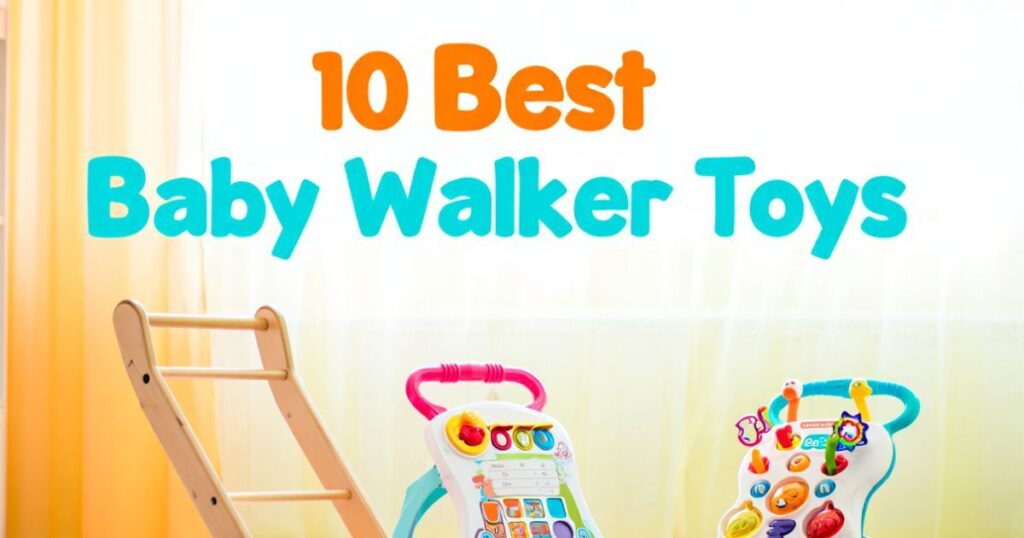
Baby walker toys can help your baby practice walking while keeping them entertained with colorful toys and music. However, expert advice emphasizes that safety is crucial: pediatric associations note that traditional baby walkers have been linked to many injuries and are often discouraged. In this in-depth guide, we explain what a baby walker toy is, key features to look for, and safety tips, and we review the top 10 baby walker toys (push walkers, sit-to-stand walkers, activity centers, and more) of 2026. Each product section highlights what makes that baby walker toy stand out, with pros and cons to help you choose the right one for your little one.
What is a Baby Walker Toy?
A baby walker toy is a device designed to help infants safely explore movement before they can walk independently. It usually includes a frame on wheels with a handle or seat. Some walkers are push walkers, which babies stand behind and push to walk (often wooden or plastic push toys). Others are sit-to-stand walkers, where a baby may sit and later stand to use the walker. Many also have an activity panel of built-in toys, lights, and sounds to keep baby engaged. The goal is to encourage standing and stepping.
These walker toys come in various styles – from simple push-along carts to fully featured interactive walkers with buttons and melodies. By 6–12 months of age (or when head control is solid), babies may begin using a walker toy to practice mobility under supervision.
Parents often wonder if baby walker toys help babies learn to walk. While these toys can entertain babies and give them a chance to strengthen their leg muscles through movement, major pediatric experts caution that walkers do not actually teach walking and can carry safety risks. In the sections below, we’ll discuss both the benefits and precautions of baby walker toys so you can make an informed decision.
Benefits of Baby Walker Toys
Baby walker toys offer several potential benefits when used safely. For example, many parents and guides note that walkers:
- Encourage mobility and muscle strength: Pushing a walker helps babies move their legs and practice standing. This activity can strengthen leg muscles and prepare infants for future walking.
- Foster curiosity and exploration: Being mobile lets babies discover their environment. Walkers allow a baby to move from one area to another, encouraging exploration and problem-solving as they navigate around obstacles.
- Provide entertainment with lights and sounds: Modern baby activity walkers often include toys, music, lights, or shape sorters on the front panel. These features can keep a baby engaged and entertained during play. Walker toys with lights and music turn walking practice into an interactive game, which can make the experience more enjoyable and motivate baby to take steps.
Each of these benefits can contribute to a baby’s development of gross motor skills and coordination. However, it’s important to balance these benefits with safety considerations (discussed next) and follow the manufacturer’s guidelines.
Safety and Developmental Considerations for Baby Walkers
While baby walker toys can be fun, pediatric health experts consistently emphasize caution. Traditional walkers (especially ones that allow infants to move quickly) have been linked to a high number of injuries. For example, the American Academy of Pediatrics (AAP) reports that thousands of children end up in emergency rooms each year due to walker accidents, mostly from falls down stairs or tipping over. In fact, the AAP has recommended banning the manufacture and sale of traditional baby walkers in the U.S. due to these hazards.
Key safety points from expert sources:
- Fall Hazard: Because walkers can move quickly (sometimes at speeds up to 4 feet per second), babies may fall down stairs or collide with hazards before a caregiver can intervene.
- Developmental Impact: Studies show that baby walkers do not help infants learn to walk sooner. In fact, they can delay walking by encouraging babies to move with their toes pointed inward (pigeon-toed) and by reducing the time babies spend on their feet bearing their own weight. Experts note that walkers offer no proven developmental benefit and may hinder natural learning.
- Other Risks: Walkers also raise risks of burns (if baby reaches hot surfaces), drowning (since babies move faster, they can get into pools), and poisoning (reaching poisons on counters). This is why strict supervision and a safe environment are critical.
In summary, while baby walker toys can help practice stepping, they must be used with caution. Always adhere to safety guidelines: use them on flat, baby-proofed floors (never near stairs), keep the volume low on any music, and supervise the baby at all times. Many experts even recommend considering safer alternatives (see below) until the baby is a confident cruiser.
Key Features to Look for in a Baby Walker Toy
When selecting a baby walker toy, it’s important to check certain features to ensure safety and suitability. The best models combine sturdiness with fun. Look for:
- Wide, Sturdy Base: A broad base lowers the walker’s center of gravity, making it less likely to tip over. Models often advertise a stable frame to prevent sideways falls.
- Non-Slip or Braked Wheels: Some walkers include built-in friction pads or brakes to slow movement if the floor is steep or uneven. This helps prevent runaway rolling.
- Comfortable Seat or Handle: If it’s a sit-to-stand walker, the seat should be supportive with padding and ideally machine-washable. For push walkers, a handle at the right height helps baby stand up straight. Adjustable height settings ensure the baby’s feet touch the floor properly.
- Interactive Activity Panel: Many top walkers are also baby activity walkers, featuring buttons, gears, shape sorters, or musical toys on a front tray. These entertain and develop fine motor skills. For example, look for walker toys with music or lights if you want extra engagement – but ensure volume control is available.
- Durability and Materials: Wooden walkers (like the Radio Flyer wagon) or metal frames can be very sturdy. Make sure any paints or plastics are non-toxic. Check if wheels have rubber covers to avoid marking floors.
- Portability (Foldable): If space is an issue or you travel often, a foldable walker is convenient for storage and transport.
- Age/Weight Limits: Always verify the manufacturer’s recommended age and weight. Walkers usually have a minimum (often around 6–9 months, when babies can sit/stand) and maximum limit. Adhering to these guidelines is crucial for safety.
Choosing a model that meets safety certifications (like JPMA-certified in the U.S.) can give extra assurance. In general, any walker toy you pick should feel solid when you test it, have well-built wheels and joints, and include locking or speed-control features if possible.
Types of Baby Walkers
Baby walker toys come in a few main types, each suited to different developmental stages:
- Seated/Activity Walkers: These have a built-in seat with a tray of toys. Baby sits and touches the panel toys; they don’t actually “walk” around but can spin or bounce if on stationary base. They are more like stationary activity centers for interactive play.
- Push Walkers: Simple push-toy walkers (often wooden) let a baby grip a handle and push the walker forward while standing. These support older babies who are starting to pull up. They tend to encourage upright walking practice without a seat.
- Sit-to-Stand Walkers: These are convertible designs (often plastic) that allow babies to sit and play with the front activity panel, then remove the panel or raise it so the baby can stand and push the walker. The Fisher-Price Zebra and VTech models are examples with two modes: “Sit & Play” and “Stand & Walk.”
- 2-in-1 or 3-in-1 Walkers: These versatile walkers transform as your child grows. For instance, a 3-in-1 may serve as a seated activity center, then become a push walker, and eventually convert to a ride-on scooter (as in the Skip Hop Kids 3-in-1).
- Baby Activity Centers (Stationary Stander): Not strictly a walker, but these are included here for comparison. They are high chairs or ring toys that stay in one place but have attached toys and sometimes a bouncy seat. They keep baby stationary and entertained without any rolling.
When deciding on a type, consider your baby’s current abilities and interests. A “push walker for babies” (like wooden wagons) is great once they can stand firmly. An “interactive baby walker toy” with sounds and lights might appeal even earlier to encourage sitting play.
How to Choose the Best Baby Walker Toy
To pick the right baby walker toy for your child, follow these tips:
- Match Age and Size: Only use a walker when your baby can hold their head up and is not ready to walk on their own (usually 6+ months). Avoid walkers if baby is underdeveloped or over the weight limit.
- Assess Safety Features: Check for a wide base, sturdy build, secure seat (if any), and wheel brakes or friction pads. See if it meets safety standards (look for JPMA or ASTM labels).
- Check Adjustability: Height-adjustable walkers ensure baby’s feet touch the floor properly. This supports good posture and natural stepping. Adjustable volume control on musical walkers is also useful to protect baby’s ears.
- Consider Entertainment: Decide how much stimulation you want. A baby activity walker toy with multiple toys, lights, or melodies can keep an older baby engaged. For younger infants, too much noise can be overstimulating. The VTech or Safety 1st models have lots of sound effects, whereas simpler push walkers (like Radio Flyer wagons) offer less distraction.
- Portability & Cleaning: If you travel or have limited space, choose a foldable walker. Look for machine-washable fabric or easy-to-clean plastic, since spills and drool are inevitable.
- Durability: Walkers get a lot of abuse. Read reviews or product info for build quality. Metal or hardwood frames (as with HABA or Janod) are often very durable.
- User Feedback: Check ratings from other parents. Sometimes subtle cons like noise level, assembly difficulty, or wobbly wheels emerge in reviews.
Above all, prioritize safety and your baby’s needs. The goal is a baby walker toy that encourages stepping and play without unnecessary risk.
Tips for Safe Use of Baby Walkers
If you do use a baby walker toy, follow these guidelines to minimize risks:
- Supervise Constantly: Never leave the baby alone in a walker. Always stay within arm’s reach. Walkers can move unexpectedly fast.
- Use in a Baby-Proofed Area: Keep the walker away from stairs, pools, kitchens, or bathrooms. Only allow it in an open, flat room with baby gates and no hazards.
- Limit Walkers to Short Periods: Experts suggest not overusing walkers. Limit time to a few minutes at a stretch to avoid fatigue and encourage natural play.
- Check the Environment: Remove sharp-edged furniture, and make sure electrical outlets are covered. The faster baby moves, the more they can reach.
- Watch and Remove When Needed: Once baby can walk independently or climb out, it’s time to discontinue the walker. Also, if baby seems frustrated or tired, take breaks.
- Use All Features Properly: Engage brakes or friction features when appropriate. For instance, some walkaways have a lever or clip to slow down wheels for carpet use; use them if baby rolls too quickly.
- Follow Guidelines: Use the walker only as the manufacturer intended. If it’s a “sit-to-stand” walker, transition modes as recommended. If it’s a push walker without a seat, don’t force baby to sit in it.
By staying alert and providing the right environment, you can enjoy some advantages of walker play while reducing risks.
Alternatives to Baby Walkers
Given the safety concerns, many parents consider alternative ways to encourage mobility:
- Stationary Activity Centers: These keep baby engaged with toys and music but do not move. Examples include exersaucers or stationary walker seats. They stimulate sensory development without the fall risk.
- Playpens or Gates: A safe, enclosed play area (playpen or gated room) lets babies crawl or walk around freely on their own pace.
- Floor Time and Cruising: Plenty of supervised tummy time, crawling, and holding onto furniture to cruise builds strength and balance naturally. Encourage baby to pull up on a couch or coffee table – this is a simple way to practice standing without a walker.
- Push Toys: Simple push-along toys (without a frame to hold onto, like a push cart or shopping cart) allow practice of walking steps in a controlled way. These don’t seat the baby, so they develop balance.
- Baby Jumpers/Standing Frames: Some parents use jumper seats or standing frames that allow bouncing or pivoting without relocating. These can be fun and safe for short periods.
In fact, pediatricians often recommend these alternatives over rolling walkers. For example, a Tufts Children’s Hospital guide suggests a stationary activity center or letting baby explore furniture safely instead of using a walker. These options can support development with much lower injury risk.
1. Best Overall Baby Walker Toy: KUB Baby & Toddler Push Walker
Why it’s great: The KUB Push Walker is an award-winning, interactive wooden walker designed for toddlers. It has a very wide wheelbase for stability, and a built-in activity panel on the front. As babies push it, they can enjoy activities like a ball goal game, moveable bead chains, and a magnetic shape sorter. BabyGearLab notes that KUB’s subtle colors and ability to turn off sounds are user-friendly. It also features an on/off music switch and a bonus rolling ball. The push handle is height-adjustable to grow with your child.
Features:
- Interactive Playboard: Includes a colorful gear and bead activity board with moving parts, developing fine motor skills.
- Wide, Stable Design: The wide rear wheels and non-slip rubber strip give stability on most floors.
- Low Noise Option: Sounds and melodies can be muted if desired (an on/off switch is provided).
- Natural Materials: Made of durable wood with smooth edges; uses non-toxic paint.
Pros: Very engaging for active toddlers (push walker with toys). Highly rated for stability. Cons: a heavier weight (solid wood), and assembly takes some effort.
KUB is our pick for best overall because it blends sturdy design with entertaining features without overwhelming the baby. The emphasis on adjustable settings and low noise makes it a lasting favorite.
2. Best Budget Baby Walker Toy: VTech Sit-to-Stand Learning Walker
Why it’s great: The VTech Sit-to-Stand Walker is a popular, affordable choice that transitions from a floor toy to a baby push walker. For sitting play, it has a removable electronic panel with lights, music, and buttons. When baby is ready to stand and push, the panel detaches and attaches to the walker frame. This two-in-one design grows with baby.
Features:
- Interactive Panels: Over 70+ activities including shape sorters, spinning gears, piano keys, and a phone handset. Pressing buttons plays learn-along songs and melodies.
- Adjustable Brake: A wheel-braking tension that can be set to limit how far baby can push it, helping control speed.
- Durable Plastic Construction: Lightweight and easy to clean, with a sturdy handle for support. The removable play panel can be played with on the floor.
Pros: Extremely engaging – bells, whistles, lights and buttons keep baby busy. Removable faceplate extends playtime off the walker. It’s widely available and highly rated (often an Amazon’s Choice).
Cons: Sound effects can be loud or repetitive (though volume is adjustable), and the plastic frame can tip if not on carpet.
The VTech walker shines as a music and light walker toy. It covers the bases for learning shapes, letters, and cause-and-effect through its songs and phrases. For the price, it’s a full-featured activity walker, so it’s our top budget pick.
3. Best Wooden Baby Walker Toy: Radio Flyer Classic Walker Wagon
Why it’s great: The Radio Flyer Classic Walker Wagon is a traditional wooden push walker that doubles as a toy storage cart. Designed like a toddler wagon, it has a nostalgic look and high-quality hardwood construction. This walker appeals to parents who want a simple, durable wooden toy with a timeless feel.
Features:
- Solid Wood Build: Sturdy cherry-red hardwood with a black wheel band and faux wood slats. It assembles easily.
- Smooth Foam Wheels: The wheels have an EVA foam cover that ensures quiet, smooth rolling on floors.
- Adjustable Tensioner: It includes a metal spring-on tensioner that audibly clicks to slow down the wagon’s forward motion on hard floors.
- Storage Wagon: The wide wagon body easily holds 3-4 stuffed animals or toys, making it great for pretend play after baby outgrows walking.
Pros: Very strong and stable. Classic design that doubles as toddler’s first wagon. Cons: It’s heavy for an infant; it has no built-in toys or music (silent push walker).
In short, this Radio Flyer wagon is a fantastic choice if you prefer a wooden walker with no plastic. It’s essentially a push wagon for babies that grows into a pull-along toy. The tensioner for safety is a nice touch. As BabyGearLab notes, it’s a “timeless wagon” that’s built to last.
4. Best Toddler Walker Wagon: Radio Flyer Classic Push & Play Wagon
Why it’s great: Also from Radio Flyer, the Classic Push & Play Wagon combines a classic wooden aesthetic with an activity panel for toddler play. It’s essentially the wooden version of the VTech walker concept. This walker is ideal for older babies and toddlers who are ready to cruise.
Features:
- Wooden Frame with Playboard: The handle pushes a wooden frame, and the front panel includes mechanical toys – like gears to spin and a small bell to ring. A detachable shape-sorting cylinder on the side adds play value.
- Dual Wheels: It has four wheels for stability and a metal tensioner (like the classic wagon) to slow down movement on hard surfaces.
- Large Steering Wheel: The front panel features a big wheel toy that babies can turn, promoting hand movement.
Pros: Attractive traditional look with engaging buttons and shapes. Sturdy design meant for years of use. Cons: It’s pricey due to wood, and the assembly is more complex. Some parts (like the bell) can be noisy if baby is sensitive to sound.
According to BabyGearLab, this walker suits toddlers “who like interactive play but loathe noise” – it has simple wooden toys on the front that are entertaining without the flashing lights. If you want a wooden walker wagon with a few engaging elements, this is a great compromise between classic style and fun.
5. Best Grow-With-Me Baby Walker Toy: Skip Hop Kids 3-in-1 Walker
Why it’s great: The Skip Hop Kids 3-in-1 walker stands out for its versatility. It starts as a traditional push walker, then converts into a sit-on scooter, and finally into a standing scooter for older toddlers. This multi-stage design means it can be used from infancy well into toddlerhood.
Features:
- 3-in-1 Function: Transforms from a push-walker (with an activity panel), to a sit & ride-on (sculpted like a police motorcycle with a turning light), and to a scooter (removing the play seat).
- Interactive Lights & Sounds: When used as a scooter, a headlight on the front can flash, and it includes simple engine and police siren sounds.
- Adjustable: The height of the push handle can be changed, and the seat adjusts. A metal footplate helps baby rest legs in ride-on mode.
- All-Terrain Wheels: Large wheels with rubber treads for both indoors and outdoors.
Pros: Extremely versatile and grows with child from ~9 months to ~4 years. Spacious seat and fun scooter design. Cons: Heavier and bulkier, and not ideal for the very first steps (BabyGearLab notes it’s more for children who can already stand and push). Assembly involves many parts.
Skip Hop’s 3-in-1 walker provides long-term value. It’s rated for ages 1–4 years, making it one of the few walkers for toddlers that lasts beyond infancy. The unique scooter mode is playful and safe (non-slip foot pads, wide base). We chose this as the best grow-with-me baby walker toy because of its extended usefulness and interactive design.
6. Best Baby Activity Walker Toy: Fisher-Price Learn with Me Zebra Walker
Why it’s great: The Fisher-Price Zebra Walker is a cheerful, plastic walker toy that does two things: it’s a push walker and an activity center. It’s especially known for its educational songs and removable play panel (on Amazon it’s often listed as “Sit & Play, Stand & Walk”).
Features:
- Two Modes: When baby is seated, the panel acts as a desk with a small flip-page “book” and colorful knobs. When standing, the panel attaches to the walker base for walking play.
- Educational Lights & Sounds: The panel plays learning songs and phrases. It teaches letters, numbers, and counting with engaging sing-along tunes. Buttons light up as they play to attract attention.
- Colorful Design: Bright zebra stripes and friendly colors appeal to babies. The sturdy handle is easy for baby to grip while taking steps.
- Sturdy Base: A wide 4-wheel base supports baby’s steps. Wheels have a brake position so you can lock it partially if needed.
Pros: Very interactive for learning on the go. Lightweight and easy to fold flat for storage. Cons: Some parents note the plastic can feel a bit cheap, and the sounds/music are repetitive.
This fisher-price walker excels at skill-building. It actively encourages fine motor development with its buttons and pages, and gross motor skills as baby steadies and pushes it. Our research highlights that it strengthens motor skills for babies 6 months+. Overall it’s a solid choice for a baby activity walker toy that blends education and fun.
7. Best Traditional Wooden Walker Toy: HABA Walker Wagon
Why it’s great: The HABA Walker Wagon is a German-designed classic wooden walker with modern touches. It offers a robust wooden build and even converts to a stroller. It’s award-winning for quality and safety.
Features:
- 2-in-1 Design: Primarily a sturdy push walker, but the back opens like a little stroller seat for dolls or stuffed animals – adding imaginative play value.
- Adjustable Speed Control: It has a unique wheel speed adjuster (tensioner) so you can dial down the walker’s speed on slippery floors.
- Silicone Wheel Treads: The wheels have silicone treads for smooth, quiet movement indoors or out (even on hardwood).
- Sustainable Materials: Crafted from beech wood and plywood with non-toxic water-based stains. It’s made in Bulgaria under high safety standards.
- Spacious Storage: A built-in rear compartment holds toys or dolls.
Pros: Extremely durable and eco-friendly. Versatile (also serves as a doll stroller). Cons: Very heavy (11+ lbs) so not easy to carry. More expensive than toy plastic walkers.
The HABA Walker Wagon has earned praise for its quality. It’s “top rated” and even mentioned in design/media features. We recommend it as a traditional wooden walker toy – it looks beautiful, feels solid, and its thoughtful features (speed control, stroller function) set it apart. It’s ideal for parents who want a classic design with long-term use.
8. Best Interactive Baby Walker Toy: Melissa & Doug Chomp & Clack Alligator
Why it’s great: For a fun wooden push walker, the Melissa & Doug Chomp & Clack Alligator is a colorful alternative. Instead of music or electronics, it uses clever wooden mechanics and noise. Three alligator heads “chomp” up and down as the baby pushes the toy, making a satisfying click-clack sound that delights toddlers.
Features:
- Chomping Alligators: Each step makes the three painted alligator heads go up and down. This teaches cause and effect as baby walks.
- Colorful Details: The handles have painted cattails and a butterfly and ladybug bead maze for extra sensory play. One wheel even has a spinning fish cutout.
- Solid Build: Made of sturdy wood, it has easy-grip handles and large wheels. It encourages gross and fine motor skills without any plastic parts.
- Fair Trade Material: Crafted from sustainably sourced forest wood and child-safe paints.
Pros: Very engaging and sturdy. “Screen-free” play that older babies enjoy. Cons: It makes noise (the chomping), which can be loud on hard floors. No lights or music, so it’s a more traditional toy experience.
As Melissa & Doug describes, this wooden walker “encourages walking and discovery” with its multisensory design. We find it an excellent choice for a parent who wants an interactive baby walker toy but prefers wood over electronics. It still has plenty of action (the alligators) and builds coordination, making every step exciting for the little one.
9. Best Convertible Baby Walker Toy: Janod Crazy Doggy Cart
Why it’s great: The Janod Crazy Doggy Cart is a whimsical wooden walker/cart that kids love to pull and push. It looks like a little dog-cart: a dog’s head on front, felt floppy ears, and a small bell on a collar. What sets it apart is its silent rubber wheels and large cart bed.
Features:
- Bell on Front: Pushing the cart rings a small bell, which babies find delightful. The dog’s felt ears bounce as it moves.
- Rubber-Coated Wheels: All four wheels are coated with rubber rings so they roll quietly and won’t scratch or mark floors.
- Solid Construction: Made of wood with a metal axle, it feels solid for heavy use. The big cart area in back is perfect for hauling toys or stuffed animals.
- Pull Along Capability: Though often used as a push walker, it also works as a pull-along toy when baby is older (rope can be tied to the front, not included).
Pros: Appealing design that holds baby’s interest. Very smooth and floor-friendly. Cons: No interactive toys on the cart – it’s more a vehicle than an “activity walker.” Assembly and a little maintenance (tightening wheels) may be needed.
In short, the Janod Doggy Cart is an adorable wooden walker that stands out for its cart and dog theme. It combines classic charm with practical features. Parents will appreciate its durability and quiet wheels. It’s our pick for the best baby walker toy that doubles as a cart – sturdy, fun, and easily passed down to younger siblings.
10. Best Activity Walker with Lights and Music: Safety 1st Sounds ’n Lights Walker
Why it’s great: This Safety 1st walker is a seated, activity-style walker designed for babies who can sit and push up. It’s packed with sensory toys and songs, earning it the spot as our best walker with lights and music.
Features:
- Five Engaging Toys: The front panel has five toys that spin, crinkle, rattle, and light up. For example, there’s a light-up drum and animal spinners for tactile fun.
- 12 Songs & Sounds: Plays songs and animal sounds to keep baby entertained as they push or sit. (Volume can be turned down or off on the back.)
- Swing-Out Trays: The padded seat has trays that swing to the side, revealing a large snack tray for snack time or floor play.
- Height-Adjustable: The frame has three height settings so it grows with baby. It also folds flat for storage.
- Safety Strips: It includes non-skid gripper pads under the walker to slow movement on uneven surfaces.
Pros: Very engaging with lights, music, and multiple toys; machine-washable seat pad. Cons: It’s a bit bulky and only for babies who can support themselves. It’s also more of an “activity center on wheels” than a push walker, so it doesn’t truly help walking.
For a baby activity walker toy, this model offers all the bells and whistles. As Safety 1st notes, it “gives your little one plenty to do” while they move. It’s especially nice for keeping baby busy with its lights and sounds while developing motor skills. If you want something for an early walker who likes vibrant activity trays, this is the top pick.
Conclusion
In summary, a baby walker toy can be a fun addition to your baby’s gear collection, but choosing the right one and using it safely is key. Our top picks range from simple wooden push wagons (like the Radio Flyer Classic) to high-tech interactive walkers with lights, sounds, and learning features (like the VTech or Safety 1st model). Each has its strengths – some focus on developmental activities, others on timeless play value. Wherever you live in 2026, you’ll find these models widely available.
Remember to prioritize safety: pick a stable walker with the features you need (brakes, padding, age-appropriate activity) and always supervise your baby closely. If you have concerns, consider safer alternatives like stationary activity centers or supervised floor play. We hope this guide helps you find the perfect baby walker toy for your toddler. Enjoy watching those first steps – and share this guide with other parents as a handy resource!
For more advice on infant products, see our other guides on baby safety and early development, or check out our baby gift guides for related recommendations.
Frequently Asked Questions
Are baby walker toys safe for my baby?
Baby walker toys can be safe if used properly, but experts strongly recommend caution. Pediatricians note that traditional walkers have been linked to injuries (especially falls). To be as safe as possible, use a walker in a baby-proofed area (no stairs), keep the volume low on any music, and always supervise your baby. Some professionals even advise choosing alternatives (like activity centers) over wheeled walkers. Ultimately, the safest use of a baby walker toy is under constant adult supervision and with all safety features (brakes, wide base) in place.
When can I let my baby start using a walker toy?
It’s generally recommended to wait until your baby can sit up steadily and hold their head up on their own, usually around 6 to 9 months old. The baby should not be able to walk or climb out of it on their own. Always check the manufacturer’s age and weight guidelines before using a walker. If the baby can cruise along furniture unaided (pull up and walk sideways), they may be ready to use a push walker for babies. Never place a newborn or a baby with poor neck control in a walker seat.
How do I choose the best baby walker toy for my child?
Focus on safety and fit. Choose a walker with a wide, sturdy base and adjustable height so that your baby’s feet touch the ground comfortably. Look for non-slip wheels or a speed brake if possible. Consider the style your baby will enjoy: a simple push walker for babies if they like moving around, or an interactive activity walker with lights, music, or toys for more engagement. Ensure it’s JPMA or ASTM certified if in the U.S., and follow age/weight limits. Reading user reviews and testing the unit (for stability) can help. Remember to include the primary feature you want – for example, if lights and music excite your baby, pick a walker with those, but ensure volume is adjustable.
Do baby walker toys help babies learn to walk faster?
No, the evidence does not support that. In fact, research shows baby walkers do not speed up walking skills and may actually delay independent walking. They allow a baby to move, but typically in an unnatural stepping motion (often on tiptoes) without building balanced walking skills. Babies actually learn best by practicing on their own feet without support. While walkers can keep baby active, they don’t replace the benefits of floor time, crawling, and supervised cruising along furniture in teaching your child to walk.
What is the difference between a sit-to-stand baby walker and a push walker for babies?
A sit-to-stand walker usually starts as a seated toy. Baby can sit inside it and play with a front activity panel. When they’re ready, the panel becomes a handle, and the baby pushes the unit while standing. It’s good for transitioning from sitting to walking. A push walker for babies is typically just a frame with a handle (often wooden or plastic). The baby holds on and pushes it from behind; there’s no seat. Push walkers are generally for slightly older babies who can stand and walk with support. Both types can be interactive (with toys on the front), but push walkers focus purely on movement, whereas sit-to-stand models double as floor activity centers.
Are interactive baby walker toys (with lights and music) worth it?
Interactive walker toys with lights, music, and toys can be very engaging and can help keep baby entertained while they move. For example, walkers with lights and sounds can stimulate the senses and teach cause-effect (press a button, get a sound). Many of our top picks (like the VTech or Safety 1st walker) include these features. They can encourage extra play. However, make sure the volume can be turned down, since loud noises could startle the baby. Also remember that interactive features are fun, but they don’t replace the need for actual walking practice under supervision. Use them as an entertainment and developmental supplement.
When should we stop using a baby walker toy?
Stop using the baby walker toy as soon as your child can walk well on their own or if they can climb out of the walker. Typically this is around 12 to 15 months old, but it varies by child. Also discontinue use if the baby looks frustrated or hits weight/age limits. At that point, free walking and push-toys (that baby can walk with) are safer and more appropriate. In general, use a baby walker toy only during the early walking stages and move on to other forms of exploration once baby is steady on their feet.
How can I ensure the walker toy stays clean and hygienic?
Keep the walker clean by following care instructions. Many baby walker seats have removable fabric covers that can be machine-washed. Plastic parts can be wiped down with mild soap and water. Disinfect any high-touch spots (especially if baby drools or eats in it). Avoid harsh chemicals on plastic surfaces. Regular cleaning is important since babies often drool on or put walker parts in their mouth. Ensure any cloth parts dry completely to prevent mold. By maintaining cleanliness, you help keep the baby walker toy safe and hygienic for your child.
Each of these FAQs aims to clarify common concerns, using keywords like baby walker toy or related terms. We hope these detailed answers help you use baby walkers responsibly and make a confident choice for your child’s growth and safety.
