
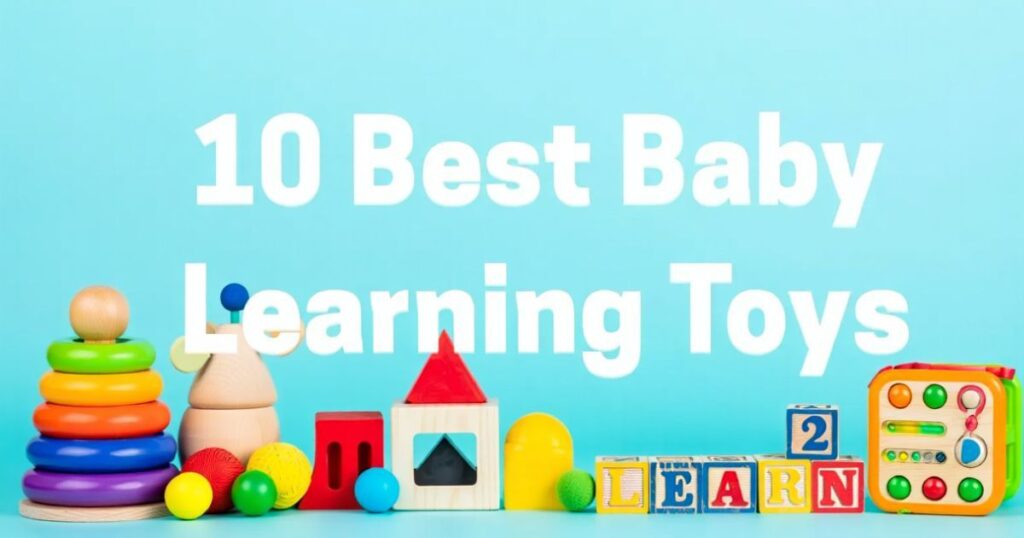
Learning toys are a powerful tool for infants. They support brain growth, fine motor skills, language, and social-emotional learning. In fact, research highlights that “games and toys…contribute to the development of cognitive, motor, psychosocial, emotional, and linguistic skills”. Choosing the right baby learning toys can spark curiosity and joy, laying the foundation for lifelong learning. In this guide, we explore top picks and key advice so you can make informed choices for your little one’s playtime and growth.
Fig: A baby surrounded by colorful toys, exploring shapes and sounds to boost early learning and development.
Why Baby Learning Toys Matter
Educational infant toys aren’t just fun – they drive development. During a baby’s early years, the brain is rapidly forming connections. Toys that stimulate the senses (bright colors, varied textures, and sounds) engage neural pathways for cognition and problem-solving. For example, rattles and soft books introduce infants to visual tracking and cause-and-effect. As babies grow, stacking toys, puzzles, and shape sorters teach hand-eye coordination and reasoning. The American Academy of Pediatrics notes that classic manipulative toys like blocks and puzzles “support fine motor skills and can improve language and brain development”. In short, the best baby learning toys turn play into a learning opportunity at every stage.
Key Developmental Benefits of Educational Toys
Playing with educational infant toys benefits babies on multiple fronts. Sensory toys stimulate sight, sound, and touch, laying a foundation for cognitive growth. For example, tactile fabrics and musical toys help develop sensory processing. Manipulative toys like rings or blocks build fine motor and problem-solving skills. And language toys – such as talking books and alphabet blocks – foster early vocabulary and brain development. Pediatric experts emphasize real interaction too. AAP guidance notes that toys like letters and books “create opportunities for you and your child to interact and have fun together,” reinforcing language and social bonds. Overall, each toy type (stacking, musical, pretend-play) targets skills from motor control to emotional intelligence.
Choosing Safe, Age-Appropriate Toys
When selecting baby learning toys, safety is paramount. Look for non-toxic, BPA-free materials and rounded edges. Many top toys meet rigorous safety standards (ASTM F963, CPSIA). For instance, the Fisher-Price Rock-A-Stack rings are BPA-free and “meet ASTM standards”. Also check recommended age ranges. Newborns (0–6 months) do best with soft, high-contrast toys and books. By 6–12 months, babies enjoy stackers and activity toys that encourage movement and exploration. Always supervise infants, especially with anything small. Following guidelines (like avoiding toys with small magnets or button batteries) ensures play stays safe and fun.
Alphabet and Language Learning Toys
Early exposure to letters and words can boost speech skills. Alphabet toys baby love include colorful letters, talking books, and soft ABC blocks. These encourage infants to learn letter names, phonics, and new words. For example, the LeapFrog Learning Friends 100 Words Book introduces over 100 words in categories like animals and colors. Touching each word plays audio in English and Spanish, combining language learning with bilingual play. Research shows building vocabulary early “builds a solid literacy foundation”. Choose alphabet toys with bright visuals and sounds to keep babies engaged. Singing the ABCs or reading together with a letter toy turns play into a rich learning experience.
Shape Sorters and Puzzles for Problem Solving
Shape sorter baby toys are classic developmental tools. By fitting blocks into corresponding holes, infants grasp shapes and match colors. The 4-in-1 Learning Hamburger stacker (LeapFrog) is one such toy: it lets little ones stack colorful burger layers and pop out shape pieces (square, circle, heart, triangle) for puzzle play. Activities like these develop fine motor and cognitive skills: children learn shape recognition, hand-eye coordination, and cause-effect. Experts note that manipulating blocks and puzzles helps improve language and brain development. Always check pieces are large enough for safety. Starting with large, chunky sorters for 6–18 months then moving to more complex puzzles helps keep learning challenging and rewarding.
Fig: A child fits bright number shapes into a wooden sorting board – a shape sorter toy that reinforces colors, numbers, and fine motor skills.
Interactive Learning Toys (Light, Sound, Action)
Modern interactive learning toys often use lights and music. While AAP cautions that screen-based “educational” apps may not replace real play, many baby toys with lights/buttons enhance learning through play. For example, the Fisher-Price Laugh & Learn Fishbowl has a wobbly base and light-up castle. Rocking the bowl or pressing buttons triggers songs teaching alphabet, shapes, and numbers. This cause-effect feedback is great for developing curiosity and fine motor skills. Similarly, toys like talking phones (e.g., VTech Bluey Ring Ring Phone) or music players let babies enjoy tunes and pretend play, boosting imagination. The key is moderation: choose interactive toys as supplements, and always pair them with caregiver interaction to deepen learning.
Musical Toys for Rhythm and Creativity
Music toys are a fun way to learn. Baby musical toys (xylophones, drums, shakers) develop auditory skills and coordination. The VTech Zoo Jamz Doggy Xylophone is a prime example: toddlers tap colored bars to make sounds and follow light-up sequences. This fosters creativity and hand-eye coordination. Research shows music activities accelerate brain development in language and pattern recognition. Play simple songs, encourage free exploration of sound, and sing along. Even a baby-safe drum can strengthen motor skills. Musical toys are also soothing – and they teach cause and effect as babies learn that their actions produce noise and joy.
Sensory and Fine Motor Development Toys
Sensory-rich toys help babies explore the world by touch and sight. Examples include textured balls, teether toys with ridges, and soft stuffed animals with squeakers or crinkles. These engage a baby’s sense of touch and reinforce neural development. Toys like the classic Fisher-Price Rock-A-Stack use different textures (ribbons, plush fabrics, spinners on rings). Grasping and stacking these rings not only delights infants but “strengthens fine motor skills and problem-solving” as children experiment. Incorporate a variety (quiet rattles, colorful mirrors, soft blocks) to stimulate sensory development. Always ensure materials are non-toxic (BPA-free, PVC-free) and safe to chew – babies love exploring with their mouths at this stage.
Building Social-Emotional Skills Through Play
Did you know playtime also supports emotions? When babies play with others or parents, toys become props for social learning. Role-play items (like the Laugh & Learn Purse with pretend mirror, phone, keys) encourage imitative play. Accessories like toy phones or dolls prompt early “make-believe” conversations, improving communication. Even simple group activities like stacking blocks with a sibling teach sharing and cooperation. As the North Clinics study noted, play makes children “self-confident, creative, and happy”. By choosing toys that invite peekaboo, singing, or pretend scenarios, parents foster emotional growth alongside cognitive skills.
Montessori-Inspired and Open-Ended Toys
Montessori and wooden toys emphasize simplicity and discovery. Open-ended sets (like wooden blocks, puzzles, or sensory baskets) allow babies to play in many ways. Such toys encourage creativity and independent thinking. For example, a wooden block set can be stacked or used as pretend objects; colorful stacking blocks can also hide surprises inside. Experts highlight the value of non-electronic, classic toys. NAEYC notes that simple wooden toys promote exploration more than flashy electronic gadgets. When shopping, seek educational infant toys that are well-made and free from small parts. Montessori-style toys (natural materials, gentle colors) often meet these criteria, making them ideal for early learning.
How to Choose the Right Baby Learning Toy
With so many options, how do you pick a toy? First, match the toy to your baby’s age and interests. Check recommended ages and think “Is this challenging enough, but not too hard?” Look for versatility – toys that grow with the child. For example, a walker like VTech’s Sit-to-Stand can become an activity table later. Prioritize real-world learning: toys featuring letters, numbers, and shapes come alive through play. Always read reviews (parents often note durability and engagement). Seek products from reputable brands known for safety (LeapFrog, Fisher-Price, VTech, Melissa & Doug). And remember: the best baby learning toys are those your child reaches for with excitement and that become springboards for interaction and learning at home.
Safety and Certification for Baby Toys
Safety certifications are essential. All the toys on our list meet or exceed standards like ASTM F963 and CPSIA. For instance, LeapFrog reports ASTM compliance for its toys, and Fisher-Price toys are BPA-free. Look for labels: BPA-free, PVC-free, phthalate-free, and “Meets ASTM Standards.” Avoid any toys with small detachable pieces until baby is older. Also ensure batteries and chargers are secure. The CPSC (Consumer Product Safety Commission) recommends checking for recalls (e.g., via SaferProducts.gov). In summary, pick well-made toys from trusted manufacturers to keep your baby safe while learning.
Top 10 Baby Learning Toys – Detailed Reviews
1. LeapFrog Touch & Learn Wooden Activity Cube – A multi-sided wooden cube packed with activities. Toddlers slide, push, and spin parts on each face, discovering shapes, colors, numbers and music. With five sides of interactive play, it builds fine motor skills and early concepts. (Recommended 12+ months; uses 2 AA batteries; FSC-certified wood.)
2. Fisher-Price Sensory Rock-A-Stack – This classic stacking toy has five rings with different textures (ribbons, plush, spinners, etc.). Babies grasp, shake and stack the rings on the wobbly base, learning about sizes and colors while improving hand-eye coordination. Its engaging sensory variety encourages exploration. (Ages 6+ months; BPA-free plastic.)
3. Fisher-Price Laugh & Learn Going Places Purse – A pretend-play learning handbag for babies 6+ months. Open the toy purse to find accessories (phone rattle, mirror, keys) and buttons that play lights, songs and phrases. It introduces shapes, colors, numbers and opposites with over 30 songs and phrases. Fine motor skills grow through opening clasps and taking accessories in/out. Durable and travel-friendly.
4. LeapFrog Learning Friends 100 Words Book – A bilingual touch-sensitive book that teaches over 100 words. Touching images plays recordings of animals introducing words in English/Spanish. It covers categories like animals, food and opposites, and includes a light-up star for songs. This book encourages early language and vocabulary. (Ages 18+ months; requires 2 AA batteries.)
5. VTech Zoo Jamz Doggy Xylophone – A musical toy that kids can pull along like a puppy. Toddlers tap the colorful keys to create sounds and light-up patterns. It offers three play modes: free play, learned songs, and guided play with flashing lights. Playing music builds color and number recognition as each bar corresponds to notes. It’s a hands-on way to inspire creativity and introduce rhythm. (Ages 1.5–4 years; 2 AA batteries.)
6. LeapFrog 4-in-1 Learning Hamburger – A stacking puzzle with a fun twist. Colorful burger pieces spin on a spiral pole. Each layer has a built-in shape puzzle (circle, square, etc.) to take out and fit. Pull the spiral for ring-toss play. Through stacking and spinning, children learn shapes, colors and motor skills. Eco-friendly too – made from reclaimed plastic. (Ages 1–3; no batteries needed.)
7. Eric Carle Hungry Caterpillar Soft Book – A cuddly cloth book themed on the classic story. It features crinkly pages, a teether on the cover, and flaps about numbers (1 to 5). Babies can chew the safe PVC-free fabric and practice counting fruit illustrations. This soft book boosts sensory development and introduces numbers in an engaging way. (Suitable from birth; machine washable, BPA-free.)
8. Fisher-Price Little People World of Animals See ‘n Say – An animal-themed talking toy. Spin the arrow to point at farm and wild animals, then pull the lever to hear the animal’s name and sound. It even has a quiz mode and sing-along tunes. This classic See ‘n Say helps toddlers learn animal names and practice fine motor skills as they turn the dial. (Ages 18+ months; uses 2 AA batteries, included.)
9. Fisher-Price Laugh & Learn Magical Lights Fishbowl – A motion-activated cause-effect toy. Little ones put in plastic fish and rock the bowl; the castle lights up with music. It has three big buttons to learn ABC’s, shapes, and numbers via song. Grasping the fish and pressing buttons strengthens coordination. The fishbowl concept teaches cause and effect while entertaining with lights and sounds. (Ages 6–36 months; 3 AA batteries.)
10. VTech Baby Einstein Magic Touch Ring – A soft textured ring toy. Different colored balls on the ring trigger classical music and fun melodies when tapped or pressed. It introduces shapes, colors and tunes in a non-electronic format. The sensory balls also soothe teething. (Ages 6+ months; no batteries; tracks developmental milestones of sensory play.)
Each pick above is well-reviewed by parents and meets safety standards. They’re interactive, educational infant toys that grow with your child. Now let’s answer some common questions about baby learning toys.
FAQ – Baby Learning Toys
Q: What are baby learning toys and why are they important?
A: Baby learning toys are playthings designed to teach infants basic concepts (colors, letters, shapes) and skills (motor, cognitive). They’re important because play is children’s work – toys stimulate brain growth and development. For instance, stacking rings build fine motor skills and problem-solving, while talking books expand vocabulary. Learning toys engage babies in cause-and-effect and imaginative play, laying a strong foundation for future learning.
Q: At what age should I introduce learning toys to my baby?
A: You can start right from newborn stage with simple sensory toys. Soft rattles and high-contrast black-white toys suit 0–6 months. As early as 6 months, babies enjoy early learning baby toys like stackers and shape sorters. Always check age recommendations. By their first birthday, most babies can explore blocks, puzzles, musical toys, and interactive books. Choose toys that match the baby’s current skills to keep them learning but not frustrated.
Q: How do educational infant toys help brain development?
A: They stimulate multiple senses and skills. For example, brain development toys for baby like colorful shape sorters teach spatial reasoning and decision making. Musical toys enhance auditory processing. Touch-and-feel books help the baby learn textures and social cues when parents read along. Research notes that interactive play promotes language centers and problem-solving pathways. In short, learning toys create neural connections by letting babies explore concepts safely.
Q: What should I look for when buying baby learning toys?
A: Look for age-appropriate, sturdy toys made of safe, non-toxic materials. Check safety certifications (ASTM, CPSIA) and that small parts are avoided for infants. Consider educational content: Does it teach colors, letters, numbers, or encourage creativity? Toys should be engaging (bright colors, sounds) but not overstimulating. Durability and easy cleaning are pluses. Finally, choose toys with multiple uses – e.g., an activity table that becomes a puzzle station – to get long-term value.
Q: Can learning toys be fun and not just educational?
A: Absolutely! The best learning toys make education feel like play. Look for toys with songs, lights, or friendly characters. For instance, the Laugh & Learn Purse hides learning behind a pretend-play tea party, and babies enjoy chasing a flashing xylophone. When children are having fun, they learn best. Mixing learning with playful activities ensures the toys stay entertaining, so your baby stays engaged and happy while developing new skills.
Q: Are wooden or classic toys better than electronic ones?
A: Both have value. Classic toys like wooden blocks, puzzles, and cloth books encourage imagination and hands-on learning without screens. They are usually durable and safe. Electronic or light-up toys can introduce complex concepts (like bilingual songs or math) and hold interest with music. Experts advise a balance: limit screen time but use interactive gadgets as supplementary tools. Combining simple wooden toys (for creativity and motor skills) with a few well-chosen tech toys (for language/senses) offers a rich learning mix.
Q: How can I get the most out of baby learning toys?
A: Be interactive! Sit with your baby during play. For example, if they’re using an alphabet toy, say the letters together. Ask questions (“Where is the red ball?”) and show them how to explore the toy. Rotate toys to keep interest. Also, incorporate toys into daily routines: sing while they stack rings, count steps while playing with blocks. Positive reinforcement (“Good job!”) encourages them. Remember, you are the best teacher, and learning toys work best with your involvement and love.
Conclusion
Choosing the best baby learning toys means picking safe, engaging tools that match your child’s age and interests. From colorful shape sorters and interactive books to musical instruments, each toy on our list is crafted to boost early development. By playing with these educational infant toys, babies enhance their cognitive, language, and motor skills in joyful ways. Remember to follow safety guidelines and supervise play. We hope this guide helps you find the perfect toys for your little learner. Share your experiences or ask more questions below – let’s keep the conversation going and ensure every child gets the best start in learning through play!
