
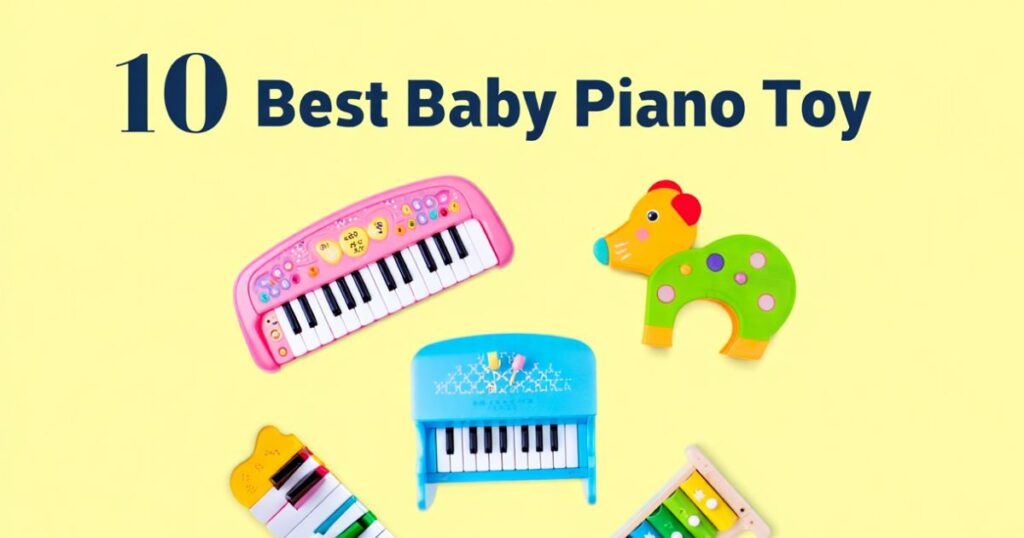
Early musical play can give babies a head start. According to pediatric experts, exposing infants to music supports brain development. A baby piano toy provides songs, lights, and buttons that teach cause-and-effect as babies press keys. Many models feature bright, light-up keys and nursery melodies to engage little ones. In this guide, we cover the 10 best baby piano toys of 2026, highlighting their features, safety, and developmental benefits. Whether you want a simple key-play piano or an interactive music keyboard baby toy, our reviews and tips will help you find the right instrument to spark your child’s love for music.
Benefits of Baby Piano Toys
Music and movement support many areas of infant growth. The CDC recommends singing and playing music with babies because it “helps their brain development”. In practice, baby piano toys engage multiple senses: pressing a key produces sound and often flashes a light. This multi-sensory feedback helps babies learn cause and effect. UNICEF notes that making music requires fine motor skills and activates multiple brain regions, boosting coordination, memory, and early literacy skills.
Playing a piano toy also builds fine motor coordination as infants reach for and press keys. As they listen to songs or animal sounds on the toy, they pick up early language patterns and rhythms. In short, a musical piano toy for baby stimulates cognitive, motor, and auditory development in a fun, hands-on way.
Key Features to Look For in Baby Piano Toys
When shopping for a musical piano toy baby, consider age-appropriate design and interactive features. Light-up keys and colorful buttons make the toy more engaging. For example, the EazyTech First Piano has illuminated “do-re-mi” labeled keys that guide infants’ fingers and teach note placement. Multiple play modes are useful – many top models include demo songs, animal sounds, or learning modes. The Fisher-Price Silly Sounds Light-Up Piano offers 8 numbered, light-up keys with music, plus modes that introduce colors, shapes, and counting.
Safety features are also key. Look for BPA-free, durable plastics and smooth, rounded edges to meet toy safety standards. Volume control is a valuable feature: adjustable sound levels protect tiny ears from loud music. Finally, portability can be a bonus – a built-in handle or compact size makes the keyboard easy to carry for travel or daycare.
Choosing the Right Baby Piano Toy
The ideal piano toy depends on your baby’s age and interests. For younger infants (6–12 months), a simple, sturdy piano with large keys and bright lights is often best. Older babies and toddlers might enjoy more complex features like detachable music cards or additional instruments. Decide whether you want electronic vs. wooden designs: electronic pianos (like most listed here) offer lights and sounds, while wooden pianos (e.g. Melissa & Doug) are durable screen-free toys. Also consider battery vs. plug-in – battery-powered keyboards are more portable.
Check the age range and skill level: for instance, Melissa & Doug’s Learn-to-Play Pink Piano is geared to ages 3+, while Baby Einstein models start at 6 months. Reading reviews and checking the manufacturer’s recommendations will help. In sum, pick a baby piano toy with features that match your child’s developmental stage and your lifestyle (travel-friendly, educational modes, etc.).
Safety Standards for Baby Musical Toys
Safety is paramount with infant toys. Top baby piano toys comply with international safety standards and often explicitly note it. For example, the Tarmeek baby piano is BPA-free, non-toxic, and meets strict safety guidelines. The Teamd piano likewise uses safe plastic with burr-free edges to avoid cuts. Always ensure the toy has no small parts that could detach. Look for certifications like ASTM F963 (USA) or EN71 (EU) on the packaging if available. Volume levels should be suitable for babies: many toys include three-level volume control to protect hearing. In short, choose a baby keyboard toy made from child-safe materials, with smooth edges and sound controls, to keep musical play both fun and safe.
Developmental Learning with Baby Keyboards
A baby piano toy can double as an early learning tool. Many keyboards teach basic concepts while entertaining. For example, the Fisher-Price piano’s light-up keys are numbered and color-coded to teach counting and colors as babies play. The Tarmeek 3-in-1 piano has a “Learning Mode” for numbers and animal sounds, building vocabulary and number recognition. Pressing keys strengthens hand dexterity and coordination in a tactile way. Over time, babies begin to anticipate melodies and may start imitating tunes, which helps memory and creativity.
Integrating piano play into daily routines is easy – combine music time with dancing or storytime to reinforce learning. In short, incorporating a musical piano toy into playtime supports early math, language, and fine motor skills in a natural, enjoyable way.
Encouraging Musical Play with Baby
Make piano playtime interactive and fun to boost its impact. Sit with your baby at the keyboard and demonstrate how to press keys. Encourage babbling or copying simple tunes. Using soothing praises or claps when your baby hits a note reinforces exploration. Some pianos have “record and play” modes (like the Spark Rolo’s Keyboard) that let baby record their tune and hear it back, which fascinates them. You can also integrate songs you sing together with the piano’s instrument sounds.
Even a few minutes of guided play each day can improve engagement: for example, if the piano offers animal sounds, ask “Where is the dog sound?” to add a question-and-answer element. The goal is to make music play feel like a game – babies learn best when they enjoy themselves and get positive feedback.
Budget vs Premium Baby Piano Toys
Baby piano toys are available at a wide range of prices. Basic electronic keytops often cost under $20, while feature-packed models can be $50 or more. Budget models usually cover the essentials: a few light-up keys and simple tunes. For instance, Tarmeek’s 3-in-1 piano is an inexpensive choice around $10–$15, offering lights, music, and animal sounds. Premium toys (like some Fisher-Price and Baby Einstein models) may include more play modes, better sound quality, and sturdier construction. The Melissa & Doug wooden piano is a higher-end, screen-free option built to last. Decide based on how often your baby will use it: if it’s the first baby piano, a lower-cost model can test your child’s interest.
If music play is a priority, investing in a better-featured or colorful keyboard might be worth it. Either way, even budget-friendly baby piano toys can provide valuable learning, as long as they include the interactive features mentioned above.
Care and Cleaning of Baby Piano Toys
Since babies love to drool and touch everything, choose a piano toy that’s easy to clean. Most electronic pianos can be wiped down with a damp cloth. For example, Baby Einstein’s care instructions advise: “Clean before use with a damp cloth and mild soap. Air dry. Do not immerse in water”. Always remove batteries before cleaning to avoid damage. Some plastic keys may get sticky, so gentle soap and water work best. Avoid harsh chemicals that could strip the finish or leave residue. Check for removable straps or covers on speakers and clean those too. Finally, let the toy fully dry before reassembling. Keeping the piano toy clean helps prevent germs and keeps the buttons working smoothly.
1. Tarmeek Baby Piano 3-in-1 (Ages 6–12 Months)
The Tarmeek Baby Piano is a compact, budget-friendly option with 3 modes (Piano, Animal Sounds, Voice Mode). It features 12 keys and bright flashing lights, along with 6 animal sound buttons. The lights and simple melodies help keep babies engaged. Parents note the materials are BPA-free and non-toxic, meeting safety standards. It also has an adjustable volume control (three levels) to protect little ears. The Tarmeek’s small size and lightweight design (only 8 inches wide) make it easy to carry and fit on a high chair.
This piano runs on batteries and is praised for its durability. Overall, it’s a great entry-level musical piano toy for infants around 6–12 months, providing light-up keys, songs, and educational sounds at an affordable price.
2. Teamd Baby Piano Toy (Ages 6–18 Months)
The Teamd 5-in-1 Baby Piano offers multiple play modes: it can function as a stand-alone piano, a piano with animal sounds, a music box mode, and more. Each key press lights up the piano and plays a note, helping attract baby’s attention. The piano has cute animal characters on top and soft lights on the keys. It’s made of durable, non-toxic plastic with rounded edges for safety. Unlike many pianos, the Teamd model can detach from its stand, allowing floor play or use as a handheld toy. Parents appreciate that it’s easy for small hands to use and that it develops hand-eye coordination.
With its engaging lights and sounds, the Teamd piano toy is a solid mid-range choice for young infants.
3. Fisher-Price Silly Sounds Light-Up Piano (Ages 6–36 Months)
A classic pick, the Fisher-Price Silly Sounds Light-Up Piano is highly rated by parents. It features 8 numbered keys with matching lights, plus four play modes: play piano notes, duck and cow sounds, and song playback. Slide the mode selector to switch functions easily. The large keys light up in different colors to guide little fingers. This piano has friendly animal buttons and over a dozen built-in songs and phrases that introduce animals, colors, shapes and numbers as children play. It’s made to be lightweight with an easy-carry handle, encouraging on-the-go play. The Silly Sounds Piano is known for its durability and clear sounds. It’s an excellent all-around choice that grows with the child (2 AAA batteries included).
4. Melissa & Doug Learn-to-Play Piano (Ages 3+ years)
For older toddlers, the Melissa & Doug Learn-to-Play Wooden Piano is a sturdy, kid-friendly option. Although designed for ages 3 and up, some parents introduce it around 2 years. It has 25 color-coded keys (two octaves) and a removable music stand. A colorful songbook with simple tunes is included, teaching kids to play basic melodies. This toy has a solid wood construction (no batteries required), making it safe and long-lasting. The keys are full-size and fairly easy to press, which helps develop finger strength and coordination.
As a mini grand piano, it also encourages imaginative play (kids pretend they are concert pianists!). While it lacks electronic lights or sounds, many parents love it for screen-free, creative music play. It’s a higher-end toy that can serve as a child’s first “real” piano instrument.
5. Baby Einstein Cal’s First Melodies Magic Touch Piano (Ages 6–36 Months)
Baby Einstein’s Magic Touch Piano is a wooden keyboard that plays notes without moving parts: just gently touch any key with a finger and it sounds. This unique “magic touch” feature means it’s easy for infants to get music out of it. The toy comes with three color-coded music cards. By following the dots on these cards, babies can play six classical melodies, choosing instrument sounds via a mode button (piano or xylophone). The piano also features playful animal voice sounds (dog and cat) to delight babies. Designed for ages 6 months to 3 years, it introduces cause-and-effect and early music skills.
Constructed with smooth wood and sturdy plastic, it meets safety standards. The Magic Touch piano is highly recommended for its innovative design and the gentle learning curve it offers very young musicians.
6. Baby Einstein Take Along Tunes Musical Toy (Ages 3–36 Months)
This portable take-along keyboard is a beloved bestseller. The Take Along Tunes toy is battery-powered with a large push-button on top. Each press plays one of 10 classical melodies (Mozart, Bach, etc.) and a light show dances across the front. It also features a caterpillar bead handle that doubles as a grip or teether, making it easy for babies to carry. Volume control lets parents adjust sound. This simple piano toy teaches babies about music and cause and effect. It’s great for travel and has earned awards for design.
While it doesn’t have multiple modes, its straightforward play – press button, hear music, see lights – makes it very engaging for infants starting around 3 months. Many families keep this in the diaper bag as a “go-to” first musical instrument.
7. Spark Create Imagine Rolo’s Keyboard (Ages 2+ Years)
The Spark Imagine Rolo’s Keyboard is aimed at toddlers (suggested 24+ months) and packs advanced features. It includes 24 light-up keys, 22 demo songs, 7 kids’ tunes, 5 instrument sounds and 5 tempo beats. It offers interactive modes such as “Sing With Puppy,” a one-key melody playback, record/playback mode, and even a microphone for sing-alongs. Bright puppy character buttons and colorful lights make the keyboard appealing. Volume control and a sturdy design ensure durability. While it’s for older toddlers, it excels at encouraging creative music play: children can record their own melody and play it back, teaching cause-effect and sequencing. Rolo’s Keyboard is a premium pick for when your child is ready for a full-featured musical instrument.
8. VTech 5-Colorful Piano Buttons Musical Rhymes Book (Ages 6+ Months)
This hybrid toy combines a storybook with a mini piano. The VTech Musical Rhymes Book has 5 piano keys along the bottom edge. Each key plays music and introduces an instrument sound or color. The book’s pages feature familiar nursery rhymes and twist/sliding pieces for interactive play. A light-up star flashes along with the sounds. In Music mode, singing along with classic rhymes helps build language and listening skills. In Learning mode, the piano keys introduce basic vocabulary (colors, animals) while the pictures reinforce meaning.
babies 6 months and up, this toy delivers music play in an engaging, educational format. Parents appreciate that it is lightweight and foldable (book mode) yet offers a simple 5-key piano for sensory fun.
9. EazyTech Kids First Piano Learning Toy (Ages 1+ Years)
The EazyTech First Piano is a compact (about 7″ wide) handheld keyboard designed as a baby’s first piano. It features Do-Re-Mi key labels printed on the keys and light-up notes that illuminate to guide toddlers’ finger placement. The mini keyboard comes in bright pink, green or red. It’s battery-operated, with light guidance that helps children learn melodies. Pressing keys strengthens finger dexterity and coordination. Its rounded edges and ABS plastic make it safe for little ones. Though simple, this toy focuses on fine-motor skill development and early music education concepts. Because it’s so portable, babies can take it anywhere – a true “piano for infants” that introduces rhythm and melody concepts in a child-safe, easy format.
10. Fisher-Price Glow & Grow Kick & Play Piano Gym (Newborn+)
For very young babies, the Fisher-Price Glow & Grow Kick & Play Piano Gym turns floor time into musical play. It’s a soft activity mat with a detachable light-up piano console at one end. The gym has a high-contrast arch with 10 linkable toys and three Smart Stages learning levels (over 85 songs, sounds and phrases). In Stage 1, baby hears simple tunes and animal sounds. Stage 2 adds learning songs about animals, letters and shapes. Stage 3 lets older infants control the piano. The removable piano module has 5 multi-colored, light-up keys and four settings including freestyle mode.
Babies kick or press the piano to activate music and the popular song “Maybe” by the Phonics Monkey. As a soft mat with loops for attachments, it’s machine washable for easy cleaning. This 4-in-1 gym grows with the child, making it an excellent long-term musical investment from newborn through toddler.
Conclusion
A baby piano toy is much more than entertainment – it’s a tool for early learning and play. We’ve shown that even simple keys-and-sounds keyboards can strengthen a baby’s motor skills, listening ability, and understanding of cause and effect. When choosing the best baby piano toy for your child, consider the features that match your goals (lights, songs, learning modes) and check that it meets safety standards. Whether you opt for a light-up plastic keyboard or a classic wooden piano, the key is to encourage your baby’s curiosity and joy in music.
These top 10 picks offer a variety of ways for infants and toddlers to explore sound, rhythm, and melody in a safe, playful way. We hope this guide helps you pick a musical toy that will delight your baby and support their development. Enjoy the music-making together and watch your little one’s confidence grow one note at a time!
FAQ
What age is a baby piano toy suitable for? Most baby piano toys are designed for infants around 6 months and up. For example, the Baby Einstein Cal’s First Melodies piano is recommended for ages 6–36 months. Fisher-Price’s light-up piano is geared toward babies 6 months to 3 years. Always check the manufacturer’s age recommendation, but in general these keyboards are best once a baby can sit up and press keys (about 6+ months).
How do baby piano toys benefit my child’s development? Playing with a baby piano toy stimulates early learning. Studies show that music activities help brain development in infants. When a baby presses keys and hears sounds or sees lights, they learn cause-and-effect and improve hand-eye coordination. The melodic tunes and songs can introduce basic concepts like numbers and colors. Over time, this play builds vocabulary, concentration, and even early math skills, since musical patterns often relate to counting and rhythm. In short, a baby piano toy provides fun sensory play that supports cognitive and motor growth.
Are baby piano toys safe for infants? Yes, reputable baby pianos are built for safety. Look for toys labeled BPA-free and free of small parts. For instance, the Tarmeek piano uses non-toxic plastic and meets strict safety standards. The Teamd piano also has rounded edges and smooth finish to prevent injury. Many toys include volume controls to keep sounds at a safe level. Always supervise play and regularly check that batteries are secure. By choosing a piano toy from a trusted brand and following age guidelines, parents can be confident it’s safe for babies to explore.
What features should I look for in a baby piano toy? Key features make a difference. Lights and sounds grab a baby’s attention, so models with light-up keys (like the EazyTech piano) are great. Multiple play modes keep babies engaged; look for demo songs, animal sounds, or learning modes. Educational features are a bonus: the Fisher-Price piano’s keys are numbered and colored to teach counting and shapes. Also check for safety features: volume control and sturdy, non-toxic construction. An easy-carry design or non-slip base can also be helpful. Choose a toy that is age-appropriate, durable, and engaging.
What is a light-up piano baby toy? A light-up piano baby toy is a small keyboard that has integrated lights on or around the keys. When the baby presses a key or plays a song, the corresponding key lights up in color. This visual feedback captivates babies and teaches cause and effect. For example, the Tarmeek baby piano “features soft flashing lights” with music and animal sounds to develop rhythm and color recognition. The lights make the toy more interactive and help hold a young child’s interest as they experiment with sounds.
Should I look for volume control on a baby piano toy? Yes. Since baby ears are sensitive, having adjustable volume is important. Many baby pianos include volume settings or a mute option. For instance, the Tarmeek 3-in-1 piano has a three-level volume adjustment to protect baby’s hearing. Using lower volume or headphones can also help for longer play sessions. When shopping, check if the toy’s sound can be turned down or off. That way, you can keep the music fun and at a safe level.
How do I clean a baby piano toy? Keep the piano toy germ-free by wiping it down regularly. Most electronic pianos can be cleaned with a damp cloth and mild soap. For example, the Baby Einstein piano’s care instructions say to clean with a damp cloth and mild soap, then air-dry (do not immerse in water). Always remove batteries before cleaning. For wooden pianos (like Melissa & Doug’s), spot-clean surfaces gently. Avoid harsh chemicals or soaking the toy. Cleaning after messy play or teething ensures the toy stays safe and in good working order.
