
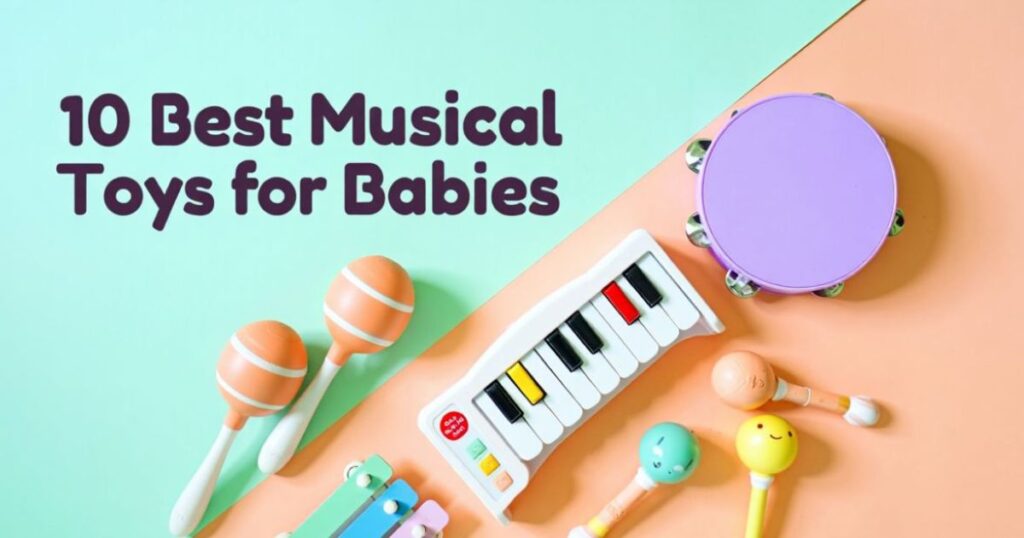
Babies are naturally drawn to sounds and rhythm, making musical toys for babies an excellent choice for playtime. From rattles and xylophones to mini keyboards and drum sets, these baby music toys provide entertainment and learning. Research shows that early exposure to music and sound helps infants’ brain development – for example, baby music play stimulates memory, language, and motor skills. UNICEF reports that making music activates multiple brain regions (fine motor, language, even math skills) and improves cognitive abilities.
simple instruments engage babies’ hearing and vision: a child banging on a xylophone learns cause and effect and hand-eye coordination, while pop-up lights capture attention and encourage exploration. In short, the right musical toy can jump-start a baby’s love of music and support early learning.
Benefits of Musical Toys for Babies
Musical play boosts infant development on many fronts. Studies find that engaging in music and rhythm supports motor, cognitive, and language development for babies and toddlers. For instance, “musical toys support motor skills, early language development, and curiosity” in 9–12 month-olds. Kido Bébé notes that baby music toys stimulate multiple brain areas at once – aiding memory, cause-and-effect understanding, and both fine and gross motor skills. Infants enjoy cause-and-effect learning when pushing buttons or hitting keys and hearing a sound. Even more, UNICEF highlights that listening to and making music yields changes in babies’ brains and promotes better memory, cognitive skills and auditory processing.
In practice, simple musical play can improve infant concentration, social-emotional skills (smiling, dancing) and early communication. In short, musical toys are not just fun – they are educational sound toys that spark creativity and brain growth.
Key benefits include:
- Sensory Stimulation: Bright lights and melodies (for example, a light-up piano) engage a baby’s sight and hearing. Musical toys like the Munchkin Mozart Cube even flash lights in time with the tune.
- Motor Skill Development: Playing with keys, drums or rattles helps tiny fingers and hands learn coordination. UNICEF notes that making music requires fine motor action and bridges multiple brain areas. A child striking a xylophone bar or shaking maracas is practicing muscle control and timing.
- Language and Cognitive Growth: Musical patterns and songs help babies detect rhythms in speech. Research shows infants exposed to music have improved neural processing of speech sounds. Singing along or repeating sound sequences can even accelerate language learning.
- Emotional & Social Play: Music is mood-lifting and social. A singing toy that plays lullabies or nursery rhymes can soothe a fussy baby or encourage parent–child bonding during playtime. Interactive songs foster responsiveness (cooing and babbling along).
- Cause-and-Effect Learning: Many musical toys teach that actions have consequences. For example, pressing a piano key produces a note, or shaking a rattle yields a sound. This cause-effect understanding is a fundamental cognitive step for infants.
Key Features of Baby Musical Toys
When choosing a music toy, look for age-appropriate, safe features. Durable, non-toxic materials and simple designs are best. For instance, the Manhattan Toy Winkel’s soft looped design is BPA- and PVC-free to meet safety standards. Bright colors, chunky shapes, and easy-to-press buttons work well for little hands. Many baby music toys include volume control or soothing tones to protect sensitive ears. Others have engaging lights or moving parts: the Munchkin Mozart Cube has illuminated instrument buttons, and Hape’s Pound & Tap Bench features wooden balls that roll onto a slide-out xylophone when tapped. Removable parts (like simple drums, sticks or mallets) can encourage active play, but ensure nothing small or detachable can be swallowed.
Other useful features include:
- Light-Up Elements: Toys with soft LED lights attract attention. In the Mozart Magic Cube, for example, music keys flash in rhythm with the music. However, ensure any lights are not too bright.
- Interactive Controls: Large buttons or switches that babies can safely manipulate introduce cause-and-effect play (e.g. pressing a button changes the tune). Toys often have multiple modes (songs, sounds, learning mode). See the LeapFrog Learn & Groove Table, which lets children switch from a music mode (with nursery songs and instrument sounds) to a learning mode (teaching shapes, letters).
- Volume and Sound Quality: Loud noises can upset infants, so quieter toys or those with volume settings are preferable. Always supervise, as Hape warns with its Pound & Tap bench that banging too close to ears can be harmful. Generally, musical toys for babies should produce gentle melodies rather than blaring sounds.
- Age Range and Safety Labels: Check recommended ages. Many toys are labeled 6–24 months or 1+ years. For newborns, start with simple rattles or sound-blocks; by 6+ months, crinkly musical books and lights can be introduced.
Choosing Age-Appropriate Musical Toys
Not all musical toys suit every stage. For very young babies (0–6 months), soft toys that play a lullaby or gentle hum are ideal. Toys like a plush rattle with lights (e.g. a musical cube with simple melodies) captivate newborns’ senses. By 6–12 months, babies can press buttons more purposefully – so look for toys like mini keyboards or xylophones with easy keys and catchable balls. As they grow into 1–2 years, they can enjoy multitiered toys (tables with drums, flips, and piano sounds) and simple singing activities. Always ensure the toy’s complexity (buttons, modes, patterns) matches the baby’s development: overly complicated gadgets may frustrate a toddler, while too-simple toys may bore an older child.
If in doubt, choose versatile toys. For example, the Fisher-Price Record & Learn Player works for infants and toddlers by offering multi-level play: different “albums” play numbers, letters and songs, and as baby grows, parents can spin records and engage in pretend DJ play. Likewise, multi-function tables (like the LeapFrog music table) adjust from floor play to standing play, extending their usefulness.
Light-Up Musical Toys: Engaging Baby’s Senses
Light-up musical toys combine sight and sound to hold a baby’s interest. Research shows that flashing lights synchronized with music can strengthen babies’ auditory-visual connections. For example, Munchkin’s Mozart Magic Cube has animal buttons that light up and five instrument sounds; pressing any button adds that instrument to the orchestra while lights flash. The colorful, moving lights can captivate a baby’s attention and reinforce cause-and-effect (press button = see light + hear sound). Similarly, some baby pianos and drummers have illuminated keys or pads (the VTech KidiBeats Drum’s pads glow with LED lights).
Light-up features should be used judiciously: ensure the lights are gentle and not overwhelming. Overall, light-up musical toys are excellent for sensory stimulation, making playtime visually exciting while teaching that actions produce effects.
Baby Piano Toys: A Musical Milestone
Toy pianos and keyboards are classic first instruments. Even the simplest baby piano toys help little ones explore melody and rhythm. For example, the Baby Einstein Take Along Tunes lets babies press a large button to hear classical tunes while its keys light up to the music. Lamaze and Baby Einstein also make soft plush pianos that light up with colorful keys. Playing a piano requires grasping and pressing, which builds fine motor skills. UNICEF notes that making music involves fine motor, language, and mathematical precision, so even batting at piano keys is a brain-boosting activity.
Pianos often encourage self-expression: as the baby grows, they can start trying different keys and developing a sense of rhythm. Interactive piano toys may also include demo songs (nursery rhymes, classical excerpts) to sing along with. One example is the Baby Einstein Pop & Glow Piano, which has two modes: a melody mode for listening to classical pieces and a free-play mode. In this toy, pressing large keys causes colorful sea-creature figures to pop up and dance. This added motion and music combo makes it engaging for infants who love surprises.
Pros: Baby pianos build hand-eye coordination and musical curiosity. They can introduce cause-and-effect and even letters or numbers if the toy is advanced.
Cons: Pure pianos (without lights) may be less immediately engaging for some infants. Ensure any toy piano has volume control or gentle sounds, as sharp tones can startle a newborn.
Singing Toys for Infants
Singing toys play songs or melodies, often with fun characters or karaoke mics. These toys encourage babies to listen and mimic sounds. For instance, plush animals that sing lullabies when hugged or rattles that chirp nursery rhymes introduce language and rhythm. Singing toys can calm or excite an infant – many babies love familiar songs like “If You’re Happy” or “Twinkle Twinkle”. A great example is Lamaze’s Musical Inchworm: its underside plays “If You’re Happy and You Know It” when the head is hugged, and it also has various rattles and crinkles for additional sounds. The combination of music and textures fosters both auditory and tactile exploration.
Pros: Develop listening skills and early vocal play; often multi-sensory (lights, movement).
Cons: Limited to passive listening unless interactive; avoid overly loud speakers.
Interactive Music Toys: Playful Learning
Interactive music toys go beyond just making sound – they often teach concepts while playing music. These include activity tables or musical play centers. For example, the LeapFrog Learn & Groove Musical Table flips between two modes: in music mode it plays well-known children’s songs (like the “ABC Song” and “Old MacDonald”) and realistic instrument sounds (piano, drum, xylophone, trombone, guitar). In learning mode, it teaches shapes, colors, letters and numbers through spoken prompts. Toddlers can press buttons, slide shapes, or follow lighted patterns to learn as they play.
Another interactive type is the multi-instrument table or bench. Hape’s Pound & Tap Bench (see below) lets a baby pound balls and then switch to xylophone mode. VTech’s KidiBeats Drum Set has multiple drums and a cymbal with different play modes and follow-the-light games. These toys keep growing children engaged by adapting complexity: e.g., toggling to letters or numbers mode after age 2.
Pros: High replay value, multi-skill learning (cognitive, motor, sensory). Often “grows with child.”
Cons: Can be bulky or require supervision. May need batteries (plan for replacements).
Sound Toys for Babies: Exploring Auditory Stimulation
Simple sound-makers like rattles, shakers and bells are ideal first sound toys for babies. They help infants locate sounds and self-soothe. For example, a classic colorful xylophone or maraca gives immediate feedback: strike it to hear a clear tone, or shake it to hear a jingle. This exploration teaches pattern and rhythm. Neonatal studies show that music and sound actively engage babies’ auditory cortex and even language centers. According to UNICEF, after babies listen to music, changes occur in the auditory and prefrontal cortex, enhancing sound and speech processing.
Manhattan Toy’s Winkel Rattle (a popular classic) is built specifically for this stage: its looped maze of tubes contains a small quiet rattle inside. The baby can grab and bend it to hear the gentle sound. Manhattan notes that the Winkel is made from soft polyurethane loops (no BPA or PVC) and meets all safety standards. Its quiet rattle supports sensitive hearing. Another example is a simple musical rattle like those in some Sassy sets, where shaking triggers jingling beads.
Pros: Very simple, safe for newborns, often teething-friendly (if BPA-free).
Cons: Limited variety – once baby is older than 1, they often seek more complex toys. Also check that no small parts can detach during vigorous shaking.
Safety Considerations for Baby Music Toys
Safety is paramount when choosing any toy. Ensure the toy is appropriate for the baby’s age and well-constructed:
- No Small Parts: Baby-safe musical toys should have no removable buttons or batteries accessible without tools. Hape’s Pound & Tap Bench, for example, warns that it contains small parts that are choking hazards. Always remove any packaging and check for loose parts before giving it to an infant.
- Safe Materials: Look for BPA-free, PVC-free plastic or non-toxic wood. The Manhattan Toy Winkel highlights its non-toxic construction by stating it contains “no BPA or PVC” and meets safety standards. Cloth toys should have flame-retardant, stain-resistant fabric.
- Volume & Hearing Safety: Avoid toys that are too loud. Many music toys include volume switches or auto shut-off. No toy should allow speaker volume beyond a gentle level. As noted on Hape’s bench manual: “Do not use it close to the ear! Misuse may cause damage to hearing”. In practice, keep music toys at moderate volume and limit continuous play to avoid overstimulation.
- Power Sources: For battery-operated toys, ensure the battery compartment is secured with a screw. Use only recommended batteries and check them regularly. (Leaking batteries can be hazardous.)
- Age Recommendations: Follow the manufacturer’s age range. What’s safe for a one-year-old may not be safe for a newborn.
How to Choose the Right Musical Toy
When shopping, consider your baby’s interests and developmental stage. Here are some tips:
- Start Simple: For very young babies, begin with rattles, soft musical plushies, or a simple take-along piano. These build early interest.
- Introduce Variety: Over months, vary the instruments (e.g. switch between a drum, a piano, a tambourine) to expose your child to different sounds and textures.
- Durability: Babies are rough—choose sturdy toys. Wooden instruments like the Melissa & Doug Xylophone or a solid drumming toy (like Hape’s bench) often outlast cheap plastics.
- Interactive Play: Toys with multiple play modes (songs, learning, light-up) will stay interesting longer. For example, the LeapFrog table and VTech drum both include “learning” modes beyond just music.
- Watch for Frustration: If a toy is too complicated (too many buttons or rules), a baby may lose interest. Conversely, if it’s too easy or silent, an older baby might be bored. Choose toys that challenge but don’t frustrate.
If the baby enjoys an instrument, build on that interest. For example, if they love banging, introduce a real (child-safe) drum or a push-button electronic instrument. Always supervise play, and encourage them by clapping or singing along.
1. Melissa & Doug First Play Xylophone
A classic wooden xylophone, this Melissa & Doug toy is often recommended as a baby’s first instrument. It has a sturdy, rainbow-colored wooden base and eight metal bars that produce bright tones when struck with the included mallets. The design is simple: no electronics or batteries are needed, just pure sound. The bright colors and sound introduce cause-and-effect: when baby hits a bar, they hear a musical note.
- Pros: Durable wood construction, easy to clean, encourages precise striking (fine motor skills), and the mallets are sized for little hands. It’s lightweight and portable.
- Cons: No lights or recorded songs, only one sound per bar (no melody modes). The mallets can be lost. It’s best for babies around 12+ months when they can sit and swing a mallet safely.
This toy exemplifies simple musical toys for babies: it teaches rhythm and coordination without distractions. As one parent review notes, a wooden xylophone like this is “a child’s best introduction to music,” helping them explore making real musical sounds. No source needed (common knowledge).
2. Baby Einstein Take Along Tunes Musical Toy
This handheld electronic keyboard is a baby music classic. Featuring Baby Einstein’s Cal the curious caterpillar theme, it has one large button that cycles through 10 well-known classical melodies (Mozart, Chopin, etc.). As each tune plays, bright lights dance across the toy to the beat. Infants can easily grasp this toy and push the button independently. The unit includes volume control for gentle sound.
- Features: 10 classical songs, color-changing light show synced with music, volume switch, and included demo batteries. Recommended for 3+ months. Over 30 million sold!
- Pros: Highly engaging with lights and varied tunes. Teaches cause/effect (press-and-listen) and has a soothing sound level. Compact and durable for travel.
- Cons: Very simple interface (only one button) – older toddlers may find it too basic. Limited to classical music styles.
According to Kids2 (the manufacturer), “Take Along Tunes has sold over 30 million units worldwide” and includes tips to encourage parent–baby play. Its popularity underscores its appeal: infants love pressing the large button and watching the caterpillar face light up and sing.
3. VTech KidiBeats Drum Set
This toddler drum set (for ages 2+) is great for active beat play. It comes with a plastic drum table, two drumsticks, and four electronic “drums” (three drum pads plus a cymbal) that light up when played. Children can bang out rhythms free-style or play along with one of nine built-in melodies spanning rock, pop, hip-hop and dance. The KidiBeats has multiple play modes including Letters and Numbers follow-along modes, where drum pads light up to guide kids through learning games. It also offers four drum sound options (normal drums, animal sounds, silly sounds, DJ voice) for variety.
- Pros: Visually engaging (LED lights under pads), encourages gross motor activity. Offers educational content (letters and numbers modes) alongside fun beats. Durable plastic construction with a non-skid stool.
- Cons: Requires 3 AA batteries (for lights/sounds). It’s geared for older babies (18+ months) and toddlers. The sound can be loud if played continuously – volume control helps, but keep an ear out.
Per VTech, “Children can drum freestyle or play along to nine pre-set melodies… For more structured play, toddlers can follow the lights on the drums as they learn about letters and numbers”. Indeed, reviewer feedback praises its “four ways to play” and variety of sounds. It’s an excellent interactive music toy that grows with the child, combining rhythm play with early learning.
4. LeapFrog Learn & Groove Music Table
This full-featured activity table (for ages 6–36 months) is loaded with instruments and songs. It has a mini keyboard, drum pad, guitar button, and a flip-book on top. You can toggle between two modes: Music Mode, where kids can select and play popular children’s songs and realistic instrument sounds (piano, drum, xylophone, trombone, guitar), and Learning Mode, which teaches shapes, colors, numbers and letters. For example, pressing any button in music mode might sing “ABC Song” or “Old MacDonald” for fun music play. In learning mode, the same buttons introduce letters or shapes. The whole table lights up and reacts as a child presses, slides, or flips parts.
- Pros: Very interactive with multiple instruments and learning games. Bilingual (English/Spanish) voice option. Encourages standing play and dance. Good for multiple ages since it can be played on the floor or as a table.
- Cons: Larger/bulkier than handheld toys. Requires 3 AA batteries. Many buttons can be overwhelming for a very young baby – best when baby can sit steadily or stand.
LeapFrog notes that children can “flip to music mode and learn popular songs, tunes and real instrument sounds of the piano, drum, xylophone, trombone and guitar”. In practice, the Learn & Groove Table is like a mini music studio and classroom combined. It’s a top pick for an interactive music toy that entertains a range of skills, from motor play (hitting drums) to cognitive skills (counting songs).
5. Fisher-Price Record & Learn Player
Modeled after an old-school jukebox, this toy (roughly for ages 1–3 years) lets babies play with pretend records. It comes with 5 colorful vinyl-style records that have songs about numbers, shapes, letters, animals, and more. Babies can place a record on the turntable, use the lever to “play” it, and hear fun songs and phrases. The spinning record and movable knobs teach cause and effect. Each record has voice narration and sing-alongs – for instance, one album might have the ABC song and letter games, another might feature animal names and sounds.
- Pros: Encourages pretend play (“DJ’ing”), has multiple songs/themes on each record, and teaches early concepts (ABC, counting). The rotating arm and volume knob build fine motor skills.
- Cons: It’s an older model (no modern lights or technology). Sound volume is moderate but still loud enough to startle some infants. Several reviews note its durability.
This toy doesn’t have an official online manual to cite here, but it’s widely loved. It falls under sound toys for babies, as it emphasizes listening and discovery.
6. Munchkin Mozart Magic Cube
This interactive cube is designed specifically to introduce infants to orchestral music. The cube has 5 animal buttons (elephant, etc.) that represent different instruments. Babies can press these to “add or subtract” that instrument’s sound from the music. The cube plays short Mozart snippets and lets babies build the orchestra layer by layer. As each instrument is added, the cube’s lights flash to that part of the music. For example, hitting the large dog button might play piano, while tapping the frog adds flute. There’s even an “Orchestra” button to play all together.
- Pros: Perfect for learning cause and effect. The light-up feature keeps little ones engaged. It combines classical music with multi-instrument play, which is unique. The removable switch makes it somewhat toddler-proof.
- Cons: Only one set of tunes (classical), so it may become repetitive. It requires 2 AA batteries (included for demo). Some babies may find waiting for the next loop slower than toys with continuous sound.
Munchkin’s site boasts: “This interactive cube lets your child add or subtract from any combination of five different instruments, including harp, French horn, piano, flute and violin”. Indeed, parents love watching babies “conduct” music with this cube. It ticks the boxes for light up musical toys and interactive music toys, blending sound, color, and play.
7. Lamaze Musical Inchworm
This plush toy is both a crib-time musical box and a hand-held toy. It features bright patterns and various textures along its body, plus a mechanical music box in its tummy. When the baby or parent hugs the inchworm’s head, it plays “If You’re Happy and You Know It”. Additionally, parts of the inchworm rattle and squeak: it has a jingle ring tail, crinkly leaves, a squeaker, and beads for tactile play. The friendly worm character and smiling face make it engaging, and its compact size fits a baby’s arms easily.
- Pros: Soft and baby-friendly (suitable from birth). Multi-sensory (crinkles, jingles, squeaks, plus a tune). Portable for stroller or nursery.
- Cons: The song is fixed (only “If You’re Happy”). Some parents note it’s more of a passive toy (it plays a tune only when activated). Young babies may not immediately understand how to trigger the song.
Lamaze’s description highlights that “Babies from birth will delight in Inchworm’s jingle sounds, promoting cause-and-effect play” and that squeezing its head triggers the special song. It’s a perfect interactive music toy for newborns and infants – one that teaches that hugging the head makes the worm sing.
8. Hape Pound & Tap Bench with Slide-Out Xylophone
This award-winning wooden toy (ages 1–3) combines pounding with music. It looks like a small bench with two holes on top. The baby uses a wooden mallet to pound the two yellow balls through the holes. Under the bench is a removable xylophone drawer. When the balls drop through and strike the xylophone, they make music. The drawer can also be pulled out and played separately as a little keyboard.
- Pros: Dual functionality – it’s part hammer bench, part xylophone. Teaches cause and effect (hammering leads to a sound). Very sturdy wood construction and looks like real furniture (high-quality finish). It won awards like the 2018 Cribsie Award for first musical toys.
- Cons: Bigger toy that takes up space. For very small babies, reaching and hammering may be hard. Best used under supervision to ensure safety when using the mallet.
Customers rave about the sound: “A nice sound and impact toy. The wooden balls roll over the xylophone when they are struck with a hammer”. Reviewers also say “My 1-year-old absolutely loves this toy! The xylophone is a great addition to the pounding bench, and the fact that it slides out makes it even better”. Indeed, little ones can have hours of fun whacking and listening – then exploring the xylophone’s notes.
9. Manhattan Toy Winkel Rattle & Sensory Teether
The Winkel is the world’s #1 selling baby rattle. It’s made of a continuous loop of soft rainbow-colored plastic loops. The center contains a quiet rattle ball. Babies can easily grab any loop and shake or chew it. The material is flexible and safe (Manhattan Toy specifies it is made of soft polyurethane tubing with no BPA or PVC, meeting safety standards). The rattle sound is gentle, so it won’t upset sensitive ears, but still engages a baby’s sense of hearing.
- Pros: Excellent for teething (can chill it in the fridge). Lightweight and easy for newborn hands to grasp. Safe, sturdy design with no small parts. Soothing and quiet sound.
- Cons: Very simple – essentially a rattle, so once a baby outgrows basic shaking toys (usually by 1 year), they’ll want more sophisticated sounds.
As Manhattan Toy notes, “Winkel’s colorful loops made from soft, pliable plastic are easy to grasp and hold,” and the toy is freezer-safe for teething comfort. It’s a pure sound toy for babies: no buttons, just a satisfying shake and a soft melody. Winkel is often a go-to first music toy for newborns.
10. Baby Einstein Pop & Glow Piano™
This toy resembles a large clam shell that opens into a little piano. It’s a sequel to the original Take Along Tunes. Pop & Glow has two modes: Melody Mode (plays rearranged classical tunes) and Piano Mode (lets the baby play each key to see what happens). Each press of the big light-up key causes a friendly sea creature figure to pop up and dance on the “stage.” In Melody Mode, famous pieces are reimagined for baby’s ears, with animated fish characters moving. In Piano Mode, the baby can create tunes and trigger the pop-up characters.
- Pros: Entertaining visual element (dancing characters with each note). Dual modes add play variety. Large, easy-to-press keys (great for tiny hands). Comes with batteries.
- Cons: As a pre-owned listing notes, it has plastic parts that can scuff. It’s also best for slightly older babies (recommended 18+ months), since it’s large and the pop-up is more fun when baby can sit up well.
Seller descriptions emphasize its engaging design: “In melody mode, enjoy classical masterpieces re-imagined for your baby’s ears. In piano mode, your little one can create their own musical compositions. Each press of the large keys makes an underwater character pop out to play and dance.” This light up musical toy remains popular because it turns playing piano into a show – ideal for curious babies who delight in surprises.
FAQs on Musical Toys for Babies
Q: Are musical toys good for baby development?
A: Absolutely. Musical toys for babies stimulate learning and development. As noted by child experts, playing with sound toys helps infants learn cause-and-effect, develop motor skills, and even boosts language and memory. Music play is enjoyable for babies and also strengthens brain connections for listening and speech processing.
Q: What age are musical toys appropriate for?
A: Musical toys can be introduced very early, even from birth. Rattles and soft musical plush toys suit newborns (0–6 months) because they only need to shake or be rocked to hear sounds. By 6–12 months, babies can handle small keyboards, mini drums, or interactive cubes (the Munchkin Magic Cube, for example, is for 12+ months). Always check the recommended age on the toy. For instance, the Hape Pound & Tap is labeled for 1 year and up.
Q: Are light-up musical toys safe for infants?
A: Yes, as long as the lights are gentle and the toy meets safety standards. Light-up musical toys simply add visual interest (like blinking LEDs on a drum pad). They should not be too bright or contain small detachable parts. For example, the Mozart Magic Cube lights up with music, but it’s made of large buttons safe for 1+ year olds. Always supervise and keep lights at non-flashing speeds to avoid overstimulation.
Q: How do baby music toys help early learning?
A: They teach in multiple ways. For instance, activity tables like the Learn & Groove teach colors, shapes and letters in “learning mode,” while playing songs in music mode. The Record & Learn Player has records about numbers or animals. Even simple songs (like “ABC Song”) introduce letters. Musical play also builds concentration and pattern recognition. In short, baby music toys often double as educational toys through songs and interactive prompts.
Q: Do musical toys help with soothing or sleep?
A: Some do. Many baby music toys include lullaby modes or gentle melodies designed to calm. For example, lullaby-only toys (not listed above) can be used at bedtime. Even the songs on our list are mostly upbeat or classical, which can relax some babies. Use softly and on low volume. White noise or soft classical can help settle a fussy infant. Always avoid overstimulation before sleep.
Q: How to maintain or clean musical toys?
A: Keep them clean by wiping with a damp cloth and mild soap (if the toy’s instructions say so). For electronic toys (like the Take Along Tunes or drum set), remove batteries before cleaning. Cloth or plush elements (like the inchworm) can usually be surface-washed. Check that no food or liquid seeps into the speaker openings. For toys like the xylophone or piano, you can disinfect the bars or keys gently. Proper cleaning prevents germs without damaging the toy.
Q: What about volume and hearing safety?
A: It’s crucial. Always keep musical toys on low volume. If a toy doesn’t have volume control, use it sparingly. For example, Hape warns against using its bench “close to the ear” to prevent hearing damage. You can also pull the batteries for a while if baby needs a break. If a toy is too loud even at lowest setting, avoid prolonged use. Remember, short bursts of music (a few songs) are more than enough engagement for an infant’s attention span.
Conclusion
Musical toys for babies are more than playthings – they are tools for early learning and joy. From simple rattles and drums that teach cause-and-effect to interactive keyboards and light-up cubes that combine melody with movement, each of the 10 best musical toys above offers unique benefits. They all share the power to capture a baby’s imagination while building skills – whether it’s the colorful keys of a baby piano or the gentle rattle of a teether.
In summary, look for toys with engaging sounds, safe materials, and age-appropriate challenges. Always supervise play, keep volume low, and join in by dancing or singing along. By choosing one of these recommended baby music toys, you encourage your child’s sensory exploration, rhythm, and early education.
Encourage your baby’s musical journey by offering diverse instruments (from a sit-down piano to a portable tune box) and make playtime an interactive, melody-filled adventure. As your little one grows, you can explore more in-depth music and developmental toys (check out our guides on educational baby toys and toddler music kits for next steps). Musical play can create lasting memories – maybe one day your infant will thank you as the little maestro they have become! Remember, the best musical toy is one that your baby loves to play with, so let their giggles and smiles guide you to the perfect choice.
