
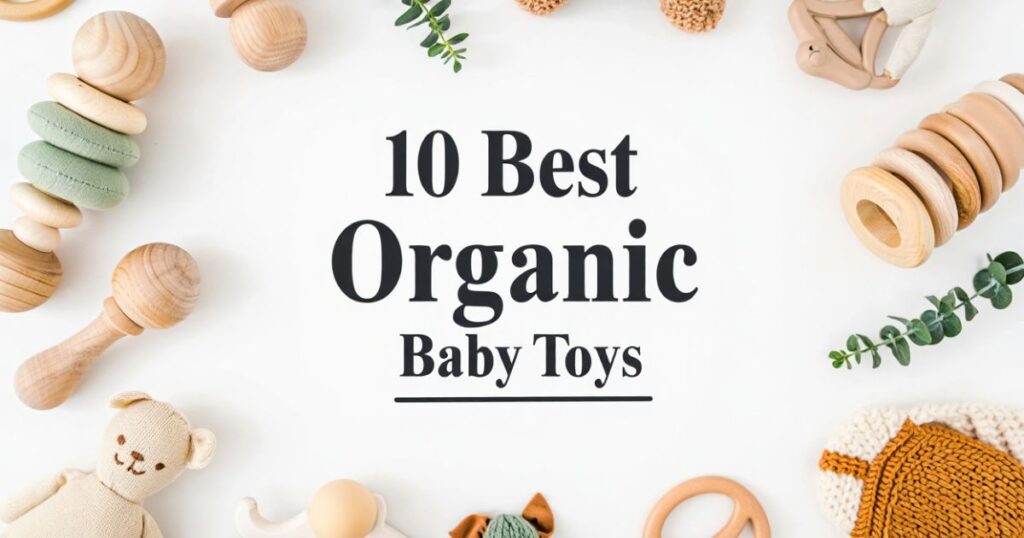
Choosing the right playthings for infants means looking beyond fun to safety and sustainability. Organic baby toys are made from natural, responsibly sourced materials (like organic cotton or wood) and avoid harmful chemicals. These eco friendly baby toys and safe natural baby toys give parents peace of mind: they are free of phthalates, BPA, heavy metals and synthetic dyes. In contrast to plastic goods, organic cotton and wooden toys are often biodegradable baby toys that break down harmlessly at end-of-life. The result is healthier play and a cleaner planet.
Parents choose organic toys because they are non toxic infant toys by design. For example, Under the Nile notes its plush toys have “100% organic… cotton” filling and are “free of all the bad stuff and chemicals found in most other toys”. In practice, this means organic stuffed animals, blankets and books are made with tested fabrics that won’t off-gas or irritate baby skin. Eco-toy brands also avoid synthetic parts. Many use organic cotton, bamboo, natural rubber or plant-derived silicone instead of PVC or petroleum-based plastics. Even recycled materials appear: one certified organic cotton ball is stuffed with recycled plastic bottles for lightweight, machine-washable softness.
Key Benefits of Organic and Eco-Friendly Baby Toys
Organic toys deliver health and environmental benefits. Since babies explore by touch and mouth, avoiding toxins is vital. The U.S. Consumer Product Safety Improvement Act (CPSIA) explicitly bans high levels of lead, cadmium, and certain phthalates in children’s toys. By choosing organic or chemical free baby toys, parents further reduce risks: these items have non-toxic infant toy materials well below legal limits. For example, eco-minded toy makers ensure their plastic-free toys are BPA-free, phthalate-free, and PVC-free. Green Toys (a leading sustainable brand) makes all its products from recycled milk jugs and proudly states they are “free from BPA, phthalates, and PVC” while meeting strict safety standards.
Environmentally, organic toys are kinder to Earth. They use renewable or recycled inputs, minimizing waste. PlanToys, for instance, crafts wooden toys from surplus rubberwood trees and uses no formaldehyde glues or synthetic paints. Many brands work toward carbon-neutral factories and zero-waste processes. Low-impact dyes and soy-based inks cut pollution dramatically. Even packaging is greener: expect compostable mailers, recycled cardboard and “no twist ties or cellophane” on labels. In short, switching to organic baby toys supports safer play and a healthier planet.
Organic Cotton Baby Toys – Soft and Snuggly
One of the most common organic baby toys categories is soft, plush toys made of organic cotton. These include stuffed animals, security blankets (“loveys”), cloth books and more. The Global Organic Textile Standard (GOTS) is key here: it certifies that fabrics truly come from organically farmed cotton and have been manufactured under strict environmental and social standards. GOTS certification also bans toxic chemicals in dyes and processes. Parents should look for the GOTS label on baby toys, which is like OEKO-TEX Standard 100 for textiles: it guarantees the material is safe for direct contact with baby skin.
Soft organic toys are gentle against sensitive skin and won’t release harmful residues. For example, Burt’s Bees Baby sells an Organic Cotton Rattle Toy made from “100% organic cotton” fabric. The result: a soft, safe rattle that can be machine-washed without fading. Similarly, organic cotton busy balls, loveys and dolls use non-toxic, plant-based dyes. These items typically feel breathable and “genuinely non-toxic” (even retaining a mild natural cotton smell instead of chemical odor). Using organic fibers means babies enjoy tactile, cuddly playthings that are hypoallergenic and free from pesticide residues.
- Durability: Many organic cotton toys are well-made and wash repeatedly without fraying or color run.
- Variety: Stuffed animals, cloth books and teethers wrapped in fabric (like lovey blankets) all use organic cotton.
- Certifications: Besides GOTS, some items have OEKO-TEX 100 certification, assuring no toxic additives.
- Development: High-contrast black-and-white or colorful patterns on fabric books stimulate infants visually, while different textures encourage touch (e.g., crinkles or ribbons).
Colorful organic cotton toys are ideal for babies. This Apple Park Organic Soft Ball (shown) is a knit toy that babies can safely grip and mouth. It’s made from non-GMO cotton and tested free of toxins.
Wooden & Biodegradable Baby Toys
Another classic category is wood. Natural wood baby toys – like blocks, teethers, puzzles and pull-toys – are inherently biodegradable. When harvested from sustainably managed forests (look for FSC certification or local sourcing), wooden toys have minimal environmental impact. They can even be composted or recycled when worn out. Many eco-friendly wooden toys (from brands like Hape, PlanToys, or Tender Leaf) use formaldehyde-free, non-toxic paints and finishes. They avoid plastics altogether.
Wooden toys meet strict safety norms: for example, PlanToys uses a proprietary PlanWood material (compressed wood and non-formaldehyde glues) and water-based dyes. Hape Toys, another top brand, is FSC certified and also says it uses “nontoxic, water-based paints and finishes” on bamboo and wood toys. Because wood doesn’t flex like plastic, toy designs avoid small detachable parts, reducing choking risk. Natural rubber (used in some teethers and bath toys) is another biodegradable option. It feels soft yet durable, and most natural rubber teethers are made to medical-grade standards.
- Biodegradable materials: Materials like wood, bamboo or rubber will break down naturally over time, unlike plastics.
- Safety: Untreated hardwoods and silicone teethers do not leach chemicals; many brands specifically market chemical-free baby toys. For instance, Tender Leaf Toys are made of reclaimed rubberwood with water-based paints. HABA, a German maker, emphasizes its products are “formaldehyde- and lead-free”.
- Variety: Wooden stacking rings, shape-sorters, spinning tops, and pull toys make up much of this category. New designs even combine wood with cloth or silicone parts (e.g. a wooden rattle with cotton ribbons).
- Eco manufacturing: Some companies run solar-powered factories and recycle all wood shavings. By contrast, a standard plastic toy typically relies on petrochemicals and ends up in landfill.
Toy Safety Certifications and Standards
When shopping for organic baby toys, certifications are your friend. The global standards ensure claims are real. Look for:
- GOTS (Global Organic Textile Standard): As noted, GOTS verifies fabrics are truly organic and produced under strict eco/social rules.
- OEKO-TEX Standard 100: This label means textiles have been lab-tested and contain no banned chemicals. It often appears on certified cotton plushies or fabric accessories.
- CPSIA/ASTM (U.S.) or EN71 (EU): Mandatory safety standards. Toys meeting these have been tested for choking hazards, flammability, small parts, and banned chemicals. For example, CPSIA limits certain phthalates and heavy metals in toys, and most reputable brands will note compliance.
- JPMA/Baby Safety Alliance: In the U.S., the Baby Safety Alliance (formerly JPMA) tests baby products to ensure they meet federal regulations (look for a little seal).
- GREENGUARD: Some baby items like playmats carry GREENGUARD certification, meaning low chemical emissions.
Reading labels helps: any toy with certified organic cotton or wood usually cites these standards. A good tip is to verify certification on official registries if unsure. Ultimately, third-party seals and test reports mean a brand is serious about safety. Realistically, no toy is 100% risk-free, but certified organic baby toys aim to minimize every risk: they’re essentially free of BPA, PVC, lead, formaldehyde and harsh dyes.
How to Choose the Best Organic Baby Toys
With a sea of “green” marketing, use these criteria to pick top-quality toys:
- Materials: Confirm the main fabric or wood is organic or natural. For cotton toys, check for “100% organic cotton” or GOTS certification. For teethers and bath toys, ensure they’re food-grade silicone or natural rubber (both FDA/EU-approved). Avoid vinyl or questionable plastics entirely.
- Certifications: Look for GOTS, OEKO-TEX, FSC, or other eco-certifications on the package or product page. These give third-party assurance. If no labels, check brand websites or retailers like sustainable boutiques.
- Design & Age Appropriateness: Make sure toys have no loose parts or small pieces. For newborns (0–6 months), prioritize high-contrast sensory toys, soft rattles, plush mobiles and teethers designed for little hands. From 6–12 months, move to grasping rings, stacking cups and cloth books. Toddlers can handle firmer wooden puzzles and shape sorters.
- Non-Toxic Details: Inspect finishes. A truly non-toxic infant toy will have water-based or plant-based paint and no glossy sealants containing solvents. Textiles should use plant-based dyes, not azo dyes or heavy metal pigments. Every small part (eyes, buttons, squeakers) should be securely fastened and tested to prevent choking.
- Brand Reputation: Choose brands known for sustainability. For example, Under the Nile and Maple Landmark feature formaldehyde-free fabrics and ethical factories. Lovevery, Green Toys, and PlanToys explicitly detail their eco processes. Even if items carry an organic label, it helps if the company is transparent about sourcing.
- Ease of Cleaning: Babies get messy. Look for machine-washable toys or ones you can wipe clean with mild soap. Many organic cotton and silicone toys are designed to be low-maintenance to withstand drool and spills.
- Value & Longevity: Yes, organic toys can cost more, but they often last longer. As one review notes, organic toys with GOTS cotton, FSC wood and plant-based dyes last many weeks of everyday play with no off-gassing. This durability means better long-term value and reuse for future children.
By focusing on these factors, you ensure you’re getting truly safe natural baby toys that will perform well. Remember, buying organic isn’t just about one label – it’s a package of safer materials, ethical production, and baby-friendly design.
Top 10 Organic Baby Toys
Below are ten outstanding picks that blend fun with safety. Each has earned praise for its organic materials and thoughtful design (often backed by third-party testing):
- Soft Touch Sensory Book (GOTS Cotton): A cloth book made of certified organic cotton with crinkly pages, a baby-safe mirror, and a BPA-free teether edge. It’s machine washable, portable (about 6×6 inches), and engages multiple senses: textures, peek-a-boo flaps, and gentle sounds to support motor and visual skills. Parents love that it’s lightweight for on-the-go and free of harsh chemicals.
- Moonkie Silicone Stacking Rings (7-Piece): This colorful ring set is made from high-quality, food-grade silicone. It’s BPA-free, phthalate-free and odorless. The seven stackable rings double as chew toys, each with slightly different textures to help soothe teething gums while building fine motor skills. It includes ventilation holes so it dries easily, and toddlers enjoy sorting the shapes as they grow.
- ChooKaChoo 2-in-1 Teething Rattle: A charming chick-shaped toy combining a silicone teether and a rattle. The firm-but-flexible food-grade silicone is BPA-free and has gentle nipples that mimic mother’s breast for gum relief. Crinkly plastic inside makes a soft sound when shaken. Kids can nibble on it safely (it’s dishwasher-safe) and practice gripping. Testers note it’s durable, soft to chew, and soothing for 3+ month-olds.
- 100% Organic Cotton Rattle (Burt’s Bees Baby): A classic hand-held rattle featuring a plush animal head (bear, bunny or puppy). The entire outer shell is certified organic cotton and it’s lightly stuffed (polyester fill). It’s designed for tiny hands – measuring about 7×4 inches – and stays soft after many washes. Parents appreciate its gentle rattle sound and contrasting colors that keep babies engaged during tummy time. Its very softness makes it ideal for newborns and infants with sensitive skin.
- Itzy Ritzy Lovey with Teether (Sloth): A cozy snuggle toy combining plush fabric and a built-in silicone teether. Its ultra-soft “sherpa” and “minky” fabrics provide comfort from day one, while a removable silicone sloth head functions as a teether during chewing months. Textured ribbon tags and crinkle inserts in the arms keep little fingers busy, and the floppy dangle arms encourage movement and visual tracking. It’s compact and fully machine-washable, tested safe “from birth” and repeatedly praised by parents as a go-to comfort item.
- Manhattan Toy Deer Crinkle Book & Mat: A versatile play mat that folds into a “book” with engaging features. Each page (about 6.5×6.5 inches) has crinkle sounds, a squeaker, a baby-safe mirror, and a teether corner. Tethered objects (like a plush mushroom and bunny) reward babies who reach and grab, supporting fine motor skills. This rugged mat is designed for tummy time: it’s wipeable/surface washable and safe for newborns onward. Users report it “grows with baby,” taking infants from lying to rolling and sitting stages.
- Petit Collage Organic Cotton Busy Baby Ball: A soft, plush ball (about 6″ diameter) filled with recycled polyester. Made entirely of GOTS-certified organic cotton with plant-based non-toxic dyes, it’s gentle to squeeze and roll. It contains a rattle chime inside that entertains babies as they crawl after it. The ball has bunny-ear handles with crinkle paper fabric, perfect for grabbing and tactile exploration. Because it’s fully cloth and stuffed from recycled bottles, it’s washable, lightweight and eco-friendly. (Parents love giving it as a green baby shower gift.)
- Silicone Shape Sorter & Muslin Tissue Box: A clever toy that pairs sturdy silicone shapes with a soft cloth box. The set usually includes wooden or silicone circle, triangle and star pieces and a pull-apart muslin “tissue box” with a slot. Babies learn shape-matching by pulling cloths through the slot and putting shapes back in. Importantly, all pieces are made from safe materials: food-grade silicone shapes (non-toxic, BPA-free) and an organic muslin cotton box. Toddlers enjoy this Montessori-inspired toy for developing hand-eye coordination. It’s easy to clean (silicone can be rinsed) and popular as a durable learning toy.
- Melissa & Doug Flip Fish Stuffed Animal: A multi-textured fish toy with crinkly scales that flip. Each “scale” exposes a hidden picture underneath, promoting visual tracking and cause-and-effect play. The whole body is crinkly fabric, and it has a soft squeaking tail and a clear (shatterproof) mirror on one side. All materials are infant-friendly and machine-washable. The toy is safe for 0–9 month-olds: no hard parts to break off. During tummy time, babies reach for its colorful fin “scales” and watch their actions. Reviewers note it’s highly engaging and stands up well to repeated washings.
- 100% Silicone Teether Ring (Silicone+Wood): A bite-friendly teething ring made of food-grade silicone and natural beechwood. This hollow, lightweight ring is entirely BPA-free and phthalate-free. Its silicone portion often has textured bumps or ridges (concave-convex) for gum massage, while the wooden ring adds a contrasting texture. You can sterilize the silicone part in boiling water. These rings are designed to be safe if chewed aggressively – no chemicals, no fillers. They are a modern twist on classic wooden rings. Many come in minimalist designs (like natural wood + soft pastel silicone) suitable for both boys and girls.
Each of the above toys exemplifies safe, eco-friendly design: they use organic or plant-based materials, pass safety tests, and are built to last. Keep in mind certification and age recommendations when selecting a specific item for your baby’s stage.
Frequently Asked Questions
Are organic baby toys truly safer than regular toys? Yes. Organic baby toys are designed to be free of harmful chemicals. They often carry certifications (like GOTS or OEKO-TEX) that verify no toxic dyes, BPA, phthalates, heavy metals or other nasties are used. In practice, organic toys use natural fibers or food-grade silicone, so they won’t off-gas or irritate a baby’s skin. Lab tests show organic fabrics have essentially zero off-gassing and reliably repel stains, meaning safer, healthier play. So while they can cost more, the payoff is peace of mind and non-toxic development for the infant.
What materials should I look for in eco-friendly baby toys? The best materials are natural and certified. For textiles, look for organic cotton, bamboo or wool (often GOTS-certified) which block pesticides and formaldehyde. For teething toys and bath toys, choose food-grade silicone or natural rubber (BPA-free and FDA-approved). Wood toys should be from sustainable forests (FSC or PEFC certified) and finished with water-based, non-toxic paints. Avoid PVC, phthalate-plastic, polyvinyl chloride or any vinyl content. A toy labeled “non-toxic, BPA-free, phthalate-free” with organic or reclaimed materials is ideal.
How can I tell if a toy is genuinely organic and not just labeled “green”? Check for third-party certifications. Real organic cotton baby toys will list GOTS or OEKO-TEX certification on their label or product page. Toy packages might include phrases like “Certified organic fabric” (ideally with a logo). You can also research the brand: reputable ones provide detailed material info and testing data. If a site says just “natural” or “eco” without proof, be cautious. Genuine organic toys usually cost a bit more because of their verified supply chain. In lab tests, certified organic toys showed no off-gassing and parents reported no skin rashes from them.
Can I recycle organic baby toys when they wear out? It depends on the material. Textiles like organic cotton and bamboo can be composted or recycled in many municipalities that accept textiles, since they biodegrade naturally. Wood toys can be disposed of in green waste or even reground into mulch. Silicone and natural rubber are not widely recyclable, but they last long and do not leach toxins. Check labels: some brands note “recyclable packaging” or partner with take-back programs. In general, organic toys have a smaller ecological footprint at end-of-life compared to mixed-material plastics.
Do organic toys have any odor or scent? Yes, and that’s normal! You might notice a mild “new cotton” or wood smell from natural toys. Organic toys aren’t treated with synthetic fragrances or fire-retardants, so they smell like their raw material. For example, a cedar or maple teether might smell faintly of wood. This natural scent is normal and indicates no hidden chemicals. (If a toy smells strongly of chemicals or plastic, it’s likely not organic.)
Are these toys safe for newborns and infants? Absolutely. Organic baby toys on this list are chosen for safety and are suitable from birth (check label age). They are free of choking hazards, BPA, and toxic dyes, meeting or exceeding ASTM/CPSC safety standards. For newborns, focus on very soft, graspable toys: cloth books, rattles and crib mobiles made of organic cotton are ideal. High-contrast patterns help early vision. By 3–6 months, you can introduce teething rings (silicone or wood) and larger plushies. Always supervise play, but rest assured that certified organic toys go above and beyond basic safety.
How do I clean and maintain organic baby toys? Most are easy to clean. Organic cotton plush and blankets are usually machine washable (use gentle cycle and air dry). Wooden or silicone toys can be wiped with mild soap and water; some silicone items (like rings) can be boiled briefly to sterilize. Check manufacturer instructions: avoid harsh bleach or heated dryers that can degrade natural fibers. Frequent washing is actually beneficial – organic toys handle it well. Since they lack toxic finishes, they won’t deteriorate or leach, even after many washes.
Conclusion: In choosing playthings for your infant, you want organic baby toys that are fun but also healthy. The 10 toys listed above have been highlighted by experts for combining organic cotton, safe wood and BPA-free materials with tested designs. Remember to look for GOTS or safety certifications, and consider materials like GOTS-certified cotton or food-grade silicone. By doing so, you ensure your baby’s first play experiences are nurturing for both the child and the planet. We encourage you to explore these options and consult pediatric guidance when selecting toys. Happy (and safe) playing!
