
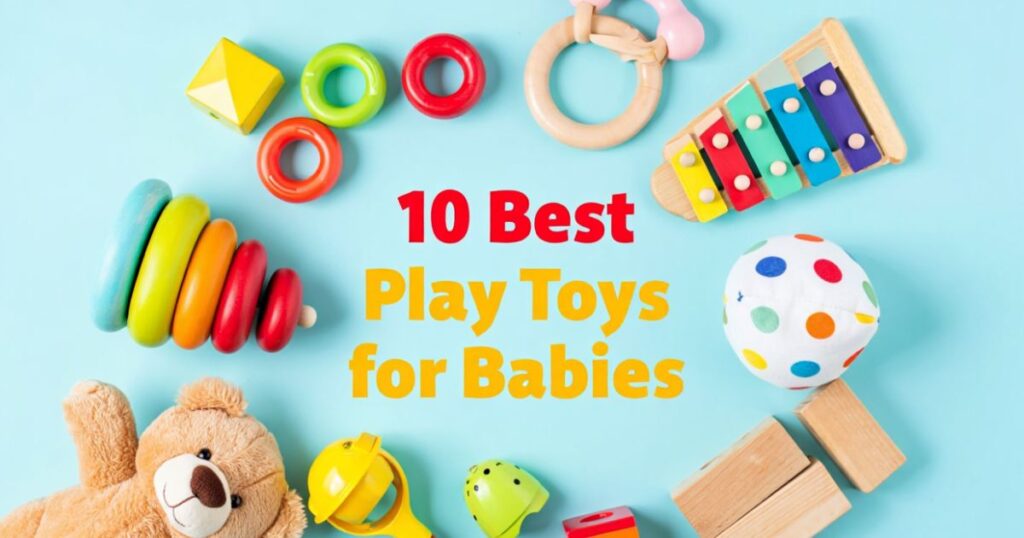
Babies learn about the world through play toys for babies, which spark their senses and build skills. In the first year their brains grow explosively, forming millions of connections each second. Play is a “great way to encourage and support” infant development, helping babies practice movement, coordination, and social interaction. For example, a newborn’s simple games help develop focus and memory. By choosing fun baby play toys that match your baby’s age and stage, you can turn playtime into a rich learning experience. We’ll explore why play matters and how to pick engaging, safe interactive infant toys that promote growth and joy.
Why Play Is Essential for Baby Development
Play is more than entertainment it builds babies’ brains and bodies. In the first year of life a child’s brain doubles in size and creates over one million new neural connections per second. Every time a baby bats at a hanging toy or squeezes a soft ball, they’re strengthening those neural pathways. Harvard researchers note that playful interactions with adults help babies develop foundational skills like attention, self-control, and motor planning. Even “peekaboo” teaches object permanence and attention, while rolling a ball back and forth teaches cause-effect. Simply put, play toys for babies train the brain for language, problem-solving and even later self-regulation.
At a glance, good baby toys support multiple areas of growth: gross motor (whole-body), fine motor (hand control), sensory (sights, sounds, textures), and social-emotional (joy, comfort). The American Academy of Pediatrics emphasizes choosing toys that match developmental abilities and “encourage the development of new skills.” Soft rattles and teethers can soothe a fussy teething infant while also rewarding them with colors and sounds. Activity gyms or indoor play toys let babies practice reaching, grasping and kicking to build strength. In every case, the simplest toys—blocks, balls, board books, and plush animals—provide the richest learning. They develop hand-eye coordination and fine motor skills (like holding and stacking), as well as gross motor abilities (like crawling and pushing).
- Key point: The right developmental play toys give babies a safe way to explore. For example, textured toys and high-contrast mobiles engage newborn vision and touch, while gentle musical toys and mirrors capture attention. According to Parents magazine, “Toys which keep them active and engaged are clutch. Think things like rattles, balls, activity gyms, and more.”. These classic categories stimulate senses and encourage babies to practice skills during play.
Choosing Safe, Age-Appropriate Baby Toys
Not all toys are created equal for infants. When shopping, always check the age label, material, and safety features. Baby toys should be age-appropriate and free of small parts or sharp edges (to prevent choking). For babies under 1, look for labels like “0–6 months” or “12 months+” and the ASTM F963 safety standard. Pediatric experts advise picking toys that are “safe, simple and inspire exploration and open-ended play.” Avoid anything with button batteries or magnets, and ensure materials are BPA-free and non-toxic. Soft, washable fabrics and smooth plastic surfaces are best.
- Checklist for safe baby toys: Look for non-toxic materials (phthalate- and BPA-free), sturdy construction (no loose pieces), age-label warnings (e.g. “Not for children under 3 years”), and ease of cleaning. Supervision is always important: even safe toys should be used under watchful eyes. As the AAP notes, toy safety also comes from how they might be used or “abused”. Wash plush toys regularly, and discard any toy that cracks, breaks, or has pieces coming loose.
In addition to safety, consider developmental fit. The AAP recommends matching toys to skills: fine-motor toys (like blocks, puzzles, stacking rings) support hand-eye coordination and problem-solving, while active toys (balls, push-pull toys, ride-ons) build gross motor skills. NAEYC similarly notes good infant toys include things to “reach for, hold, shake, and make noise with”, and for older babies, objects to sort, stack and drop. As one parent advisor puts it: provide babies “a safe space on the floor to explore” and a few “age- and developmentally-appropriate toys” so they can practice new skills while having fun. That way, playtime is both safe and enriching.
Sensory and Interactive Baby Toys
Sensory-rich toys are perfect for early learning. These fun baby play toys stimulate sight, sound, and touch. For newborns, black-and-white or high-contrast patterns (on mobiles or gym toys) help vision develop. Soft rattles and crinkle fabric toys reward grabbing with gentle noise, teaching cause-and-effect. For example, the Fisher-Price Sing & Go Purple Monkey is a plush clip-on toy with textured ribbons, a crinkly ear, and jingling beads. In testing, reviewers noted its “rich fabrics, high-contrast colors, clackers and a crinkle ear held babies’ attention”. Babies can grasp its loops and bang the clackers to hear sounds, while parents clip it to strollers or diaper bags for on-the-go play. (Tip: choose clip-on toys to entertain babies in car seats or carriers.)
Interactive infant toys go a step further: they respond to baby’s actions. Soft toys with hidden bells or mirrors can delight and surprise baby. Sensory mobiles, like the Wimmer Stim To Go, capture newborn attention with simple hanging shapes. This lightweight stroller mobile uses high-contrast images designed specifically for 0–5 month olds; testers found it “effective at capturing newborn attention with its high-contrast images and durable construction.”. Mobiles and play gym attachments encourage babies to track movement with their eyes and reach out with their hands. Other interactive examples include light-up toys, gentle musical dancers (that turn and flash when touched), and talking plush characters. The key is to provide different textures, sounds, and motions.
- Suggestion: Rotate a variety of sensory toys to keep baby engaged. Simple items like textured balls, soft cloth books (with flaps and mirrors), and musical rattles can all stimulate curiosity. Look for toys labeled for sensory play or developmental play, which often combine textures and sounds. For instance, a mirror toy encourages self-recognition and visual tracking, while a musical popper toy rewards pushing buttons with a jingle.
Activity Gyms and Play Mats
Activity gyms and play mats create a mini play world for babies. These stationary setups usually include an arched bar with hanging toys, or built-in lights and music on a soft mat. For tummy time and early sitting, an activity gym encourages reaching and grabbing. According to parents, “providing babies with a safe space on the floor to explore their body and surroundings” is vital. A good baby gym will have multiple dangling toys (rattles, teething rings, soft animals) within easy reach, helping babies practice gross motor skills and neck control.
Notable picks include the Lovevery Play Gym (with black-and-white high-contrast stripes and dangling plushies) and Skip Hop’s colorful “Geometric Wonders” mat. (Babylist editors highlight gyms as perfect spots for developing core strength during tummy time.) Some gyms also attach toys with lights or music, adding auditory feedback. For babies who sit, gyms can convert to a seated activity center with front-facing toys or a piano keyboard at the feet.
These encourage arm and foot movement, building coordination. For example, Tiny Love’s Stationary Activity Center is a bucket-seat style gym that spins 360° so babies can play with detachable toys all around. In general, look for a gym with adjustable levels (so it grows with baby) and toys that are sturdy yet easily removable for cleaning.
- Parent tip: Supervised floor play on an activity mat helps babies build core strength and explore textures. Place your infant on a padded mat and hang a few safe toys within their reach. As they kick and flop, the attached toys will swing and catch their eye, motivating them to try batting and grabbing.
Musical and Light-Up Toys for Babies
Toys with music, lights, or gentle sounds turn playtime into a party of the senses. For babies 6 months and up, musical toys can delight and teach rhythm. Simple instruments like maracas, shakers, or a toy piano encourage cause-and-effect: baby hits a key or press a button and hears a tone. According to child development experts, such baby entertainment toys help infants anticipate results and develop auditory skills. The rhythmic patterns also soothe and engage.
Popular examples include the Fisher-Price Laugh & Learn Puppy (plays songs and phrases) or a small keyboard that plays nursery rhymes. Nightlight or projector toys, like the Baby Einstein Sea Dreams Soother, cast soft shapes on the ceiling while playing lullabies. In testing, the Sea Dreams Soother’s “calming lights, ocean sounds, and gentle music” helped soothe infants (though parents noted battery life could be an issue). Another is a musical mobile or crib toy that attaches to the crib rail with soft melodies and spinning elements.
- Use with care: Keep volume moderate. The AAP notes that even “educational” digital toys can’t replace real interaction. It’s best when parents sing and dance along rather than relying on screens or TVs. Music play should be part of active interaction – tap a rattle together or clap hands – so the baby associates sound with you.
Rattles, Teethers and Grasping Toys
Small grasp toys are often a baby’s first “tools.” Rattles and teethers encourage grabbing and shaking, which builds hand strength. Classic wooden or plastic rattles (like a hand-held ring with beads) teach cause-and-effect: baby shakes it, then hears a sound. For teething babies, teether rings and soft silicone toys relieve gums and are safe to chew. Many popular rattles combine both: one end to shake, another textured part to chew. For example, the Skwish is a wooden ring toy with elastic bands and colorful beads; its flexible design fascinates babies as they squeeze and roll it.
According to Babylist editors, simple rattles and grabbing toys provide a “rich sensory experience”. They recommend including rattles and other objects for babies to hold and shake. When choosing a rattle/teether, ensure it has no small moving parts that could come off. Silicone rings and wooden bangles are durable choices. Some teething toys even have built-in cool gel or textured nubs for sore gums.
- Examples: The Sassy Wonder Wheel (a suction cup spinner for highchairs), Bright Starts “Wink & Go” teether rattles, or any BPA-free silicone teething ring. Always clean these daily and inspect for wear.
Soft Books and Story Time Toys
Books and textures are among the best developmental play toys. Soft cloth books, board books, or activity books with flaps and mirrors engage babies from birth. NAEYC suggests books with nursery rhymes or simple images as great baby toys. Babies learn words and patterns even before they speak. Many baby toys, like plush storybook characters or sound books (that play a short melody or word when pressed), help infants associate sounds with images.
Soft activity books often have crinkly pages and teething corners. A cloth book with high-contrast pictures can captivate a 2-month-old, while a sturdy board book (like Brown Bear, Brown Bear) can be introduced around 6 months. These toys also foster language: caregivers can talk about the pictures while baby touches pages, building vocabulary and social bonding. Even puppet toys (finger puppets or hand puppets) can count as play toys, inviting peek-a-boo games.
- Rich learning: Research shows infants enjoy “listening to music, poems and stories”. Reading to baby at any age is worthwhile. Look for books with colorful pictures of faces or simple objects. At 1 year, interactive books that make animal sounds or say first words become engaging educational toys.
Balls, Push-Pull and Ride-On Toys
For older infants (around 9–18 months), toys that move or roll can boost gross motor skills. Soft balls or foam balls encourage crawling and throwing. A brightly colored ball that squeaks or rattles (like an Oball Classic Ball) is easy for little hands: the Oball’s 32 large holes let babies grip and roll it. Reviewers note it’s lightweight and BPA-free, making it a reliable first ball. As your child grows, a larger soft ball can be rolled back and forth to practice hand-eye coordination.
Push and pull toys help newly walking babies. A classic example is a wooden pull toy (like a duck or train) on a string. Pushing a baby walker or small cart also builds leg strength. These toys should have a wide, stable base so baby won’t tip easily. Many push-toy walkers include a front activity panel (buttons, gears, shapes) to play with while pushing. The AAP notes that toys with physical activity, “like balls, push and pull toys, ride-on toys”, support physical development and even self-control.
- Ride-ons: For 1–2 year olds, ride-on toys (little cars or animals you sit on and scoot) encourage balance. Even a simple hard plastic turtle or rocking horse can provide hours of fun. Ensure wheels are well-made and that baby is supervised. (By toddler age, safety standards require harnesses or sturdy handles.)
Stacking, Nesting, and Sorting Toys
Stacking rings, cups, and shape-sorters make excellent developmental play toys for babies about 1 year and up. These open-ended toys teach cause-and-effect (“if I stack ring, it stays; if too many, it falls”), problem solving, and fine motor control. According to one review, stacking toys “help your child develop fine motor skills and hand-eye coordination” while introducing early math concepts like balance and size. Even if a baby can’t fully stack yet, they enjoy knocking down your tower!
Begin with large, soft stacking toys or nesting blocks around 9–12 months. Later, a classic 5-ring stacking toy (rings of different colors) can teach color and size sequences. Puzzle toys or shape-sorters (toys where pieces fit into matching holes) are another variant of this skill. Choose chunky, easy-to-handle shapes. Montessori-style wooden puzzles with knobs or pop-out pieces are safe for babies when designed properly.
- Benefits: These toys encourage a “voluntary release” skill (letting go of objects) and spatial reasoning. Stacking and sorting also encourage patience and persistence: baby tries again and again to fit the piece. Always supervise in case of frustration, and celebrate every little success (“Yay, you fit the star!”).
Indoor vs Outdoor Play Toys for Babies
Most play for babies happens indoors, but that doesn’t mean you can’t have fun outside too. Indoor play toys for babies include everything we’ve mentioned: gym mats, plush animals, stacking rings, balls. Keeping play safe is easier inside (no traffic!), and many indoor toys are padded or electronic. Setting up a baby corner at home with a soft rug and a few favorite toys ensures baby can explore freely.
For outdoor play, simple is best. A baby swing (attached to a tree or in a park) can be a joyful first ride (always secured with harness and constant supervision). A small plastic sandbox with a few scoopers introduces sand play once baby can sit well (always indoors or in shade). Bright balls can be rolled on the lawn. Some baby gyms even detach toys so you can safely strap baby into a stroller or seat and enjoy fresh air while they play.
- Caution: Outdoor environments add new safety concerns (sun exposure, uneven ground). Always supervise closely. Never leave an infant on playground equipment or near water without a hand on them. But a daily dose of sunshine and new textures (grass, leaves, sand) is great sensory enrichment – think of it as another kind of play toy provided by nature.
Portable and On-the-Go Toys for Babies
When out of the house, it’s handy to have a couple of compact play toys for babies to pull out during waits or car rides. Clip-on stroller toys and activity centers are made for portability. For example, the Fisher-Price Sing & Go Monkey mentioned earlier hooks easily onto strollers or car seats. Another is a ring rattle with a strap, or a miniature soft book that velcros shut to toss in a bag.
Soft, lightweight toys work best when traveling. A small teether/rattle or cloth doll can keep baby busy at a restaurant. Busy boards or activity panels are also popular “travel toys” – these fabric panels have zippers, buckles, mirrors and clackers all in one. Because they fold, they fit in a diaper bag and offer quiet, independent play.
- Tip: Keep just a few portable toys. Overloading a car seat or stroller with too many toys can overwhelm or fall off. Choose 1–2 multi-sensory items (bright colors, sound and texture) that baby hasn’t seen all day. Rotating these keeps them novel. And remember that interacting with you is the best “toy” on a trip: sing songs or play peek-a-boo whenever possible.
Baby Toy Safety and Care
Finally, always remember that even the best play toys for babies are only as good as their safety. Follow age recommendations, and discard toys once baby outgrows them or they become worn. Keep play areas clean: vacuum carpets and wash mats, and sanitize toys (many plastic toys can be cleaned in warm soapy water or even a dishwasher-safe tote). Plush toys should be machine-washable to avoid germs.
Routine checks are important: loose button eyes on plush toys, cracks in plastic parts, or peeling paint should prompt replacement. The CPSC and AAP advise against toys with small parts for under 3-year-olds, and against high-powered magnets or button batteries in baby toys. Always attach toys securely (for example, use clips that lock).
Internal linking suggestions: This article on play toys can be paired with guides on babyproofing, child development milestones, and baby health tips. For instance, linking to a baby safety checklist or an article on “babies and technology” (screen time warnings) would reinforce these points.
By offering a curated selection of engaging and safe play toys for babies, you support their growth in fun ways. Remember: at every stage, the best toy is one that sparks curiosity and lets baby explore under your watchful eye.
Conclusion
Choosing the right play toys for babies can transform playtime into a joyful learning adventure. From soft rattles and interactive plush to activity gyms and simple blocks, each toy offers a new way for your little one to grow. By focusing on safe, age-appropriate toys that encourage exploration and creativity, you help babies build motor, sensory, and cognitive skills. Remember that play should always be supervised and interactive – the best outcomes come when parents and caregivers join in the fun. We’ve highlighted a variety of fun and developmental toys above; try a few and see which ones your baby loves most. With these insights, you’re now equipped to pick playful, developmental play toys that delight and educate. Happy playing!
Frequently Asked Questions
Q: What are the best play toys for babies from newborn to 1 year?
A: The best toys for babies focus on sensorimotor play. For newborns, high-contrast mobiles, gentle rattles, and soft fabric books stimulate vision and touch. By 6–12 months, popular choices include soft activity gyms (with hanging toys), colorful stacking/nesting cups, teething rings, and gentle musical toys. Rattles, sensory balls (like Oball) and board books are perennial favorites. Always choose simple, age-appropriate toys that are safe for mouthing and easy for tiny hands to hold.
Q: Why are developmental play toys important for babies?
A: Developmental toys are designed to match a baby’s growing abilities. They encourage skills like grasping, problem-solving, and movement. For example, stacking toys teach spatial concepts, shape sorters boost cognitive skills, and push/pull toys promote balance and walking. Experts note that traditional manipulative toys (blocks, puzzles) “support fine motor skills and can improve language and brain development”. In short, developmental toys turn playtime into practice for milestones like sitting, crawling, and talking.
Q: How do I choose safe toys for a baby?
A: Safety is paramount. Always buy toys marked for your baby’s age (e.g. “0+ months”) and check labels for choking hazard warnings. Avoid toys with removable small parts, long strings, button batteries or toxic materials. Opt for BPA-free plastics and water-based paints. The AAP emphasizes toys that allow supervision and easy cleaning. Inspect toys regularly: discard anything broken or with pieces coming loose. Keeping a “safe toy” rotation of soft, washable toys helps maintain hygiene too.
Q: What indoor play toys are good for a baby?
A: Indoor toys for babies often include activity mats, play gyms, floor toys, and soft balls. These allow safe play at home. Tummy-time mats with attached rattles help develop neck and core strength. Soft blocks, stacking rings, plush books, and high-contrast toys stimulate sensory and motor skills while babies lie or sit on the floor. Musical toys and baby-safe mirrors are also popular indoor choices. The key is variety – different textures and shapes – to keep indoor playtime engaging.
Q: Are interactive toys good for infants?
A: Yes, but use them wisely. Interactive infant toys (like mobiles, lights, music) can captivate babies and boost development. For example, a light-up projector soother can create visual interest, and a sound puzzle can teach cause-effect. However, the AAP warns that screen-based “educational” toys should not replace real interaction. Always choose simple electronics that respond directly to baby’s actions (pressing a button, shaking a toy) rather than passive videos. And use interactive toys as a supplement to, not a substitute for, hands-on play with caregivers.
Q: How many toys should a baby have, and how often should they be replaced?
A: There’s no exact number of toys needed—quality over quantity matters. A few well-chosen toys per age range are enough. For newborns, start with 3–5 basic toys (rattle, teether, soft book, ball). As baby grows, add new types (stacking cups, push toy, musical instruments). Rotate toys weekly so each one remains novel and clean. Replace toys when baby outgrows them or if they become worn or unsafe. Overloading babies with too many toys at once can be overwhelming; rotating a handful at a time keeps focus and excitement high.
Q: What are examples of fun baby play toys that help learning?
A: Great examples include a colorful stacking ring set, which teaches size order and fine motor skills, and an interactive plush book that plays sounds, which reinforces language. Balls are a universal favorite – even a soft ball with holes (like an Oball) helps grasping and rolling for gross motor play. Activity cubes with spinners, beads, and mirrors offer varied exploration. Classic wooden blocks or chunky puzzles introduce problem solving. All these toys are “fun” because they reward baby with movement or sound, while silently supporting hand-eye coordination, spatial awareness, and sensory processing.
