
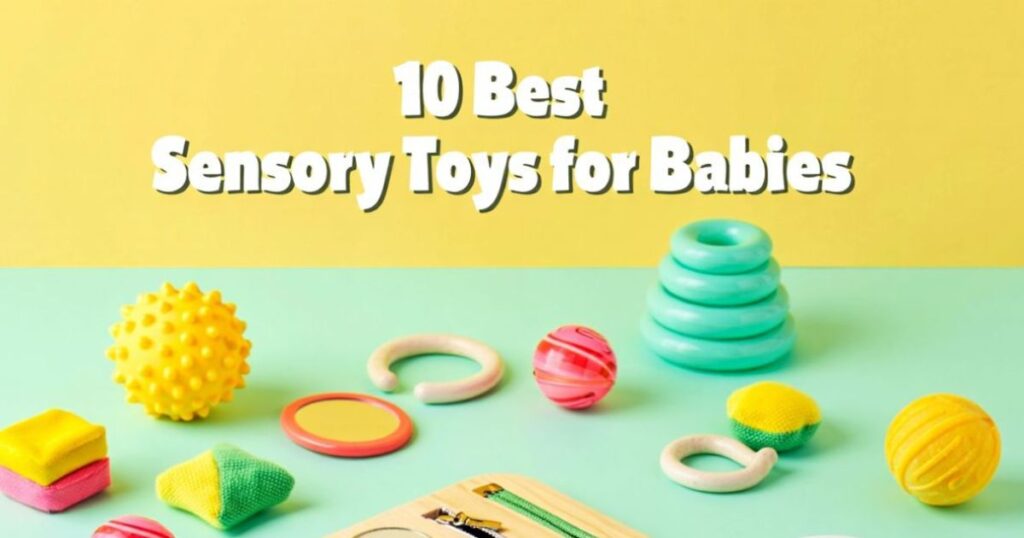
Sensory toys for babies are specially designed playthings that engage infants’ senses – touch, sight, sound, and sometimes even taste – to support early development. These sensory play toys help little ones explore textures, colors, shapes, and sounds. From soft crinkle books to bright rattles and textured teethers, the right sensory toys can turn everyday play into a rich learning experience. Experts note that sensory play “engages your child’s senses, helping them develop language skills and motor skills” while building brain pathways.
In fact, sensory toys are more than just fun: they can calm or activate a baby, encourage hand-eye coordination, and teach cause and effect. Below, we explore the benefits and types of sensory toys and highlight 10 top picks for babies at each stage of infancy.
What Are Sensory Toys?
Sensory toys are active learning tools that stimulate babies through one or more senses. They often feature contrasting colors, varied textures, gentle sounds (like rattles or crinkles), and safe mirrors or lights. Pediatric occupational therapists explain that sensory toys “stimulate the tactile system,” using texture and patterns to captivate a baby’s attention. These toys let babies explore by touching, mouthing, and listening. For example, a soft crinkle cloth toy might combine bright patterns and a gentle crinkling noise, engaging both vision and hearing. All ages can benefit: sensory toys help infants learn to focus, follow objects, and feel textures, laying the groundwork for future learning.
In a sensory toy, every feature (sound, color, or texture) is intentional, so even a simple rattle or a plush tag blanket can become a mini developmental milestone for a baby.
Benefits of Sensory Toys for Babies
Sensory play is vital to infant development. Activities that engage sight, sound, touch (and even movement) help strengthen neural connections in a baby’s brain. For instance, when a baby manipulates a textured teether or presses a button that makes noise, they are naturally learning cause-and-effect and building fine motor skills (pinching and grasping). Sensory toys also support language and social skills; as babies experience new sensations, they learn to describe feelings and communicate needs. Additionally, such toys can have a calming effect on fussy infants – repetitive, soothing inputs (like soft music or weighted plushies) help regulate emotions. Cleveland Clinic notes that sensory play “helps build nerve connections in their brain’s pathways,” which supports complex tasks later on.
In summary, sensory development toys for infants fuel exploration: while a baby thinks they’re just playing, they’re actually exercising cognitive growth, coordination, and even early problem-solving.
How to Choose the Right Sensory Toy for Your Baby
Selecting the best sensory toy means considering age, safety, and stimulation type. Always check the age label – a “0+ months” toy is safety-tested for infants, with no small parts or sharp edges. Newborns, for example, benefit from high-contrast black-and-white patterns and gentle rattles, since their vision and coordination are still developing. As babies grow, you can introduce toys with sounds (chimes, soft music) or with squishy, textured surfaces (silicone teethers, crinkle fabric). Itzy Ritzy recommends multifunctional toys that “do more than one thing,” such as a teething toy that also rattles or a plush toy with tags and a squeaker. Look for materials that are non-toxic (BPA-free silicone, food-grade plastic) and washable.
Finally, consider how the toy engages multiple senses at once: a toy that a baby can grasp, bite, and look at all in one (for example, a soft ring with clanking beads) offers richer sensory stimulation than a plain one-dimensional toy.
Safety and Care for Baby Sensory Toys
Safety is paramount. Always inspect baby toys for durability: “Check for loose stitching, cracked plastic, or parts that could become a choking hazard”. Choose soft sensory toys for babies made of safe fabrics or molded materials that can withstand chewing. For example, a popular teether-rattle (the Manhattan Toy Winkel) is made of soft, pliable polyurethane that meets all safety standards (no BPA/PVC, phthalate-free). Check that any detachable pieces (mirrors, bells) are firmly attached. Cleaning is also key: many sensory toys are machine-washable or wipeable. Pick toys with minimal electronics or battery compartments to avoid water-damage and ensure hygiene. As a rule, if a toy requires an elaborate cleaning routine, it may not be practical.
Instead, go for easy-to-sanitize options (like silicone rings or rubber balls) so your baby can explore safely.
Soft Sensory Toys for Babies
Soft, cuddly toys are gentle options for newborns and infants. Think plush rattles, taggy blankets, and cloth books. These toys often combine different fabrics (smooth, nubby, silky) and make gentle sounds (like a crinkle or a squeak). For instance, soft cloth books may have velcro flaps, loops, and small crinkle squares, inviting babies to touch and lift. Similarly, plush crinkle toys or stuffed animals with ribbon tags engage a baby’s sense of touch without being hard or heavy.
Many soft toys also include teething elements – such as silicone rings sewn into a plush. A good example is a plush octopus toy with dangling legs and crinkly body; babies can squeeze it, chew on the legs, and listen to the rustle. Importantly, these soft toys are often machine washable and very baby-friendly.
If you’re searching for soft sensory toys for babies, look for ones described as “gentle,” “newborn-safe,” or “sensory loveys” – these emphasize textures and sensory features appropriate for tiny hands.
Textured Baby Toys for Tactile Exploration
Textured baby toys are all about touch. These include items with ridges, bumps, and grooves for tactile feedback. Teethers are a common example: rubber rings or silicone keys often have raised bumps that soothe sore gums and give a unique feel when explored. Another example is a tactile ball – soft rubber balls with concentric ridges or bumps.“Balls, Blocks & Buddies” set, for example, includes a small ball covered in nubs that intrigues baby’s fingers and mouth. Textured stacking rings or wooden blocks may have carved patterns for gripping. Even bath toys can be textured (consider a rubber duck with raised dots).
to sensory experts, offering textured surfaces helps a baby differentiate sensations – which is a key part of sensory development.
choosing, ensure textures are safe for mouthing (no peeling parts) and durable under chewing. In short, textured toys let babies build fine motor skills: grasping a bumpy teether or rolling a ribbed ball helps strengthen tiny hand muscles.
Colorful Sensory Toys for Visual Stimulation
Bright, high-contrast colors are excellent for newborns and older babies alike. Colorful sensory toys for baby include toys in vibrant hues or with patterned designs. For very young infants, high-contrast black-and-white or primary-colored mobiles and books catch the eye best. As vision sharpens, toys with multiple colors and patterns become engaging. Think rainbow stacking rings, a toy drum with multicolor shapes, or a busy board painted in pastel blocks. For example, a baby piano gym often has a bold black-and-white arch with brightly colored hanging animals – the contrast and moving toys boost visual tracking. Toys with lights (like a gentle flashlight or a glowing lantern) also stimulate sight.
key tip: sensory toys are even more effective when parents point out colors and shapes
“See the red ball! Touch the yellow tag!”), making it a learning moment. In essence, colorful sensory toys delight infants and help them learn to follow movement and recognize colors, reinforcing visual development in every play session.
Newborn Sensory Stimulation Toys
For newborns (0–3 months), “sensory toys” often mean simple, gentle items that match their earliest capabilities. Newborns see best in high-contrast patterns, so toys in black-and-white or red/white are ideal. These include high-contrast board books, soft rattles with bold patterns, or hanging crib toys with simple shapes. According to baby development experts, high-contrast visuals “enhance visual tracking and focus” in early months. Tummy-time mirrors are another newborn favorite: they provide a gentle reflective surface and usually have smooth edges and soft fabric surrounds. Gentle auditory toys (like a soft heartbeat sound toy or a wind chime) can also be considered newborn-friendly sensory toys. Importantly, these first toys should be lightweight and safe for mouthing.
example, a black-and-white soft cloth book with sewn-on shapes and a touchable mirror gives varied stimulus without overwhelming a newborn. Newborn sensory stimulation toys set the stage for later play by building attention and early tracking skills in a calming way.
10 Best Sensory Toys for Babies
Below are ten highly recommended sensory toys, spanning multiple ages and developmental milestones. Each toy offers unique textures, sounds, or visuals to engage a baby’s senses and encourage exploration:
- 1. Fisher-Price Glow & Grow Kick & Play Piano Gym. This interactive play mat starts as a newborn gym and converts into a piano for sitting babies. It features a black-and-white arch, hanging toys, mirror, and a removable light-up piano keyboard. The baby tester loved the music, colorful shapes, and piano sounds, noting it “encourages sensory exploration through sound (music), vision (colorful animals) and touch (piano keys)”. With three play modes, it grows from tummy-time mirror play to sitting piano practice, making it a versatile multi-sensory toy. Ideal for 0+ months, it stimulates hearing (85+ songs), sight (high-contrast colors), and touch (pressable keys).
- 2. Manhattan Toy Winkel Teether & Rattle. A classic silicone loop toy made of soft, pliable plastic, it’s easy for tiny hands to grasp. This toy’s colorful loops double as teething surfaces (they can even be chilled in the fridge for extra gum soothing). The Manhattan Toy company notes it meets all safety standards (BPA/PVC-free) and is their top-selling teether rattle. Babies love clenching the loops and hearing the gentle rattle inside the center cube. It’s ideal for soothing sore gums while building hand strength and coordination, and its chewy, textured loops provide tactile stimulation in a baby-friendly design.
- 3. Itzy Ritzy Sensory Scarves Pull-And-Take Toy. A unique sensory toy featuring three silky scarves attached to a plush cloud. As babies pull and tug each scarf, they experience movement, texture, and surprise – the scarves replenish one by one like a magic trick. Itzy Ritzy describes it as “all about movement, texture, and sensory magic,” designed to keep babies engaged through pulling and reaching. This toy helps develop grip and coordination and is very portable (it clips onto strollers or car seats). Its colorful scarves and soft fabric encourage tactile play and hand-eye coordination as babies learn cause-and-effect (pull a scarf – a new one appears).
- 4. Infantino Balls, Blocks & Buddies Set. A combination set perfect for infants around 6–12 months. It usually includes a small textured ball, a set of soft blocks, and a plush “buddy” toy (often a bunny or owl). The ball has raised bumps and makes a gentle rattle, great for tactile grabbing and rolling. Soft blocks often have crinkly and squeaky inserts. The plush buddy often has detachable teethers or tags. Together, this set provides multiple textures and shapes to explore: babies can toss the ball, squeeze the blocks, and cuddle the buddy. It’s ideal for developing motor skills (grasping, throwing) and sensory curiosity. (Various retailers carry similar sets under different names, but look for one described as “sensory blocks and balls.”)
- 5. Lamaze Mortimer Moose. A plush moose character with built-in sensory features. His body is made of soft fabric with different textures, his belly has a squeaker, and his antlers and legs have colorful patterns and ribbons. There’s also a ring teether attached. Babies love touching Mortimer’s fuzzy feet and mouthing his textured legs. This toy combines sound (squeaker), texture (corduroy feet, silky ears), and teething relief in one cuddly companion. Reviewers praise Mortimer for keeping babies engaged and happy with its engaging layers of stimuli, making it an enduring favorite for infants (many parents call it the “perfect first stuffed toy”).
- 6. Sophie la Girafe Teether. An iconic natural rubber teething toy shaped like a giraffe. Sophie’s surface is soft yet firm, with raised bumps on her feet, horns, and tail for varied sensation. Babies instinctively hold Sophie by the long neck and chew on different textured parts. Its simple brown-and-cream spots also provide visual interest. While Sophie doesn’t have sounds or colors, her texture and chewability make her a classic sensory choice. Experts note her natural rubber is safe for baby mouths. If your baby is teething (usually 4–10 months), Sophie la Girafe offers gentle resistance to bite against, soothing gums while subtly stimulating touch and sight.
- 7. “Pat the Bunny” Touch-and-Feel Book. This classic board book (Great Big Board Book edition) is filled with tactile elements: a fuzzy bunny, a peek-a-boo flap, and a scratchy sandpaper patch. Book-based sensory toys like this support both reading readiness and sensory exploration. As parents read aloud, babies reach out to feel textures and interact with the story. The little mirror and soft bunny fur keep infants (6+ months) engaged. Our testers’ baby “loved to flip the pages and play with the different elements,” especially the peek-a-boo flap. A sensory book is perfect for a quiet moment of play during diaper changes or story time.
- 8. Lovevery Stage 1 Blocks Set. From Lovevery’s developmental play line, this set of soft stacking blocks includes shapes in high-contrast colors. Each block has a different texture or sensory feature (for example, one has silicone teething tabs, another has a rattle inside). Babies can squeeze or shake the blocks, making gentle sounds. They’re soft enough to chew on safely and light for little hands. The blocks encourage stacking practice and shape sorting as babies grow, while the varied textures and colors stimulate their senses. Parents often praise such sets for combining visual patterns, textures, and learning shapes in one toy.
- 9. Taggies Soft Activity Book. Taggies brand makes cloth books and plush toys covered in looped fabric tags. A typical Taggies activity book has colorful pages with mirrors, crinkle sections, and lots of ribbon tags sewn along the edges. Each page might have different textures (minky fabric, velour, faux fur) and a simple motif (like a garden or nighttime scene). Babies enjoy feeling and tugging the tags, which provide fun tactile feedback. One Taggies book example, “Taggies Soft Activity Book – Garden Pop & Discover”, has pages that pop up and textures like satin flower petals. Such books are machine washable and perfect for on-the-go sensory play. They combine visual cues with lots of touchy bits, fitting the “textured baby toys” concept.
- 10. Green Toys Baby Blocks. A set of colorful wooden or plastic blocks (for example, the Green Toys block set) offers simple sensory value. Each block is painted in bright colors and may have letters or images. While mostly for building, babies love to squeeze the big blocks and feel their smooth wood or plastic edges. They make a solid thunk when stacking or knocking over, giving auditory feedback. These blocks also often have varied textures or raised shapes on their surfaces. They serve well as a colorful sensory play toy – rolling a block on the floor, touching the painted numbers, or mouthing a corner engages multiple senses. Durable and chew-safe, block sets last through early toddler years as babies learn to sort and stack.
Key Features of Great Sensory Toys
Effective sensory toys share a few hallmarks. They are age-appropriate (no small parts for infants) and made of safe, non-toxic materials. They often combine multiple elements: for example, a teething toy might also crinkle or rattle. Toys with changing textures – soft vs. hard areas, smooth vs. ridged sections – keep babies’ fingers and mouths exploring. Vivid, contrasting colors or gentle lights are a plus, as is a variety of sounds (squeaks, chimes, music). Portability and ease of cleaning are practical considerations: many top sensory toys clip to strollers or have loops, and are machine-washable.
In short, the best toys grow with baby: they can be used tummy-time one month and handed over to little hands the next, always offering something new to discover.
one pediatric OT noted, the most versatile baby sensory play toys encourage “cause and effect” (like making something happen when the toy is squeezed) and support developmental milestones in a fun way.
Conclusion
Choosing the right sensory toys for babies can make playtime both fun and educational. From soft plushies and teething rings to bright activity gyms and textured books, these toys stimulate babies’ senses and foster early learning. They help build motor skills, boost cognitive growth, and even calm fussy infants. When shopping for sensory toys, prioritize safety (age-appropriate, non-toxic materials) and look for toys that engage multiple senses at once. With a rich variety of options—soft, textured, colorful, or musical—there’s a perfect sensory toy for every baby’s stage.
hether it’s a high-contrast book for a newborn or a multi-textured ball for an older baby, each toy opens a new door to exploration. We hope this guide helps you pick the best sensory toys for babies. Enjoy watching your little one discover and learn through play!
Frequently Asked Questions
What are the best sensory toys for a newborn baby? Newborns benefit from simple, high-contrast items. Look for black-and-white or bold patterned toys, like soft cloth books with contrasting pages, high-contrast mobiles, or gentle rattles. Toys with bold shapes and gentle textures provide essential sensory stimulation. For example, a black-and-white fabric book or a soft rattle with bold stripes engages a newborn’s developing vision and tactile sense. Always choose newborn-safe sensory stimulation toys with soft fabrics and no small parts to ensure safety during early play.
How do sensory toys help baby development? Sensory toys encourage babies to touch, see, hear, and sometimes taste, which builds neural connections in their brains. Playing with different textures and sounds helps babies learn cause-and-effect (if I squeeze this, it squeaks), and strengthens fine motor skills (grasping, pinching). They also support language and social skills by giving babies new experiences to react to and share. In short, sensory toys make playtime educational: they develop cognitive skills, coordination, and even self-regulation, all while keeping the baby happily engaged.
Are sensory toys safe for babies? Yes, when chosen carefully. Always use toys labeled for your baby’s age. Good sensory toys for babies are made of non-toxic materials (like BPA-free silicone or natural rubber), with sturdy construction and no small detachable parts. Regularly inspect toys for wear and tear – cut away anything loose. Soft sensory toys should be machine washable or wipeable. By sticking to baby-safe sensory play toys and following cleaning guidelines, you can ensure your baby explores safely.
How many sensory toys should my baby have? There’s no magic number; quality is better than quantity. Even just a few well-chosen items can offer diverse sensory input. Rotate toys every few days to maintain interest. For example, you might alternate between a textured teether, a soft crinkle book, and a musical toy. Changing them keeps playtime fresh and encourages your baby to explore each toy’s features. The Itzy Ritzy guide recommends rotating a few favorites alongside a new toy to keep your baby engaged without overwhelming them.
At what age should I introduce sensory toys? You can start right away! Newborns can enjoy high-contrast visual toys and soft rattles. As your baby grows (around 3-6 months), they’ll appreciate more textures, sounds, and lights. Teething toys are usually introduced around 4-6 months when gums bother them. By 6-12 months, babies can handle slightly more complex toys like busy boards or simple cause-effect toys. The key is to match the toy to your baby’s developmental stage: start with gentle visual and tactile toys for newborns, and gradually introduce more interactive toys as they learn to reach and grab.
Can sensory toys soothe a fussy baby? Absolutely. Many sensory toys have calming effects. Soft toys with gentle motion, lullabies, or textured teethers can soothe teething babies. Weighted or plush toys that provide gentle pressure (like a soft stuffed animal) can also be comforting. Loud or bright stimuli should be used sparingly, but low lights, soft sounds, and familiar textures can help a baby relax. Always observe how your baby reacts – some sensory input energizes them, while others (like soft music or a gentle vibrating toy) might help them settle and even nap.
How can I clean sensory toys properly? Most baby sensory toys are designed for easy cleaning. Plush and cloth toys often go in the washing machine (check the label). Silicone and rubber toys (teethers, balls) can be washed with warm soapy water or sterilized, since babies mouth them. Avoid complex electronic toys in water; instead, wipe them with disinfectant wipes. Itzy Ritzy advises checking how to clean each toy before buying: if a toy demands complicated cleaning, consider swapping it for a simpler, more washable option. Keeping sensory toys clean ensures your baby can explore safely and hygienically.
